 FREE UK SHIPPING OVER £35!
The Spin Doctor Europadisc's Weekly Column
Fathers and Sons (Part 2)
15th February 2023
15th February 2023
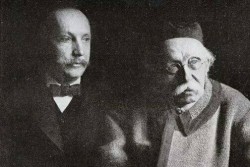 As we saw last week, the heyday of musical dynasties was the Baroque era, when musical employment by the church or court often passed from father to son, and certain families (notably the Bachs in Thuringia and Saxony) became known as musical clans. (In some non-Western cultures, the transmission of performing and composing is still passed on in this manner, often within a certain caste.) From the late 18th century onwards, the more freelance, individual nature of composition and performance, as musical activity exploded beyond the walls of cloisters and castles into the public sphere, saw the collapse of this model, but keeping the family in the business certainly didn't disappear entirely. Family ties are often strong ones, and even if parents such as Johann Strauss senior may have decided on other careers for their offspring, blood bonds often work against such intentions.
Apart from the Bachs and Strausses, surely one of the most famous musical families were the Mozarts. Their patriarch, the Augsburg-born Leopold (1719–1787), trained as a choirboy before embarking on studies of logic, science and theology (a combination typical of the Enlightenment). In 1737 he moved to Salzburg, initially as a student at the Benedictine University, before beginning a career as a violinist and valet. Of his seven children, only two survived infancy: Maria Anna (Nannerl, 1751–1829) and Wolfgang Amadeus (1756–1791). As their teacher, he fostered their musical talents, taking them on tour as child prodigies. In time, the young Wolfgang, like his father, entered the employment of the Prince Archbishop of Salzburg, and even when the son's extraordinary gifts blossomed, Leopold remained a particularly close confidant, as Wolfgang's many letters home from his own travels amply demonstrate.
For many years, Leopold Mozart was known to 20th-century listeners through the (still somewhat doubtful) attribution of the famous 'Toy Symphony' (Cassation in G major), but recent years have seen more interest devoted to his wider output, including orchestral works and church music. As one of the leading violin teachers of his day (his 1756 Treatise on the Fundamental Principles of Violin Playing is still required reading for historically-informed string players), Leopold was a highly effective composer of elegantly-crafted instrumental music, while his experience as a chorister is also evident in his sacred works. Together with Johann Christian Bach (see last week), he was a key compositional influence on the developing style of the young Wolfgang.
Of Wolfgang's own children, his two surviving sons Karl Thomas (1784–1858) and Franz Xaver (1791–1844), both seemed destined to remain in music: the elder for a while hoped to open a piano store, although the plans fell through. However Franz Xaver, although born just a few months before his father's death, was the one to carry musical flame. Compared with that of his great father, his musical output was slender, but it is characterised by a Schubertian early Romanticism that has an immediate appeal, and his piano variations and two piano concertos in particular have proved successful in modern recordings.
Emerging from the shadow of such a great father must have been a daunting prospect for Franz Xaver. Many of the 19th century's great composers emerged from musical families where the father wasn't quite such an overwhelming artistic force. Beethoven's father Johann (1740–1792), for instance, was a court singer in Bonn who initially tried to promote his son Ludwig as a child prodigy in the Mozart manner, but whose alcoholism and abusive parenting did little to foster the young Beethoven's gifts or affections. In fact it was Johann's own father, also named Ludwig (1712–1773), a professional singer and music director, whose memory the young Beethoven appears to have revered. It was Beethoven's flight from Bonn to Vienna that enabled him to shake off the memories of his early upbringing and fully allow his wings to spread.
One musical son who never really had the chance to escape fully from the shadow of his father was Siegfried Wagner (1869–1930), the offspring of Richard Wagner's second marriage to Cosima (née Liszt). Although still young when his father died in 1883, the burden of eventually taking on the running of the Bayreuth Festival may have held back his wider musical ambitions. Nevertheless his activities as both composer and conductor were far from negligible, and of his 18 operas, many in a firmly late-Romantic idiom rich in melodic imagination, several have been revived in recent times, notably An allem ist Hütchen schuld! ('Hattie is to blame for everything!', 1914–15). Siegfried is still best remembered as the dedicatee of his father's Siegfried-Idyll, but a more thorough exploration of his own output would be welcome.
Arguably more fruitful was the relationship between Richard Strauss and his father Franz (1822–1905). Although Franz tried to steer his son in a firmly classical direction, his own talents as a horn player (Hans von Bülow dubbed him 'the Joachim of the horn') were hugely influential on Richard. Both father and son composed horn concertos that are still in the repertoire, but Franz's greatest impact is on Richard's horn writing which, from the dashing Don Juan and mercurial Till Eulenspiegel to the glorious summit of the Alpine Symphony, is unimaginable without a close familiarity with the workings of the instrument. Franz Strauss's legacy endures on almost every page of Richard’s orchestral works and operas, even if the compositional direction he took was rather different from that intended by his father!
Next time: Fathers and Sons, Mothers and Daughters in the 20th century
Recommended recordings:
L Mozart - Symphonies (Gaigg) 9999422
L Mozart - Symphonies CHAN10496
Salzburg Relations: Music By L Mozart, M Haydn & WA Mozart COV92205
FX Mozart & Clementi - Piano Concertos CDA68126
FX Mozart - Piano Variations CD3033
S Wagner - An Allem ist Hutchen Schuld 822537880
S Wagner - Complete Orchestral Works 9996552
F & R Strauss - Horn Concertos PC10312
Latest Posts
Music of the Iberian Peninsula, Part 3: More observations on the Golden Age
16th June 2026
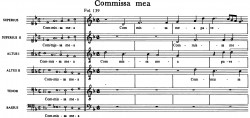
Our last visit to the Iberian peninsula, a fortnight ago, was an insanely ambitious, necessarily broad-brush survey of the Spanish and Portuguese Golden Age, covering vocal and instrumental music, the sacred and the secular. This week, we take a more concise and (I hope) focussed look at a few of the sacred vocal masterpieces which exemplify the particular fervour and intensity of this remarkable period of musical history. They reflect the special place the peninsula had as a bulwark against the Reformation that had taken... read more
read more
Music of the Iberian Peninsula, Part 3: More observations on the Golden Age
16th June 2026
Our last visit to the Iberian peninsula, a fortnight ago, was an insanely ambitious, necessarily broad-brush survey of the Spanish and Portuguese Golden Age, covering vocal and instrumental music, the sacred and the secular. This week, we take a more concise and (I hope) focussed look at a few of the sacred vocal masterpieces which exemplify the particular fervour and intensity of this remarkable period of musical history. They reflect the special place the peninsula had as a bulwark against the Reformation that had taken... read more
read more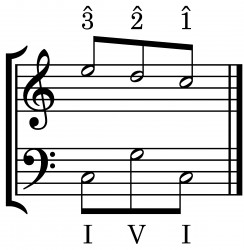
Carl Schachter, Arnold Whittall, and why music analysis matters
9th June 2026
Two recent deaths have robbed the world of music analysis of a pair of its most revered figures. Carl Schachter, who has died at the age of 93, was a pupil of (and subsequently collaborator with) Felix Salzer, himself one of Heinrich Schenker’s foremost students. Schachter continued to enrich and broaden the teaching of Schenkerian analysis, including important work on its application to issues of rhythm (which Schenker, focussing on harmonic and contrapuntal matters, largely bypassed). His influence went well beyond the... read more
read more
Carl Schachter, Arnold Whittall, and why music analysis matters
9th June 2026
Two recent deaths have robbed the world of music analysis of a pair of its most revered figures. Carl Schachter, who has died at the age of 93, was a pupil of (and subsequently collaborator with) Felix Salzer, himself one of Heinrich Schenker’s foremost students. Schachter continued to enrich and broaden the teaching of Schenkerian analysis, including important work on its application to issues of rhythm (which Schenker, focussing on harmonic and contrapuntal matters, largely bypassed). His influence went well beyond the... read more
read more
Music of the Iberian Peninsula, Part 2: ‘O quam gloriosum’ – The Spanish and Portuguese Golden Age
2nd June 2026
Over the past fortnight, I’ve been bathed in the most glorious, radiant, transformative light. Not the UK’s recent unseasonable heatwave, but the extraordinary vocal polyphony of the Siglo de Oro: the Spanish (and Portuguese) ‘Golden Century’. Extending from the late 15th to the early 17th century, this was a time of remarkable artistic flowering on the Iberian Peninsula, coinciding with the emergence of Spain and Portugal as global imperial powers with extensive colonial territories in the Americas, Africa and Asia. The... read more
read more