 FREE UK SHIPPING OVER £35!
The Spin Doctor Europadisc's Weekly Column
Fathers and Sons (Part 1)
8th February 2023
8th February 2023
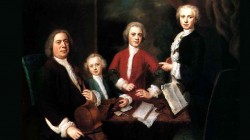 Our New Year piece on Josef Strauss had us pondering on the many instances in classical music of musical fathers and sons (and mothers, daughters, and siblings). They provide many fascinating instances of continuity and change, of preserving tradition and striking out on new paths. In the case of the Strauss family, Johann Senior's sons - Johann II, Josef and (to a lesser extent) Eduard - were all intended for different professions, but all joined the 'family business' of light dance music, raising the waltz, polka and other forms to new heights unamigined by their father. Johann II further branched out into operetta, with such masterpieces as Die Fledermaus (1874), Eine Nacht in Venedig (1883) and Der Zigeunerbaron (1885), and earned the acclaim Wagner and Brahms. Josef, despite an early reluctance to enter on a musical career, became - as we have seen - the most original and imaginative of the family through his essays in the waltz genre.
The heyday of the musical family, however, was the Baroque era, when (contrary to the more recent tendency of musicians to direct their offspring on more secure career paths - law, medicine, and so on) sons were expected to carry on the artistic activities of their fathers. Several generations of the French Couperin family testify to this. Louis Couperin (1626-1661) was the first to make a real name for himself not just as a keyboardist and viol player but as a composer. His 'unmeasured' keyboard preludes, strikingly notated without barlines or note stems, and with long, expressive slurs, were a highly distinctive contribution to the developing French harpsichord school. Louis's brother Charles (1639-1679), nephew Nicolas (1680-1748), great-nephew Armand-Louis (1727-1789), and Armand-Louis's sons Pierre-Louis (1755-1789) and Gervais-François (1759) were all organists, carrying the family tradition into the early 19th century, with the last three becoming significant composers in their own right.
But it was Charles's son, François 'le Grand' (1668-1733), one of the most prolific composers among the French clavecinistes, who overshadowed all other members of the Couperin family. His success in obtaining a privilège du Roy (royal warrant) in 1713 allowed him to publish series of volumes of Pièces de clavecin, the four books of which - subdivided into a total of 27 ordres, containing a huge variety of character pieces - stand as his lasting legacy, while his Concerts royaux (1714) and Nouveaux Concerts, ou Les Les Goûts réunis (1724) are highly individual works in the genre of Baroque chamber music. François's musical fecundity, along with his efforts to marry Italian (specifically Corellian) and French styles, his important treatise on keyboard playing L'Art de toucher le clavecin (1716) and his sheer inventiveness all ensured a legacy of enormous influence. Composers as diverse as Brahms, Ravel and Adès have all paid tribute to him, ensuring that the Couperin family name has been immortalised in music.
A Baroque father-and-son pair of particular interest is the Scarlattis: Alessandro Scarlatti (1660-1725), Sicilian by birth but whose career took him to Naples and Rome. He became the most important composer of the Neapolitan opera school, especially for his development of the da capo aria and his invention of the three-movement Italian overture (or sinfonia) which was a crucial staging post in the development of the symphony. Today, his operas have fallen into neglect, unlike his many secular cantatas and sacred works, but are surely worthy of revival on account of their historical significance.
Alessandro's son Domenico Scarlatti (1685-1757) intially seemed destined for a similar path to his father, with whom he first studied. Born in Naples, his early career took him to Rome, where he composed several operas, but it was his move to Lisbon in late 1719, as music teacher to Princess Barbara of Portugal, that was decisive in reshaping his focus. Though he moved briefly back to Rome in 1729, he soon relocated to Seville, again teaching Princess Barbara, who in 1746 became Queen Consort of Spain as wife of Ferdinand VI. The 555 keyboard sonatas that Domenico composed, mostly while teaching his royal pupil, dominate his output. Their absorption of Iberian influences and concentrated inventiveness have made them hugely popular with generations of pianists and harpsichordists. Recordings of selections and indeed the complete cycle are perennial favourites in the catalogue, while Domenico's sacred works - particularly his 1724 setting of the Stabat Mater - have also received attention.
If the Scarlattis provide a study in contrasting outputs, undoubtedly the most famous father-and-son examples come from the Bach family. Johann Sebastian (1685-1750) is, of course, the dominant figure, but he came from a musical clan whose forebears were significant enough in their own write that he devoted considerable time to collecting and studying their output. It is the varying lives of his sons, emerging from the dominant shadow of their 'old school' father, that continues to fascinate scholars, musicians and audiences. The eldest, Wilhelm Friedemann (1710-1784), was an accomplished organist like his father, and as a composer he showed flashes of (often eccentric) genius: his concertos in particular are well worth exploring. But his failure to secure a stable professional position ensured that he died in poverty, and his output has received less attention than that of two of his brothers.
Carl Philipp Emanuel Bach (1714-1788) was much more fortunate in securing two important posts in his career, in Berlin (1738-68) at the court of Frederick the Great, and then as Kapellmeister in Hamburg (1768-88) as successor to his godfather Telemann. Emanuel's early works show the influence of his father, whose legacy he was keen to preserve, but he soon developed a highly distinctive musical style of his own, combining the empfindsamer Stil ('sensitive style') with Sturm und Drang elements to create rich in contrasts and surprises, sudden changes of trajectory, yet all the while superbly controlled and deployed. He also had a shrewd eye for business, and his published works were enormously influential on later composers including Haydn, Mozart and Beethoven. From keyboard miniatures to concertos, symphonies and sacred works, his output is full of confidence in his own abilities, emerging boldly from his great father's shadow.
Johann Christian Bach (1735-1782), initially trained by his father Johann Sebastian, became close to his half-brother Carl Philipp Emanuel, working alongside him in Berlin. But in 1754 he moved to Italy, and the influence on him of the Italian style was decisive in shaping his own urbane musical character. In 1762 he moved to London, soon establishing a reputation as an opera composer (unlike his father and brothers). It was his finely-crafted instrumental music, combining Italian elegance and ideas with superbly crafted surfaces, that made the greatest impression, not least on the young Mozart, whom he taught for five months in 1764, becoming a huge influence. Many ideas in Mozart's mature works can be traced back to Johann Christian, on whose death Mozart remarked, 'What a loss to the musical world!'
The Couperin Family (Benjamin Alard, hpd) MV007
F Couperin - Complete Works for Harpsichord (Olivier Baumont) 9029563455
A Scarlatti - Griselda (Jacobs) HMM93180507
D Scarlatti - Complete Keyboard Sonatas (Scott Ross, hpd) 2564629945
D Scarlatti - Stabat Mater, etc. (Vox Luminis) RIC258
JS, JC & CPE Bach - Magnificats (Arcangelo/Cohen) CDA68157
CPE Bach - Symphonies & Cello Concertos (OAE/Leonhardt) 5617942
Latest Posts
Music of the Iberian Peninsula, Part 3: More observations on the Golden Age
16th June 2026
Our last visit to the Iberian peninsula, a fortnight ago, was an insanely ambitious, necessarily broad-brush survey of the Spanish and Portuguese Golden Age, covering vocal and instrumental music, the sacred and the secular. This week, we take a more concise and (I hope) focussed look at a few of the sacred vocal masterpieces which exemplify the particular fervour and intensity of this remarkable period of musical history. They reflect the special place the peninsula had as a bulwark against the Reformation that had taken... read more
read more
Music of the Iberian Peninsula, Part 3: More observations on the Golden Age
16th June 2026
Our last visit to the Iberian peninsula, a fortnight ago, was an insanely ambitious, necessarily broad-brush survey of the Spanish and Portuguese Golden Age, covering vocal and instrumental music, the sacred and the secular. This week, we take a more concise and (I hope) focussed look at a few of the sacred vocal masterpieces which exemplify the particular fervour and intensity of this remarkable period of musical history. They reflect the special place the peninsula had as a bulwark against the Reformation that had taken... read more
read more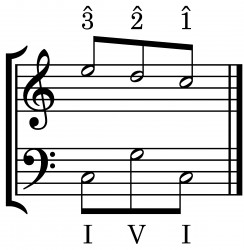
Carl Schachter, Arnold Whittall, and why music analysis matters
9th June 2026
Two recent deaths have robbed the world of music analysis of a pair of its most revered figures. Carl Schachter, who has died at the age of 93, was a pupil of (and subsequently collaborator with) Felix Salzer, himself one of Heinrich Schenker’s foremost students. Schachter continued to enrich and broaden the teaching of Schenkerian analysis, including important work on its application to issues of rhythm (which Schenker, focussing on harmonic and contrapuntal matters, largely bypassed). His influence went well beyond the... read more
read more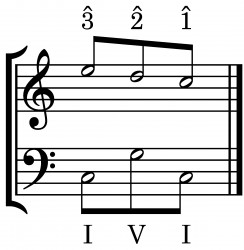
Carl Schachter, Arnold Whittall, and why music analysis matters
9th June 2026
Two recent deaths have robbed the world of music analysis of a pair of its most revered figures. Carl Schachter, who has died at the age of 93, was a pupil of (and subsequently collaborator with) Felix Salzer, himself one of Heinrich Schenker’s foremost students. Schachter continued to enrich and broaden the teaching of Schenkerian analysis, including important work on its application to issues of rhythm (which Schenker, focussing on harmonic and contrapuntal matters, largely bypassed). His influence went well beyond the... read more
read more
Music of the Iberian Peninsula, Part 2: ‘O quam gloriosum’ – The Spanish and Portuguese Golden Age
2nd June 2026
Over the past fortnight, I’ve been bathed in the most glorious, radiant, transformative light. Not the UK’s recent unseasonable heatwave, but the extraordinary vocal polyphony of the Siglo de Oro: the Spanish (and Portuguese) ‘Golden Century’. Extending from the late 15th to the early 17th century, this was a time of remarkable artistic flowering on the Iberian Peninsula, coinciding with the emergence of Spain and Portugal as global imperial powers with extensive colonial territories in the Americas, Africa and Asia. The... read more
read more