 FREE UK SHIPPING OVER £35!
The Spin Doctor Europadisc's Weekly Column
Celebrating Norrington
1st February 2023
1st February 2023
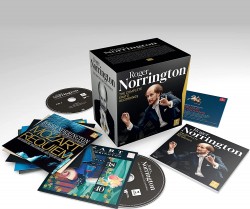
The recent release by Warner/Erato of Roger Norrington's complete recordings made originally for EMI - an attractively priced and presented 45-disc set - has generated considerable critical interest online, much of it negative. There are, it seems, three main beefs: the presentation as 'The Complete Erato Recordings' when Norrington never made a single recording for Erato or Warner; the fact that the personnel of Norrington's London Classical Players overlapped considerably with other London-based period-instrument orchestras; and the hoary old chestnut of vibrato (or rather, the lack of it).
Love him or loathe him (and Norrington, like many other artistic disruptors, seems to divide opinion quite markedly), there is more to this conductor than what many see as his obsession with removing vibrato from the orchestral sound-picture. The lean textures that result open out new textural perspectives, and even if Norrington has arguably taken things to extremes, he did at least get a debate going - and how! The evidence for and against vibrato as a default setting for music of the Classical and Romantic eras has been much pored over, and it's not our intention to rehearse it here. Suffice to say, with so many sources marshalled in rival cases, the answer is surely that there is no one single truth, but a range of possibilities, just as there are in matters of tempi (and Norrington has on occasion been similarly extreme in approach to speeds, particularly at the 'slower' end of the spectrum).
The recordings that the London Classical Players made of later 19th-century music has perhaps been the most criticised: his Wagner orchestral excerpts and and a breezy Bruckner Third (in its first version) from the mid-1990s, as well as his controversial account of Smetana's Má vlast. Yet for all the occasional misfires, there are, for those with open ears and minds, plenty of times when Norrington and his players hit the bullseye: from his Beethoven cycle - one of the first to explore the full potential of period instruments in revivifying these standard repertoire pieces - the Second, Third, Fourth and Eighth Symphonies still capture the thrill of new discovery, and the fleet-footed 'Eroica' is undoubtedly one of the set's highlights.
Norrington's Mendelssohn, too, is full of astonishingly exciting sonorities: the Third and Fourth Symphonies have rarely sounded so involving or richly yet transparaently textured on disc. The Schubert symphonies - again, for those with receptive minds and ears - are comparably fresh-sounding. Choral works such as the Mozart and Brahms Requiems (the former in Duncan Druce's completion) serve as a reminder of the conductor's splendid early work with his Schütz Choir, even if the Mozart operas (Don Giovanni and The Magic Flute) don't quite recapture the pioneering thrill of his days in charge of Kent Opera.
The Brahms symphony cycle is another slightly mixed bag, though it deserves credit for seeking to apply the performance style of the Meiningen Orchestra as detailed by the conductor Fritz Steinbach - something few other postwar conductors had investigated at the time. The Beethoven and Mozart piano concertos with Melvyn Tan are similarly problematic, though more on account of the solo instruments used than anything else, and with moments of great stylishness alongside the provocative tempi.
The cycle of the second set of Haydn's 'London' Symphonies (nos. 99 to 104) doesn't quite gel as Norrington's later Stuttgart set would, but in many other aspects his earlier accounts of works later revisited with the South West German band are often more rewarding, and certainly fresher. The two symphonies of Weber - relative rarities on disc when Norrington and his players recorded them - are still worth revisiting, as is the fizzing set of Rossini overtures and opera excerpts, and the disc of Romantic Overtures.
As to the billing as 'Erato Recordings', this has been made too much of by critics keen to take a pot shot at anything conducted by Norrington. The fact is that, when Warner/Erato took over the old EMI classical catalogue, they couldn't retain the EMI branding, and Erato had always been the 'early music' arm of French Warner: hence the rebranding. A legal necessity, not a huge misstep or conspiracy.
Where the overlap of players with other 'period' groups of the time (the Academy of Ancient Music, English Concert, Hanover Band and English Baroque Soloists), this was a period when the number of London-based players with sufficient expertise on period instruments was relatively small compared with today. The small pool of key talent was no reason not to explore new ventures and line-ups. Key players (notably the leaders) varied from group to group, and each conductor (Norrington, Hogwood, Pinnock, etc.) brought something distinctive both to the sound and to interpretations and repertoire focus.
Instead of the ad hominem carping that has characterised some online commentary recently, the recently retired Norrington and his erstwhile players deserve to be celebrated as disruptors in the field of classical music, challenging received orthodoxies and prejudices, even though some will inevitably feel that they have replaced old orthodoxies with new ones. What rot! No-one forced non-period orchestras to embrace styles pioneered by Norrington, Hogwood and others, yet many 'mainstream' conductors, persuaded by the new perspectives offered by historical rethinking of musical approaches, freely embraced the style, and many audiences were won over.
The Recordings:
Latest Posts
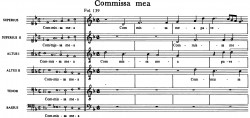
Music of the Iberian Peninsula, Part 3: More observations on the Golden Age
16th June 2026
Our last visit to the Iberian peninsula, a fortnight ago, was an insanely ambitious, necessarily broad-brush survey of the Spanish and Portuguese Golden Age, covering vocal and instrumental music, the sacred and the secular. This week, we take a more concise and (I hope) focussed look at a few of the sacred vocal masterpieces which exemplify the particular fervour and intensity of this remarkable period of musical history. They reflect the special place the peninsula had as a bulwark against the Reformation that had taken... read more
read more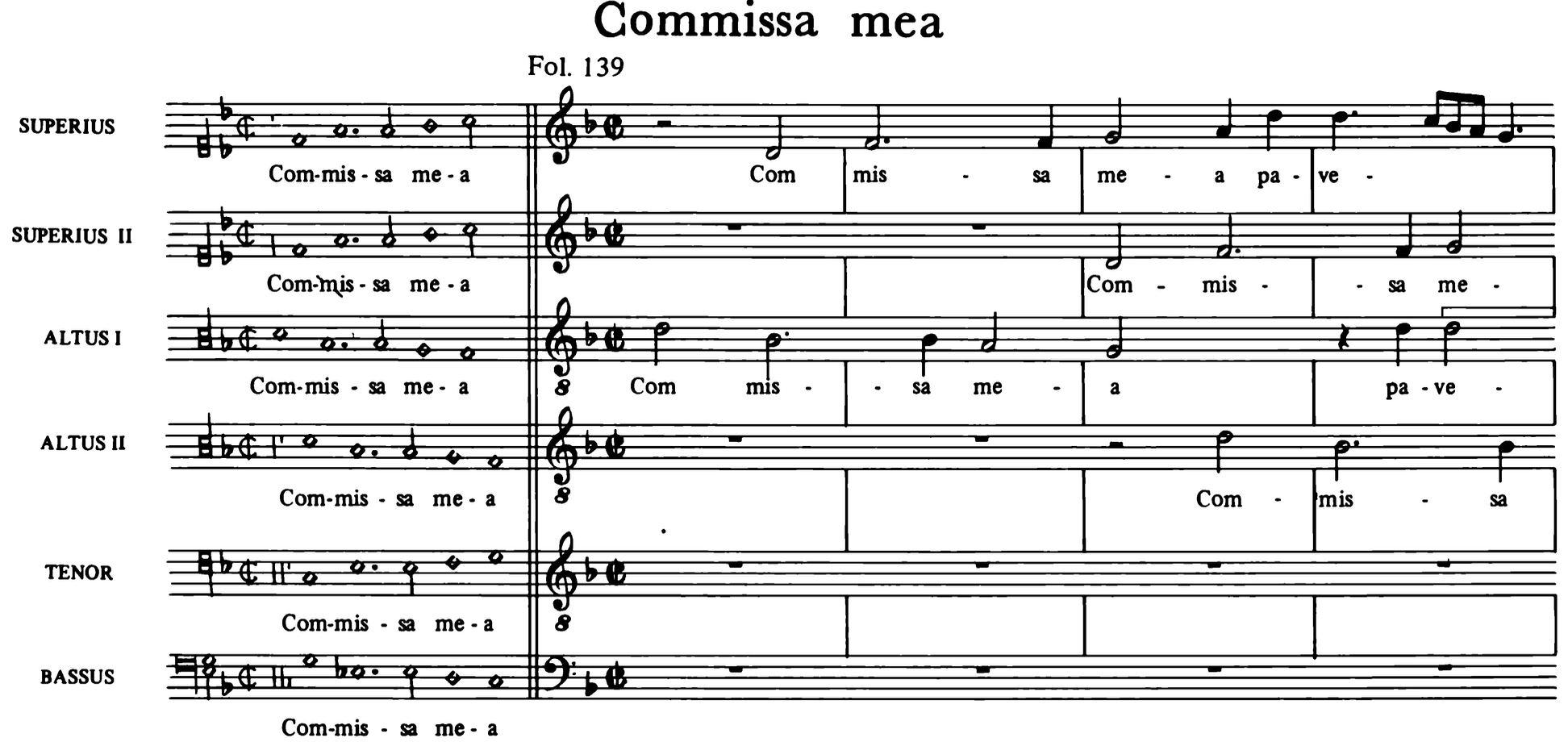
Music of the Iberian Peninsula, Part 3: More observations on the Golden Age
16th June 2026
Our last visit to the Iberian peninsula, a fortnight ago, was an insanely ambitious, necessarily broad-brush survey of the Spanish and Portuguese Golden Age, covering vocal and instrumental music, the sacred and the secular. This week, we take a more concise and (I hope) focussed look at a few of the sacred vocal masterpieces which exemplify the particular fervour and intensity of this remarkable period of musical history. They reflect the special place the peninsula had as a bulwark against the Reformation that had taken... read more
read more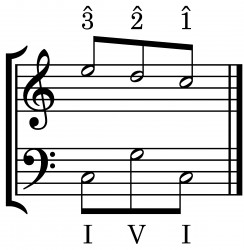
Carl Schachter, Arnold Whittall, and why music analysis matters
9th June 2026
Two recent deaths have robbed the world of music analysis of a pair of its most revered figures. Carl Schachter, who has died at the age of 93, was a pupil of (and subsequently collaborator with) Felix Salzer, himself one of Heinrich Schenker’s foremost students. Schachter continued to enrich and broaden the teaching of Schenkerian analysis, including important work on its application to issues of rhythm (which Schenker, focussing on harmonic and contrapuntal matters, largely bypassed). His influence went well beyond the... read more
read more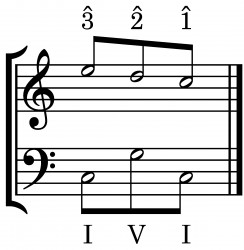
Carl Schachter, Arnold Whittall, and why music analysis matters
9th June 2026
Two recent deaths have robbed the world of music analysis of a pair of its most revered figures. Carl Schachter, who has died at the age of 93, was a pupil of (and subsequently collaborator with) Felix Salzer, himself one of Heinrich Schenker’s foremost students. Schachter continued to enrich and broaden the teaching of Schenkerian analysis, including important work on its application to issues of rhythm (which Schenker, focussing on harmonic and contrapuntal matters, largely bypassed). His influence went well beyond the... read more
read more
Music of the Iberian Peninsula, Part 2: ‘O quam gloriosum’ – The Spanish and Portuguese Golden Age
2nd June 2026
Over the past fortnight, I’ve been bathed in the most glorious, radiant, transformative light. Not the UK’s recent unseasonable heatwave, but the extraordinary vocal polyphony of the Siglo de Oro: the Spanish (and Portuguese) ‘Golden Century’. Extending from the late 15th to the early 17th century, this was a time of remarkable artistic flowering on the Iberian Peninsula, coinciding with the emergence of Spain and Portugal as global imperial powers with extensive colonial territories in the Americas, Africa and Asia. The... read more
read more