 FREE UK SHIPPING OVER £35!
The Spin Doctor Europadisc's Weekly Column
More on melodrama
25th January 2023
25th January 2023
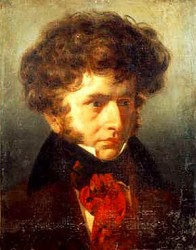 Our piece last week on the subject of melodrama generated some interesting responses from readers. Although it’s a neglected genre that is often overlooked, and certainly underrepresented in the catalogues, it is clearly of interest to many of you. The mixture of spoken word and music (the latter usually instrumental, but sometimes vocal too) encompasses extremes of utterance – i.e. unpitched, recited speech and pitched tones – that can heighten emotions and throw narratives into fresh relief. The conventional view is that, as a genre if not as a technique, melodrama’s time quickly passed with changing fashions. Yet its periodic use by prominent composers seeking to achieve an exceptional means of expressing music and text suggests a durability that, while patchy, certainly merits more attention from performers and audiences.
First, however, the terminology itself deserves some discussion. Properly applied, melodrama is a genre or technique which combines speech and music, either in alternation or simultaneously, in some kind of balance to take the drama forward. (Such a balance would not apply, for instance, to most examples of theatrical incidental music, where the speech and action have primacy over the music. This does not preclude the use of moments of melodrama – such as Egmont’s farewell in Beethoven’s music to Goethe’s eponymous drama – in certain numbers within any incidental music.) This definition is quite distinct from the popular use of the term ‘melodramatic’ to refer to sensationalised acting (or actions) of exaggerated characters, either onstage or in real life, even if the origins of the expression may lie in 19th-century stage melodramas.
Confusingly, the Greco-Italian word melodrama is not used in Italian, where the term melodramma refers to opera more generally; instead, the Italian language uses the word melologo, which Berlioz translated to French to describe his Lélio, ou Le retour à la vie, op.14b (mélologue en six parties). Lélio is probably the most interesting instance of melodrama as a genre following the examples by Georg Benda more than fifty years earlier. Benda’s contributions to the genre caused a sensation with audiences, but also represent an important stage in the development of serious German opera independent of Italian models. Moreover, Benda’s ‘duodrama’ Ariadne auf Naxos (first performed in 1775) is the first instance of historically appropriate costumes being used on the operatic stage. Both Ariadne and its companion piece Medea are more than deserving of revival and recording.
Berlioz’s Lélio, while not quite so neglected, is underrepresented both on stage (it straddles a grey area between theatre and concert hall) and on disc, particularly given that it was designed as a companion piece to the ubiquitous Symphonie fantastique. Together, the two works constitute the ‘Episodes in the life of an artist’ – the description that is normally applied to the Symphonie fantastique alone. Yet Lélio – a curious but fascinating mixture of domestic- and public-scaled music, incorporating narrator, solo voices, chorus and orchestra – is the essential complement to the symphony, showing the artist (i.e. the composer as represented by the narrator) woken-up after the vivid, nightmarish dreams of the symphony, and addressing the way forward following his rejection by the beloved. This is achieved through invoking the spirits and texts of Goethe, Byron, and above all Shakespeare, Berlioz’s idol whom he felt scandalously neglected by his compatriots. The figure of Lélio the composer is obviously a representation of Berlioz himself, in the wake of his obsession with and rejection by the actress Harriet Smithson. Lélio is thus a key work in Berlioz’s output, its dazzling mixture of genres and texts typical of the composer, yet it is still a rarity on disc. Ideally it should be coupled, as Berlioz intended, with the Symphonie fantastique: only Philippe Jordan’s recording with the Wiener Symphoniker currently does this, although Pierre Boulez’s recording with the London Symphony Orchestra for CBS is still worth seeking out.
Both Benda and Berlioz illustrate the radical potential of the melodrama genre, and that radicality has been most obviously tapped into by 20th-century composers. Although, as mentioned last week, several works by Schoenberg employ the technique, it is his 1942 setting of Byron’s Ode to Napoleon Buonaparte, for reciter, string quartet and piano, that most fully inhabits the genre. Whereas Berlioz (and Benda before him) alternated speech and text, Schoenberg’s Ode presents music and speech simultaneously. Unlike such works as Pierrot lunaire, where the voice is semi-pitched in Sprechgesang, here Schoenberg specified that the voice should be performed in ‘natural’ speech. Schoenberg channels Byron’s support of an independent Greece to express his own allegiances in the midst of World War II. Dating from the composer’s mature twelve-tone period, the Ode to Napoleon Buonaparte has never been among his more widely performed works, and it too is underrepresented in the recording catalogues, but deserves far wider circulation.
Last week we mentioned the Czech vogue for melodrama in the late 19th century, and in particular the works of Zdeněk Fibich (1850–1900). His collected concert melodramas have been recorded on a small Czech label, but there is still no wider availability. Together with his Hypodamia triology (1888–91), his 1883 setting for narrator and orchestra of Karel Jaromír Erben Vodník (‘The Water Goblin’, familiar from Dvořák’s tone poem with the same title) is a work that ought to be better known. We’ll return to the subject of melodrama (with composers including Stravinsky, Gerhard, Martinů and Richard Strauss) soon, but for now we end with a plea for some of Fibich’s works to be recorded. Perhaps Naxos – who have championed the composer’s orchestral works so successfully – could be persuaded to take up the challenge?
Recommended recordings:
Berlioz - Symphonie fantastique & Lélio (Wiener Symphoniker / Jordan) WS020
Schoenberg - Ode to Napoleon Buonaparte (Wilson-Johnson, Denk / Craft) 8557528
Latest Posts
Music of the Iberian Peninsula, Part 3: More observations on the Golden Age
16th June 2026
Our last visit to the Iberian peninsula, a fortnight ago, was an insanely ambitious, necessarily broad-brush survey of the Spanish and Portuguese Golden Age, covering vocal and instrumental music, the sacred and the secular. This week, we take a more concise and (I hope) focussed look at a few of the sacred vocal masterpieces which exemplify the particular fervour and intensity of this remarkable period of musical history. They reflect the special place the peninsula had as a bulwark against the Reformation that had taken... read more
read more
Music of the Iberian Peninsula, Part 3: More observations on the Golden Age
16th June 2026
Our last visit to the Iberian peninsula, a fortnight ago, was an insanely ambitious, necessarily broad-brush survey of the Spanish and Portuguese Golden Age, covering vocal and instrumental music, the sacred and the secular. This week, we take a more concise and (I hope) focussed look at a few of the sacred vocal masterpieces which exemplify the particular fervour and intensity of this remarkable period of musical history. They reflect the special place the peninsula had as a bulwark against the Reformation that had taken... read more
read more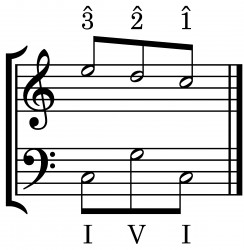
Carl Schachter, Arnold Whittall, and why music analysis matters
9th June 2026
Two recent deaths have robbed the world of music analysis of a pair of its most revered figures. Carl Schachter, who has died at the age of 93, was a pupil of (and subsequently collaborator with) Felix Salzer, himself one of Heinrich Schenker’s foremost students. Schachter continued to enrich and broaden the teaching of Schenkerian analysis, including important work on its application to issues of rhythm (which Schenker, focussing on harmonic and contrapuntal matters, largely bypassed). His influence went well beyond the... read more
read more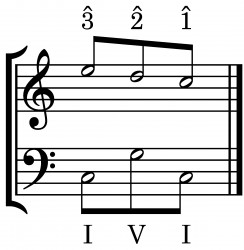
Carl Schachter, Arnold Whittall, and why music analysis matters
9th June 2026
Two recent deaths have robbed the world of music analysis of a pair of its most revered figures. Carl Schachter, who has died at the age of 93, was a pupil of (and subsequently collaborator with) Felix Salzer, himself one of Heinrich Schenker’s foremost students. Schachter continued to enrich and broaden the teaching of Schenkerian analysis, including important work on its application to issues of rhythm (which Schenker, focussing on harmonic and contrapuntal matters, largely bypassed). His influence went well beyond the... read more
read more
Music of the Iberian Peninsula, Part 2: ‘O quam gloriosum’ – The Spanish and Portuguese Golden Age
2nd June 2026
Over the past fortnight, I’ve been bathed in the most glorious, radiant, transformative light. Not the UK’s recent unseasonable heatwave, but the extraordinary vocal polyphony of the Siglo de Oro: the Spanish (and Portuguese) ‘Golden Century’. Extending from the late 15th to the early 17th century, this was a time of remarkable artistic flowering on the Iberian Peninsula, coinciding with the emergence of Spain and Portugal as global imperial powers with extensive colonial territories in the Americas, Africa and Asia. The... read more
read more