 FREE UK SHIPPING OVER £35!
The Spin Doctor Europadisc's Weekly Column
An alternative to boycotting and cancelling: Exploration and re-focus
11th January 2023
11th January 2023
 In the run-up to Christmas, Ukraine's culture minister Oleksandr Tkachenko created something of a furore by calling on theatres and other cultural venues to ‘pause’ performances of Tchaikovsky and other ‘Kremlin-favoured’ composers and works in a show of solidarity with the beleaguered Ukrainian people. Tkachenko attempted to choose his words carefully, but to many it smacked of ‘cancel culture’, and commentators were quick to point out that, wherever the blame might lie for the now more than 10-month-old invasion of Ukraine, Tchaikovsky was no more at fault than Mussorgsky, Shostakovich, Prokofiev or any other Russian composer of the past few centuries. The notion of a collective, retrospective guilt smacks too much of totalitarianism.
More than a century ago, during the Great War of 1914-18, there was certainly a good deal of anti-German sentiment among the wider public in both Britain and France. But just a generation later, during the horrors of World War II, no-one seriously talked of boycotting the music of Beethoven, whose music (most famously the ‘V for Victory’ rhythm from the Fifth Symphony) was rightly seen as the artistic property of wider humanity. Transferred to the present situation, one could argue that performances of Mussorgsky’s operas Boris Godunov and Khovanshchina, far from glorifying Russian rulers, actually shine a spotlight on the downtrodden common people who are so often at the mercy of authoritarian regimes. Of course, such regimes will always take liberties to put a spin on whichever works take their fancy (as the Nazi regime did with Wagner), but if the best that Putin can come up with is the distinctly sub-par 1812 Overture, frankly, he’s welcome to it.
As for Tchaikovsky’s wider output, from the symphonies to the three great ballets, a degree of sensitivity around programming and productions rather than a blanket boycott seems preferable. Anyone seriously proposing programming the triumphalist Fifth Symphony around the anniversary of the Russian invasion on 24 February is tin-eared and should seriously consider rescheduling; ditto performances of the controversially nicknamed Symphony no.2 (‘The Little Russian’).
More powerful than any boycott, however, has been the spotlight that recent events have shone on the output of Ukrainian composers past and present, with the music of Boris Lyatoshynsky, Valentin Silvestrov, Mykola Lysenko and Myroslav Skoryk in particular finding far wider audiences than could previously have been imagined. Performers programming such works should be applauded for shifting the focus away from the tub-thumping crowd-pleasers of yesteryear towards a more balanced and nuanced musical landscape.
The same is true of the many performers and record companies now exploring the richly varied outputs of black and women composers. In just the past five years, an astonishingly diverse repertoire has begun to be uncovered – not as a result of ‘cancelling’ any established figures (Bach, Beethoven, Chopin, Mahler et al. are as well-represented as ever), but thanks to a renewed spirit of inquisitiveness and openness. This is the surely best response to any sort of repression, whether nationalist, racist, sexist or economic. But beyond that, as we’ve suggested in the past, such shifts in focus and broadenings of perspective are vital if classical music in all its many forms is to attract new audiences and investment. The alternative is to get stuck in a groove, constantly harking back to ‘golden ages’ that never quite were at the time, but that risks petrifying an essentially dynamic art form.
A New Year’s resolution for all of us might be that, instead of constant talk of boycotts, ‘cancel culture’ and so-called ‘wokery’, we all work harder to broaden our horizons, questioning our own prejudices and indulging them a little less, and instead exploring beyond our own comfort zones to take in music that offers new experiences and perspectives. A starting point for many could be Fiona Maddocks’s ‘Feed your soul: the 31-day classical music diet for January’, encompassing both old favourites (including Tchaikovsky!) and much less familiar fare, both ancient and modern. And as we’re only 11 days into the month and most of the items are commendably short, there’s even time to catch up. It’s guaranteed to serve up at least a few surprises, even for those of very broad tastes…
Fiona Maddocks - Feed your soul: the 31-day classical music diet for January
Recent and forthcoming recommendations:
Silvestrov - Maidan 4858084
Silvestrov - The Messenger CC72939
Walker - Antifonys, Lilacs, Sinfonias 4 & 5 TCO0005
Coleridge-Taylor - Othello & African Suites, Violin Concerto, etc. 4853322
Coleridge-Taylor - Nonet, Piano Trio, Piano Quintet CHAN20242
Out of the Shadow CC72888
Poetesses symphoniques LDV103
Latest Posts
Music of the Iberian Peninsula, Part 3: More observations on the Golden Age
16th June 2026
Our last visit to the Iberian peninsula, a fortnight ago, was an insanely ambitious, necessarily broad-brush survey of the Spanish and Portuguese Golden Age, covering vocal and instrumental music, the sacred and the secular. This week, we take a more concise and (I hope) focussed look at a few of the sacred vocal masterpieces which exemplify the particular fervour and intensity of this remarkable period of musical history. They reflect the special place the peninsula had as a bulwark against the Reformation that had taken... read more
read more
Music of the Iberian Peninsula, Part 3: More observations on the Golden Age
16th June 2026
Our last visit to the Iberian peninsula, a fortnight ago, was an insanely ambitious, necessarily broad-brush survey of the Spanish and Portuguese Golden Age, covering vocal and instrumental music, the sacred and the secular. This week, we take a more concise and (I hope) focussed look at a few of the sacred vocal masterpieces which exemplify the particular fervour and intensity of this remarkable period of musical history. They reflect the special place the peninsula had as a bulwark against the Reformation that had taken... read more
read more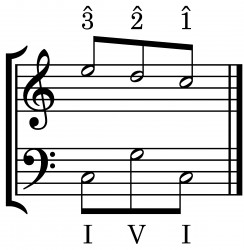
Carl Schachter, Arnold Whittall, and why music analysis matters
9th June 2026
Two recent deaths have robbed the world of music analysis of a pair of its most revered figures. Carl Schachter, who has died at the age of 93, was a pupil of (and subsequently collaborator with) Felix Salzer, himself one of Heinrich Schenker’s foremost students. Schachter continued to enrich and broaden the teaching of Schenkerian analysis, including important work on its application to issues of rhythm (which Schenker, focussing on harmonic and contrapuntal matters, largely bypassed). His influence went well beyond the... read more
read more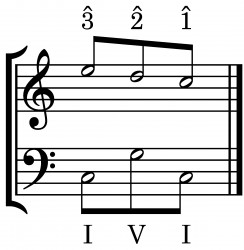
Carl Schachter, Arnold Whittall, and why music analysis matters
9th June 2026
Two recent deaths have robbed the world of music analysis of a pair of its most revered figures. Carl Schachter, who has died at the age of 93, was a pupil of (and subsequently collaborator with) Felix Salzer, himself one of Heinrich Schenker’s foremost students. Schachter continued to enrich and broaden the teaching of Schenkerian analysis, including important work on its application to issues of rhythm (which Schenker, focussing on harmonic and contrapuntal matters, largely bypassed). His influence went well beyond the... read more
read more
Music of the Iberian Peninsula, Part 2: ‘O quam gloriosum’ – The Spanish and Portuguese Golden Age
2nd June 2026
Over the past fortnight, I’ve been bathed in the most glorious, radiant, transformative light. Not the UK’s recent unseasonable heatwave, but the extraordinary vocal polyphony of the Siglo de Oro: the Spanish (and Portuguese) ‘Golden Century’. Extending from the late 15th to the early 17th century, this was a time of remarkable artistic flowering on the Iberian Peninsula, coinciding with the emergence of Spain and Portugal as global imperial powers with extensive colonial territories in the Americas, Africa and Asia. The... read more
read more