 FREE UK SHIPPING OVER £35!
The Spin Doctor Europadisc's Weekly Column
In praise of... Josef Strauss
4th January 2023
4th January 2023
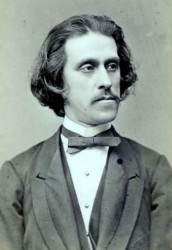 This year’s New Year’s Day concert from Vienna – which many of you will have seen or heard – shone a welcome spotlight on the music of Josef Strauss (1827–1870). The second of the Strauss brothers, he normally stands somewhat in the shadow of the easy inventiveness and sheer prolificacy of his older brother, Johann II (1825–1899). Yet Josef’s best-known works, including such waltzes as Village Swallows from Austria, Music of the Spheres and Delirien, demonstrate textural and expressive depths which Johann’s music rarely equalled. For many Strauss aficionados, Josef has long been regarded as the most original and talented of the family, and his works certainly deserve more attention than they usually receive.
Born less than five months after the death of Beethoven, Josef – like Johann II – was originally intended by their father, Johann senior, for a quite different career: in Johann II’s case banking, in Josef’s the military. Both sons defied Johann senior, but initially it seemed that Josef was destined for a very different occupation. After studying technical drawing and mathematics at Vienna’s Technische Universität, he worked as an architect and mechanical engineer, designing a street-cleaning machine that was later taken up by the city of Vienna, as well as publishing two mathematical textbooks. Something of a polymath, he also wrote an anthology of poems and Rober, a five-act drama for which he also provided detailed designs.
When Johann II was taken ill in 1853, Josef had to assume his brother’s conducting duties with the Strauss Orchestra, as well as reluctantly composing a waltz (his op.1) entitled Die Ersten und Letzten – ‘The First and Last’ (!) – which was acclaimed by the critics. On his brother’s recovery, he stepped back from the limelight, but took up serious studies at the violin and, later, in thoroughbass and composition. The health problems that ultimately led to Josef’s early death in 1870 were already manifesting themselves, but gradually a sibling rivalry took shape, with Josef leading the Strauss Orchestra when Johann’s higher-profile career took on more public responsibilities.
As Johann directed his attention increasingly towards the stage, it was Josef who continued to provide dance music for the ‘family business’, although his own inclinations seem to have been rather more serious. While Johann had introduced music from Wagner’s Tannhäuser and Lohengrin to Vienna, it was Josef who introduced extracts from Tristan, Das Rheingold and Die Meistersinger (before their world premières!), with a concert of music from Tristan even earning Wagner’s approval. He also conducted the first Viennese performance of Liszt’s Mazeppa.
This ‘serious’ side to Josef’s music-making can be detected in his own music, too. The swirling chromaticisms of the introduction to Delirien, the ethereal, mystical world of Music of the Spheres, a recurrent penchant for the minor mode, and the bold harmonic sidesteps of Transactionen all lend an extra layer of expression to his iterations of the Viennese waltz. Had he lived longer, and with brother Johann more occupied with the world of operetta, Josef might have taken Viennese dance music into even more proto-Mahlerian directions. And while his lighter works – among them the fast polkas Ohne Sorgen!, Plappermäulchen and the Jokey-Polka, not to mention numerous quadrilles and marches – yield nothing in panache to his older sibling, there is an extra charm to his slower polkas, such as the exquisite Die Libelle or the gentle chugging of the mill-wheel in the Moulinet-Polka.
Among specialist Strauss conductors, Josef has never been short of admirers, and such greats as Karajan and Carlos Kleiber were notable for including his music in their now-legendary appearances at the Vienna New Year’s concerts. Richard Strauss went so far as to directly quote Josef’s Dynamiden in his own waltz music for Der Rosenkavalier, in one of the most memorable passages of the whole opera, and not for nothing has this most musically original member of the Strauss clan been labelled the ‘Schubert of the ballroom’. After his death, Josef’s brothers Johann II and the younger Eduard appear to have held his music in special esteem, and the sibling rivalry between the two elder brothers did not prevent them collaborating in 1869 on the Pizzicato-Polka – now one of the most popular examples of all Straussiana.
It is regrettable that the complete Josef Strauss edition on the Marco Polo label (running to 27 volumes) is currently out of the catalogue, and it is to be hoped that at some point the entire series will reappear on Naxos. In the meantime, this year’s New Year’s concert, due for imminent release by Sony on CD, vinyl LP, DVD and Blu-ray, immaculately played and conducted, is probably the best way to explore many of his lesser-known works, while Clemens Krauss’s Strauss family recordings – now part of a 16-disc Eloquence box set of Krauss’s complete Decca recordings – include some of the most idiomatic accounts of his most popular works.
Recommended recordings:
Clemens Krauss: Complete Decca Recordings ELQ4841704
New Year’s Concert 1987 (Wiener Philharmoniker / Karajan) 4776336
New Year’s Concert 2023 (Wiener Philharmoniker / Welser-Möst)
- 19658717392 (CD); 19658717441 (LP); 19658717429 (DVD); 19658717439 (Blu-ray)
Latest Posts
Music of the Iberian Peninsula, Part 3: More observations on the Golden Age
16th June 2026
Our last visit to the Iberian peninsula, a fortnight ago, was an insanely ambitious, necessarily broad-brush survey of the Spanish and Portuguese Golden Age, covering vocal and instrumental music, the sacred and the secular. This week, we take a more concise and (I hope) focussed look at a few of the sacred vocal masterpieces which exemplify the particular fervour and intensity of this remarkable period of musical history. They reflect the special place the peninsula had as a bulwark against the Reformation that had taken... read more
read more
Music of the Iberian Peninsula, Part 3: More observations on the Golden Age
16th June 2026
Our last visit to the Iberian peninsula, a fortnight ago, was an insanely ambitious, necessarily broad-brush survey of the Spanish and Portuguese Golden Age, covering vocal and instrumental music, the sacred and the secular. This week, we take a more concise and (I hope) focussed look at a few of the sacred vocal masterpieces which exemplify the particular fervour and intensity of this remarkable period of musical history. They reflect the special place the peninsula had as a bulwark against the Reformation that had taken... read more
read more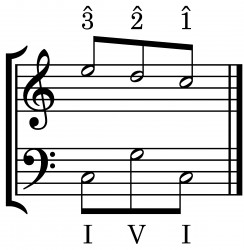
Carl Schachter, Arnold Whittall, and why music analysis matters
9th June 2026
Two recent deaths have robbed the world of music analysis of a pair of its most revered figures. Carl Schachter, who has died at the age of 93, was a pupil of (and subsequently collaborator with) Felix Salzer, himself one of Heinrich Schenker’s foremost students. Schachter continued to enrich and broaden the teaching of Schenkerian analysis, including important work on its application to issues of rhythm (which Schenker, focussing on harmonic and contrapuntal matters, largely bypassed). His influence went well beyond the... read more
read more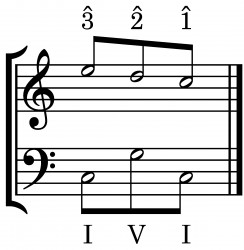
Carl Schachter, Arnold Whittall, and why music analysis matters
9th June 2026
Two recent deaths have robbed the world of music analysis of a pair of its most revered figures. Carl Schachter, who has died at the age of 93, was a pupil of (and subsequently collaborator with) Felix Salzer, himself one of Heinrich Schenker’s foremost students. Schachter continued to enrich and broaden the teaching of Schenkerian analysis, including important work on its application to issues of rhythm (which Schenker, focussing on harmonic and contrapuntal matters, largely bypassed). His influence went well beyond the... read more
read more
Music of the Iberian Peninsula, Part 2: ‘O quam gloriosum’ – The Spanish and Portuguese Golden Age
2nd June 2026
Over the past fortnight, I’ve been bathed in the most glorious, radiant, transformative light. Not the UK’s recent unseasonable heatwave, but the extraordinary vocal polyphony of the Siglo de Oro: the Spanish (and Portuguese) ‘Golden Century’. Extending from the late 15th to the early 17th century, this was a time of remarkable artistic flowering on the Iberian Peninsula, coinciding with the emergence of Spain and Portugal as global imperial powers with extensive colonial territories in the Americas, Africa and Asia. The... read more
read more