 FREE UK SHIPPING OVER £35!
The Spin Doctor Europadisc's Weekly Column
The Travails of the Concert Hall
7th December 2022
7th December 2022
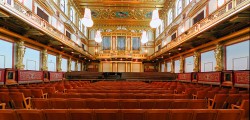 The recent news that Cardiff City Council is to pull the plug on St David’s Hall – Wales’s leading concert hall – is yet another reminder of the precarious times being faced by the performing arts. St David’s Hall is home to the biennial BBC Cardiff Singer of the World competition, as well as to the annual Welsh Proms. But Cardiff City Council has been unable to afford the building’s costly maintenance bills, and now looks set to pass the running of the venue to what Private Eye describes as ‘an aggressively commercial outfit that runs pop events’. In fact, like many British concert halls, St David’s already exists on a mixture of classical and more popular fare. But reconfiguring the space to make amplified, arena-style performances easier will likely prove a tipping point, ruining the acoustic that presently makes it so attractive for classical performers, as well as pricing them out of future bookings.
The problems highlighted by the situation in Cardiff are widespread in the classical world: how to ensure that halls designed with a certain kind of music and audience in mind can have a sustainable future that still caters for that repertoire. When the first of the world’s great concert halls were developed during the 19th century, they rose on a wave of support from newly-emergent middle-class audiences who hankered after something more than domestic music-making around the family piano. The growth of the great Romantic choral societies in Germany, Austria, Britain and elsewhere was another key factor in driving this growth – London’s Royal Albert Hall (1871) being only the most gargantuan example.
More sympathetic to the nuances of Romantic orchestral music were the classic ‘shoe-box’ style halls exemplified by the Grosser (or ‘Goldener’) Saal of Vienna’s Musikverein (1870), Leipzig’s second Gewandhaus (1884), and Amsterdam’s Concertgebouw (1886). Built in the grand imperial styles typical of the late 19th century, these halls were endowed with superb acoustics not merely by their basic rectangular shape but by the wealth of interior detail that provided their reflective surfaces. The advantages of this type of design were applied most famously to Boston’s Symphony Hall (1900), built to a similar ‘shoe-box’ model, which remains one of the US’s most revered and admired concert halls.
The post-war rebuilding of Europe in the mid-20th century brought a new wave of concert halls, not all of them successful. The story of London’s Royal Festival Hall – built for the 1951 Festival of Britain and still (just about) in use as a classical venue – is a chequered one at best. It filled the (metaphorical) gap left by the wartime destruction of the old central London Queen’s Hall (another venue in the shoe-box style), but was beset by acoustic problems from the outset, even though it has hosted an impressive list of performers over the years. When, a decade later, the south London borough of Croydon built its Fairfield Halls, the acoustic lessons of the RFH were taken on board, but Croydon failed to attract classical audiences down the short journey from central London, and today its biggest problem is a bungled renovation and mismanagement on an epic scale.
In Germany, the old Philharmonic Hall in Berlin, likewise a casualty of the war, was replaced in 1963 by Hans Scharoun’s new Berliner Philharmonie, its ‘vineyard’ style terracing of the audience seating, with an ‘in the round’ element, has been enormously influential across the subsequent decades, with halls as far apart as Sydney, Los Angeles, Leipzig and Paris all indebted to elements of its design, while attempting improvements on its often problematic acoustics. Recently completed concert halls such as Paris’s Philharmonie 1 (2015) and Hamburg’s Elbphilharmonie (2017) demonstrate that there is still demand for concert halls of high quality, even though they will inevitably be beset by teething problems, often at eye-watering cost.
Perhaps the trickiest problem, beyond the expertise of any acoustician or marketing adviser, is to match location, demand, culture and construction in perfect harmony. One of the problems with London’s Barbican Hall – and with any future hall brave enough to set itself up within the Square Mile – is that the City of London (as opposed to the West End) effectively shuts down over the weekends and at 5 p.m. on weekdays. There are few places to go, before or after a concert. The widely-praised Royal Concert Hall in Europadisc’s own home city of Nottingham is underused as a classical venue. With no resident professional orchestra, and substantially less demand for classical concerts than for more popular fare, there are only so many reconfigurations of Gershwin, Rachmaninov and Tchaikovsky possible: as with Croydon’s Fairfield, it’s a resource that is sadly underused, though thankfully rather better run.
Concert halls seem to flourish best where there is not only demand as well as expertise in design and location, but also a well-nurtured tradition of classical concert-going, with an education system and cultural consciousness to support it. In the absence of US-style private sponsorship (which often raises as many problems as it answers), the generous state subsidies in France and Germany are among the reasons why halls in Paris, Hamburg and Vienna continue to flourish. The adaptability of concert halls to smaller ensembles and different configurations is also key. Even the revered Musikverein has the smaller Brahms Saal (as well as the more recent Gläserner Saal) for chamber-sized concerts, while Paris’s Cité de la Musique (Philharmonie 2) is adaptable to a range of styles and sizes up to chamber orchestra size.
If classical programmers finally break away (as they seem slowly to be doing, with a helping prod from Covid) from the more monumental aspects of the Romantic age, such adaptability will be crucial for what lies ahead. And if Cardiff goes ahead with its risky commercial dalliance, we must hope that it will still be accommodating to classical needs, tastes and costs...
Suggested reading:
Michael Forsyth, Buildings for Music: The Architect, the Musician, and the Listener from the Seventeenth Century to the Present Day (Cambridge: Cambridge University Press, 1985)
Suggested viewing:
Elbphilharmonie Hamburg: Grand Opening Concert (DVD) 741408
Latest Posts
Music of the Iberian Peninsula, Part 3: More observations on the Golden Age
16th June 2026
Our last visit to the Iberian peninsula, a fortnight ago, was an insanely ambitious, necessarily broad-brush survey of the Spanish and Portuguese Golden Age, covering vocal and instrumental music, the sacred and the secular. This week, we take a more concise and (I hope) focussed look at a few of the sacred vocal masterpieces which exemplify the particular fervour and intensity of this remarkable period of musical history. They reflect the special place the peninsula had as a bulwark against the Reformation that had taken... read more
read more
Music of the Iberian Peninsula, Part 3: More observations on the Golden Age
16th June 2026
Our last visit to the Iberian peninsula, a fortnight ago, was an insanely ambitious, necessarily broad-brush survey of the Spanish and Portuguese Golden Age, covering vocal and instrumental music, the sacred and the secular. This week, we take a more concise and (I hope) focussed look at a few of the sacred vocal masterpieces which exemplify the particular fervour and intensity of this remarkable period of musical history. They reflect the special place the peninsula had as a bulwark against the Reformation that had taken... read more
read more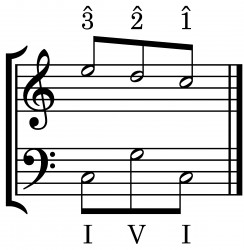
Carl Schachter, Arnold Whittall, and why music analysis matters
9th June 2026
Two recent deaths have robbed the world of music analysis of a pair of its most revered figures. Carl Schachter, who has died at the age of 93, was a pupil of (and subsequently collaborator with) Felix Salzer, himself one of Heinrich Schenker’s foremost students. Schachter continued to enrich and broaden the teaching of Schenkerian analysis, including important work on its application to issues of rhythm (which Schenker, focussing on harmonic and contrapuntal matters, largely bypassed). His influence went well beyond the... read more
read more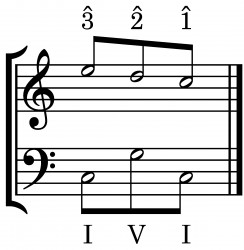
Carl Schachter, Arnold Whittall, and why music analysis matters
9th June 2026
Two recent deaths have robbed the world of music analysis of a pair of its most revered figures. Carl Schachter, who has died at the age of 93, was a pupil of (and subsequently collaborator with) Felix Salzer, himself one of Heinrich Schenker’s foremost students. Schachter continued to enrich and broaden the teaching of Schenkerian analysis, including important work on its application to issues of rhythm (which Schenker, focussing on harmonic and contrapuntal matters, largely bypassed). His influence went well beyond the... read more
read more
Music of the Iberian Peninsula, Part 2: ‘O quam gloriosum’ – The Spanish and Portuguese Golden Age
2nd June 2026
Over the past fortnight, I’ve been bathed in the most glorious, radiant, transformative light. Not the UK’s recent unseasonable heatwave, but the extraordinary vocal polyphony of the Siglo de Oro: the Spanish (and Portuguese) ‘Golden Century’. Extending from the late 15th to the early 17th century, this was a time of remarkable artistic flowering on the Iberian Peninsula, coinciding with the emergence of Spain and Portugal as global imperial powers with extensive colonial territories in the Americas, Africa and Asia. The... read more
read more