 FREE UK SHIPPING OVER £35!
The Spin Doctor Europadisc's Weekly Column
Early Music Round-Up
30th November 2022
30th November 2022
 ‘Early Music’ comes in all sorts of shapes and sizes. In recent months, several new releases have come our way which have impressed us with their quality and the scope of the repertoire covered. Here we summarise just a few recent releases that have stood out from the crowd.
The Glasgow-based Linn Records continues to expand its ventures into rare earlier repertoire. One outstanding example comes from the Marian Consort (familiar from previous releases on the Delphian label), with a fascinating disc of motets by the 16th-century Portuguese composer Vicente Lusitano. A previously neglected figure from the generation after Josquin Desprez, Lusitano emerges as a composer of remarkably wide-ranging expression. As if to emphasise this, Rory McCleery and his singers place at the centre of their album a mesmerisingly beautiful setting of Salve regina, contrasting powerfully with the startlingly chromatic Heu me, Domine.
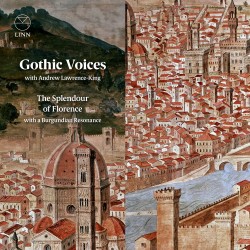
Another outstanding disc from Linn is The Splendour of Florence, a survey by Gothic Voices of 15th-century Franco-Flemish repertoire associated with the Tuscan city, with works by Dufay, Busnois, Ockeghem, Compère and Ghizeghem among others. Ranging from items for solo harp or harp and voice to multi-voiced motets, this is another peach of a disc from this expert ensemble, to set alongside last year’s ‘Echoes of an Old Hall’.
Another neglected figure, this time from the mid-17th century, is the Belgian composer Philippus van Steelant, whose two Requiem settings (one in the old-fashioned stile antico, the other a more ‘modern’ setting with independent instrumental parts) form the backbone of a disc on the Pentatone label. CantoLX and the B’rock Orchestra are the accomplished performers, and the programme is rounded out with Steelant’s Miserere. This is a disc that provides a fascinating window onto sacred music in the Low Countries in the post-Monteverdi early Baroque.
Venturing further south and a little later, Jean-Philippe Rameau has fared particularly well on disc recently. On the Chateau de Versailles label, harpsichordists Loris Barrucand and Clément Geoffroy serve up a sumptuous menu of suites from the operas in transcriptions for two keyboards. For Alpha, Noël Bestion de Camboulas and his Ensemble Les Surprises perform two marvellous opera-ballets: the Le Retour d’Astrée (the prologue to Les Surprises d’Amour), and the pastoral-flavoured Les Sybarites. Just as compelling is another Alpha release, the original 1749 version of Rameau’s tragédie en musique, Zoroastre, with conductor Alexis Kossenko directing a starry cast including Jodie Devos, Véronique Gens, Reinoud Van Mechelen and Tassis Christoyannis. The drama itself may be patchy, but the exceptionally vivid and spectacular score is something else altogether: a must for lovers of French baroque opera.
English composer Matthew Locke paid his own tribute to Rameau’s great predecessor Lully with his own setting of Psyche. Sébastien Daucé and his Ensemble Correspondances have reconstructed a performing version of Locke’s work, a sort of French take on an English take of a French original. Foreshadowing key musico-dramatic aspects of Purcell (and including plentiful ‘echo’ effects), this is a thoroughly worthwhile release from Harmonia Mundi, from a cast including such respected names as Lucile Richardot and Marc Mauillon.
Two other discs of French Baroque repertoire deserve highlighting. La Gamme (1723), perhaps the most celebrated single work by Marin Marais receives a probingly intense recording from the trio Les Timbres, and is almost worth the price for just the concluding Sonnerie de Sainte-Geneviève du Mont de Paris, a hypnotic gem (Chateau de Versailles). Meanwhile, violinist Théotime Langlois de Swarte and harpsichordist Justin Taylor present a dazzling selection of violin sonatas and transcriptions by members of the Francœur family, a marvellous introduction to the works of this important musical clan (Alpha).
Moving to more familiar repertoire, two releases of keyboard music by J.S. Bach, both continuing longer-term series, have grabbed our attention. Mahan Esfahani has set down the Italian Concerto and the Overture in the French Style (the constituent parts of Clavier-Übung II) for Hyperion, coupling them with two Capriccios and the four Duets from Clavier-Übung III, all in typically forthright, intelligent and insightful performances. And Benjamin Alard continues his hugely ambitious Harmonia Mundi project to record Bach’s complete keyboard music (including all the organ works!) with a two-disc set of the Orgelbüchlein on an idiomatic modern French instrument, including sung performances of each chorale as the work moves through the seasons of the church year.
Handel has had a particularly good year, and the outstanding young mezzo-soprano Lea Desandre has teamed up with countertenor Iestyn Davies and Thomas Dunford’s Jupiter ensemble for ‘Eternal Heaven’, an anthology of arias and duets from the composer’s English-texted oratorios. Among the many riches of this album is quite possibly the most spectacular performance you’ll ever hear of ‘No, no, I’ll take no less’ from Semele: vocal fireworks at their very best.
Finally, we’d like to stretch the definition of ‘Early Music’ a little further to encompass Luigi Cherubini’s 1813 operatic hit – long since fallen into neglect – Les Abencérages, a key stage in the early development of French grand opera. Its mixture of political intrigue and love story has parallels in many successor works, and the extensive choruses likewise paved the way for the more elaborate ensembles of the 19th century. A new recording on period instruments from György Vashegyi with his Purcell Choir and Orfeo Orchestra is the opera’s first since a 1975 radio recording under Peter Maag, and all the more attractive for its luxury presentation from Palazzetto Bru Zane.
The Recordings:
Lusitano - Motets CKD694
The Splendour of Florence CKD700
Steelant - Antwerp Requiem PTC5187006
Rameau - Fêtes Persanes (Barrucand, Geoffroy) CVS079
Rameau chez la Pompadour ALPHA876
Rameau - Zoroastre (1749) ALPHA891
Marais - La Gamme CVS074
Les Frères Francœur ALPHA895
JS Bach - Italian Concerto, French Overture (Esfahani) CDA68336
JS Bach - Orgelbüchlein (Alard) HMM90249899
Handel - Eternal Heaven 5419719677
Cherubini - Les Abencérages BZ1050
Latest Posts
Music of the Iberian Peninsula, Part 3: More observations on the Golden Age
16th June 2026
Our last visit to the Iberian peninsula, a fortnight ago, was an insanely ambitious, necessarily broad-brush survey of the Spanish and Portuguese Golden Age, covering vocal and instrumental music, the sacred and the secular. This week, we take a more concise and (I hope) focussed look at a few of the sacred vocal masterpieces which exemplify the particular fervour and intensity of this remarkable period of musical history. They reflect the special place the peninsula had as a bulwark against the Reformation that had taken... read more
read more
Music of the Iberian Peninsula, Part 3: More observations on the Golden Age
16th June 2026
Our last visit to the Iberian peninsula, a fortnight ago, was an insanely ambitious, necessarily broad-brush survey of the Spanish and Portuguese Golden Age, covering vocal and instrumental music, the sacred and the secular. This week, we take a more concise and (I hope) focussed look at a few of the sacred vocal masterpieces which exemplify the particular fervour and intensity of this remarkable period of musical history. They reflect the special place the peninsula had as a bulwark against the Reformation that had taken... read more
read more
Carl Schachter, Arnold Whittall, and why music analysis matters
9th June 2026
Two recent deaths have robbed the world of music analysis of a pair of its most revered figures. Carl Schachter, who has died at the age of 93, was a pupil of (and subsequently collaborator with) Felix Salzer, himself one of Heinrich Schenker’s foremost students. Schachter continued to enrich and broaden the teaching of Schenkerian analysis, including important work on its application to issues of rhythm (which Schenker, focussing on harmonic and contrapuntal matters, largely bypassed). His influence went well beyond the... read more
read more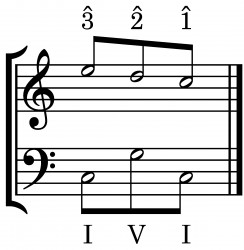
Carl Schachter, Arnold Whittall, and why music analysis matters
9th June 2026
Two recent deaths have robbed the world of music analysis of a pair of its most revered figures. Carl Schachter, who has died at the age of 93, was a pupil of (and subsequently collaborator with) Felix Salzer, himself one of Heinrich Schenker’s foremost students. Schachter continued to enrich and broaden the teaching of Schenkerian analysis, including important work on its application to issues of rhythm (which Schenker, focussing on harmonic and contrapuntal matters, largely bypassed). His influence went well beyond the... read more
read more
Music of the Iberian Peninsula, Part 2: ‘O quam gloriosum’ – The Spanish and Portuguese Golden Age
2nd June 2026
Over the past fortnight, I’ve been bathed in the most glorious, radiant, transformative light. Not the UK’s recent unseasonable heatwave, but the extraordinary vocal polyphony of the Siglo de Oro: the Spanish (and Portuguese) ‘Golden Century’. Extending from the late 15th to the early 17th century, this was a time of remarkable artistic flowering on the Iberian Peninsula, coinciding with the emergence of Spain and Portugal as global imperial powers with extensive colonial territories in the Americas, Africa and Asia. The... read more
read more