 FREE UK SHIPPING OVER £35!
The Spin Doctor Europadisc's Weekly Column
Recent Brahms Symphony Sets
23rd November 2022
23rd November 2022
 Conductor A is about to conduct a performance of Brahms’s First Symphony. Meeting him before the performance, Conductor B wishes him well, adding: ‘I hope your Brahms is suitably bearded!’ To which Conductor A responds: ‘But Brahms didn’t have a beard when he wrote the First Symphony!’
The spectre of the ‘bearded Brahms’ – autumnal, wistful, elusive, a shade lugubrious – hangs over the common perception of all his music, much as the images of ‘old man’ Bach, ‘Papa’ Haydn and the ‘tormented genius’ Beethoven have skewed views of their output. Nowhere is this more apparent than in performances of the symphonies, which – particularly over the last century – have tended to become more and more expansive and thick-textured. It took exponents of the period performance approach – Roger Norrington, John Eliot Gardiner and (most successfully) Charles Mackerras – to begin weaning audiences off such high-calorie interpretations to something closer to what Brahms himself might have recognised and even approved. A veritable bevy of Brahms symphony sets released in recent months (with recording dates between 2003 and 2021) vividly illustrate the range of interpretative options now available to listeners. None are recorded on period instruments, but all come from conductors of vast experience, and each in its own way – from the opulently traditional to the daringly revisionist – offers plentiful food for thought.
For those who favour unashamedly old-school tonal bloom in Brahms, the nonagenarian Herbert Blomstedt at the helm of the Leipzig Gewanhausorchester is enormously attractive. Splendidly recorded by Pentatone in the warm acoustics of the city’s Gewandhaus in 2019 (Symphonies 1 and 2) and 2021, this has more expansive speeds than most of the other sets under consideration here, but that extra spaciousness is never wasted: every note is relished without being cosseted. There are many glorious moments: the spine-tingling emergence of the famous horn call in the finale of the First Symphony being an obvious example, but also the splendidly swinging horn theme in the equivalent movement of the Third, and that same work’s magical close. And there are surprises, too, like the end of the Second Symphony: taken at relatively steady speed, the excitement is nevertheless ramped up in the final tutti by the carefully observed rising scale that emerges from the depths of the cellos and basses via violas and second violins to first violins for the final fortissimo. It may lack the edge-of-seat adrenalin of such thrilling old accounts as Eugen Jochum (Berlin Philharmonic, 1951) and Bruno Walter (New York Philharmonic, 1953), but no other account we’ve heard is quite like it. Such is the wisdom of old age! As an example of the tonal glories of the Gewandhausorchester, and of deep musical insight, this cycle is superior to the widely-acclaimed Chailly cycle with the same orchestra on Decca, and with a remarkable consistency of vision across the four works.
The late Bernard Haitink’s cycle with the London Symphony Orchestra (recorded live at the Barbican Hall in 2003 and 2004 for the LSO Live label) is similar in general approach, although he eschews the first movement exposition repeats in the first two symphonies (a practice endorsed by Steinbach). Alone among the five conductors under review here, Haitink also has the second violins in what until recently was the conventional layout of recent years, i.e. next to the firsts, rather than placed antiphonally to the conductor’s right according to older practice. It’s a shame, as the antiphonal layout benefits so many passages in these works (the slow introduction to the First’s finale being a famous example). In other respects, however, there is much to enjoy in Haitink’s unhurried performances, which in each case build from somewhat diffuse openings to conclusions of immense power – an obvious benefit of live recording. The LSO might lack the sheer tonal richness of the Gewandhausorchester, but nobody who admires Haitink’s famously unfussy way with 19th century repertoire should miss these performances.
Occupying a subtly different approach – still with traditionally broad tempi but with a dash of paprika in the mix – Iván Fischer and his Budapest Festival Orchestra (recorded between 2009 and 2020 for Channel Classics) offer vividly characterful performances by a symphony orchestra that has a particular attachment to the Hungarian elements in Brahms’s music. The cycle is most successful in the middle two symphonies (notwithstanding a rather underwhelming conclusion to the Second), which benefit from a greater sonic and interpretative focus than the outer works. The sound of the Budapest orchestra is leaner than that of their Leipzig rivals, and the recorded sound likewise has a degree more transparency without sacrificing bloom.
Iván Fischer’s cycle comes just a couple of months after that of his older brother Ádám with the Danish Chamber Orchestra on Naxos. Their approaches could scarcely be more different. As with their recent acclaimed traversal of the Beethoven symphonies, Ádám Fischer and his Danish colleagues offer an intriguingly iconoclastic approach to these familiar works. The smaller size of the forces is emphasised by the strings’ almost complete lack of vibrato, which allows the woodwind and brass through the textures with extraordinary clarity. There is, however, a cost to be paid in terms of warmth, something which is further emphasised by Fischer’s tendency to highlight detail at the expense of the overall trajectory. There’s a thin dividing line between paring the phrasing (a practice which is idiomatic in Brahms) and making it sound clipped, and often these intriguingly provocative performances cross it. There’s also a focus on highlighting detail (by means of articulation, dynamics or tempo interventions) which, while on first listening often revelatory, can grate on repeated listening. (An example: the exaggerated hiatus after the violas’ descending three-note motif four bars before figures E and O in the opening movement of the First Symphony. Mackerras and the Scottish Chamber Orchestra on their currently unavailable Telarc cycle managed this with infinitely more subtlety and durability.) As with brother Iván, Ádám is most successful in the middle two symphonies, even given their vastly different fundamental approaches.
However, for a more satisfying ‘middle way’, the palm must go to Thomas Dausgaard and the Swedish Chamber Orchestra on BIS, recorded between 2011 and 2018. These performances, with a chamber orchestra that sounds larger than the Danish group on Naxos and is not averse to string vibrato, have just as much vitality without pushing quite so relentlessly. Dausgaard is nevertheless no slouch when it comes to momentum, and although he is less inclined to make sudden changes of speed, his deployment of rubato is generally more subtle. The famously tricky Third Symphony has just the right degree of élan, the first movement sounding sunnier and perkier than is usually the case, even if its final movement doesn’t have quite the depth of Blomstedt. There’s a real sense of elation at the close of the Second, the First is vigorously ‘unbearded’ without the OTT timpani thwacking of Ádám Fischer’s account, and the Fourth marries vitality with a nobility rooted in Brahms’s reverence for tradition. In the Fourth Symphony’s Andante moderato second movement, Dausgaard (like Ádám Fischer and Mackerras) follows Steinbach’s suggestion that the divisi viola passage at letter D be played by just two solo violas; it’s a magical touch. BIS’s recordings are a model of clarity, combining warmth and detail, and – as with the very different Blomstedt performances – there’s a keen sense of orchestral colour as well as consistency of approach.
A brief word on couplings: Ádám Fischer’s three-disc Naxos set offers just the four symphonies, while Blomstedt adds arresting performances of the Tragic and Academic Festival Overtures. Haitink has the Tragic Overture and immensely rewarding accounts of the Double Concerto (with soloists Gordan Nikolitch and Tim Hugh) and the charming Serenade no.2. Spread across four discs, Iván Fischer has not only the two overtures and the Second Serenade but the Variations on a Theme by Haydn and four of the Hungarian Dances, with deliciously idiomatic folk inflections. Most generously of all, Dausgaard gives us the two overtures, the Haydn Variations, the complete Hungarian Dances (mostly in dazzlingly imaginative arrangements by Dausgaard himself), the Liebeslieder Waltzes in Brahms’s own orchestrations, the Alto Rhapsody (with Anna Larson the excellent soloist), and Brahms’s orchestrations of six Schubert songs.
If it’s variety you want, Dausgaard’s BIS set represents stunning value as well as constantly engaging stylishness, while those who prefer good, honest, old-school Brahms conducting can confidently invest in Blomstedt. But all these sets will be of interest to the committed Brahms collector, bearded or not!
The Recordings:
Gewandhausorchester / Blomstedt: PTC5186978
London Symphony Orchestra / Haitink: LSO0570
Budapest Festival Orchestra / I Fischer: CCSBOX7322
Danish Chamber Orchestra / A Fischer: 857446567
Swedish Chamber Orchestra / Dausgaard: BIS2556
Latest Posts
Music of the Iberian Peninsula, Part 3: More observations on the Golden Age
16th June 2026
Our last visit to the Iberian peninsula, a fortnight ago, was an insanely ambitious, necessarily broad-brush survey of the Spanish and Portuguese Golden Age, covering vocal and instrumental music, the sacred and the secular. This week, we take a more concise and (I hope) focussed look at a few of the sacred vocal masterpieces which exemplify the particular fervour and intensity of this remarkable period of musical history. They reflect the special place the peninsula had as a bulwark against the Reformation that had taken... read more
read more
Music of the Iberian Peninsula, Part 3: More observations on the Golden Age
16th June 2026
Our last visit to the Iberian peninsula, a fortnight ago, was an insanely ambitious, necessarily broad-brush survey of the Spanish and Portuguese Golden Age, covering vocal and instrumental music, the sacred and the secular. This week, we take a more concise and (I hope) focussed look at a few of the sacred vocal masterpieces which exemplify the particular fervour and intensity of this remarkable period of musical history. They reflect the special place the peninsula had as a bulwark against the Reformation that had taken... read more
read more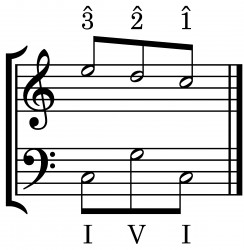
Carl Schachter, Arnold Whittall, and why music analysis matters
9th June 2026
Two recent deaths have robbed the world of music analysis of a pair of its most revered figures. Carl Schachter, who has died at the age of 93, was a pupil of (and subsequently collaborator with) Felix Salzer, himself one of Heinrich Schenker’s foremost students. Schachter continued to enrich and broaden the teaching of Schenkerian analysis, including important work on its application to issues of rhythm (which Schenker, focussing on harmonic and contrapuntal matters, largely bypassed). His influence went well beyond the... read more
read more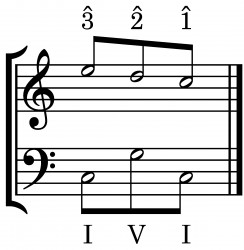
Carl Schachter, Arnold Whittall, and why music analysis matters
9th June 2026
Two recent deaths have robbed the world of music analysis of a pair of its most revered figures. Carl Schachter, who has died at the age of 93, was a pupil of (and subsequently collaborator with) Felix Salzer, himself one of Heinrich Schenker’s foremost students. Schachter continued to enrich and broaden the teaching of Schenkerian analysis, including important work on its application to issues of rhythm (which Schenker, focussing on harmonic and contrapuntal matters, largely bypassed). His influence went well beyond the... read more
read more
Music of the Iberian Peninsula, Part 2: ‘O quam gloriosum’ – The Spanish and Portuguese Golden Age
2nd June 2026
Over the past fortnight, I’ve been bathed in the most glorious, radiant, transformative light. Not the UK’s recent unseasonable heatwave, but the extraordinary vocal polyphony of the Siglo de Oro: the Spanish (and Portuguese) ‘Golden Century’. Extending from the late 15th to the early 17th century, this was a time of remarkable artistic flowering on the Iberian Peninsula, coinciding with the emergence of Spain and Portugal as global imperial powers with extensive colonial territories in the Americas, Africa and Asia. The... read more
read more