 FREE UK SHIPPING OVER £35!
The Spin Doctor Europadisc's Weekly Column
A few thoughts on CD packaging
16th November 2022
16th November 2022
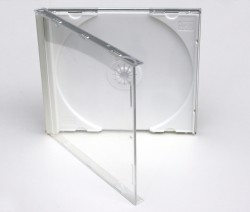 If you’re reading this, it’s highly likely that you buy CDs and/or DVDs on an occasional or regular basis. Maybe the odd one or two, or perhaps many, adding to a small or large collection. And you’ll no doubt have noticed how much sheer space they take up. When CDs originally started replacing LPs in the mid-1980s, many collectors rued the small size of the new medium, the often tiny print of the booklet notes, the shrunken artwork on the cover. Yes, they were more durable than LPs, less prone to scratching and warping (some even rashly pronounced they were indestructible), and delivered generally clearer sound – although this last claim has been hotly disputed by vinyl and analogue devotees ever since.
Yet while the discs themselves were smaller than vinyl LPs, the packaging – the now ubiquitous plastic jewel cases – was cumbersome, and far from indestructible. Fiddly to open (especially if shrink-wrapped in polythene), they were often just as fiddly from which to extract the enclosed booklet, not to mention the disc itself, wedged fast on the fragile central spindle. Multiple-discs were even more cumbersome, with even more plastic – hinges, spindles, inner trays – to risk breaking. And then there were the ‘slimline’ double cases, posing an additional challenge: how to get at the second disc (on which side was the inner tray hinged?).
And all the time, an ever-increasing amount of plastic! Compared with the discs themselves, the housing took up the most room. If you ever had one of the old-style CD storage towers – suitable only for single or slimline double cases, and often to be seen in high street charity shops – you'll know how much space was needed to store just a few dozen discs. And if you had multi-disc sets (which could often be extraordinarily chunky, especially if they ran to more than four discs), you had to find somewhere else to store them: a bookshelf, mantlepiece or another flat surface.
It took the recording industry some time to address the practical and environmental issues raised by such expansive and wasteful packaging. While environmentally conscious younger consumers have often transferred to high-quality streaming or downloads – which can be played through sound systems linked to a computer or other hard drive – many still prefer to have the physical product, however much space may be at a premium. Though often hard to read, collectors still like a booklet with accompanying notes and (where relevant) a libretto with translation. But booklets cost money: adding just four pages to a standard CD booklet can incur extra costs, and it’s little wonder that many companies have, at least for non-premium releases, dispensed with libretti and other sung texts, often in favour of ‘online’ libretti which can be accessed only by those with a computer. (Our tip: look out for second-hand copies of the old ENO/Royal Opera Guides in charity shops: all include libretto and translation in legible print!)
In recent years, companies have begun to address both the spatial and environmental impact of their products. Large and even some smaller box sets now typically have individual discs in small cardboard sleeves or paper wallets. The digipack – hinged cardboard packaging incorporating embedded plastic trays for the discs – is far more common, and often more attractive, with more room for outer artwork. Still, there are downsides to this: if the plastic tray gets damaged (spindles in particular are notorious breakable), the only option is to replace the whole set, or simply to live with it. And, frustratingly, some companies attach the accompanying booklet to the digipack itself, making larger booklets in multi-disc sets particularly irksome to read.
Other record labels have tried to omit plastic altogether. This started with certain 'niche' labels: HatHut, whose hat[now]ART imprint specialises in contemporary music, is a particularly good example of a 'minimalist' approach to packaging. But other, more mainstream classical labels have now joined this move. Swedish-based BIS records recently moved away from jewel cases to slender cardboard double-sleeves, with a paper inner sleeve for the disc on one 'wing', and the booklet tucked into the opposite wing. Some collectors weren't happy with this downsizing, but all the packaging is eco-friendly and recyclable. Whatever the objections of a minority, it's difficult not to applaud the ethics behind such a move, and it certainly saves precious space! To begin with, the new discs were sealed with just a small sticky paper seal, but the susceptibility for particles to enter the product when stored for long periods seems to have led to a compromise: new discs are now shrink-wrapped in polythene.
At the more luxurious end of the market, sets from labels like Alia Vox and Bru Zane come in book-like presentation, with extensive articles and texts. Bru Zane’s sets of French operas and other vocal music are particularly fine, packaged as numbered, limited edition books on high-quality paper, with exceptionally sharp two-colour printing, and two ribbon markers: one for the articles, the other to keep one’s place in the libretto. No claims for the sustainability of the packaging are made, but with the discs slipping into neat wallets on the inner front and back covers, again there’s no plastic in sight (except for the shrink-wrapping). Such productions are pricey but worth it, particularly for the serious opera aficionado, costing much less than a good seat at the opera.
With the imminent re-release of Solti’s legendary recording of Wagner’s Ring cycle in an expensive new remastering, Decca have really pushed the boat out, with (even for the SACD release) luxury LP-sized packaging including lavish booklets containing technical information and many original sessions photographs. At around £70 for the SACD of Das Rheingold alone (the corresponding vinyl LPs are dearer still), for many the price will be prohibitive, yet some dedicated collectors have already begun the investment. Maybe, for a project dubbed by Gramophone ‘the greatest recording of all time’, this ultimate in presentational luxury is appropriate...
Latest Posts
Music of the Iberian Peninsula, Part 3: More observations on the Golden Age
16th June 2026
Our last visit to the Iberian peninsula, a fortnight ago, was an insanely ambitious, necessarily broad-brush survey of the Spanish and Portuguese Golden Age, covering vocal and instrumental music, the sacred and the secular. This week, we take a more concise and (I hope) focussed look at a few of the sacred vocal masterpieces which exemplify the particular fervour and intensity of this remarkable period of musical history. They reflect the special place the peninsula had as a bulwark against the Reformation that had taken... read more
read more
Music of the Iberian Peninsula, Part 3: More observations on the Golden Age
16th June 2026
Our last visit to the Iberian peninsula, a fortnight ago, was an insanely ambitious, necessarily broad-brush survey of the Spanish and Portuguese Golden Age, covering vocal and instrumental music, the sacred and the secular. This week, we take a more concise and (I hope) focussed look at a few of the sacred vocal masterpieces which exemplify the particular fervour and intensity of this remarkable period of musical history. They reflect the special place the peninsula had as a bulwark against the Reformation that had taken... read more
read more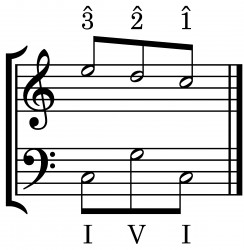
Carl Schachter, Arnold Whittall, and why music analysis matters
9th June 2026
Two recent deaths have robbed the world of music analysis of a pair of its most revered figures. Carl Schachter, who has died at the age of 93, was a pupil of (and subsequently collaborator with) Felix Salzer, himself one of Heinrich Schenker’s foremost students. Schachter continued to enrich and broaden the teaching of Schenkerian analysis, including important work on its application to issues of rhythm (which Schenker, focussing on harmonic and contrapuntal matters, largely bypassed). His influence went well beyond the... read more
read more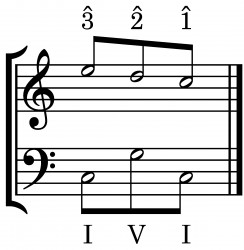
Carl Schachter, Arnold Whittall, and why music analysis matters
9th June 2026
Two recent deaths have robbed the world of music analysis of a pair of its most revered figures. Carl Schachter, who has died at the age of 93, was a pupil of (and subsequently collaborator with) Felix Salzer, himself one of Heinrich Schenker’s foremost students. Schachter continued to enrich and broaden the teaching of Schenkerian analysis, including important work on its application to issues of rhythm (which Schenker, focussing on harmonic and contrapuntal matters, largely bypassed). His influence went well beyond the... read more
read more
Music of the Iberian Peninsula, Part 2: ‘O quam gloriosum’ – The Spanish and Portuguese Golden Age
2nd June 2026
Over the past fortnight, I’ve been bathed in the most glorious, radiant, transformative light. Not the UK’s recent unseasonable heatwave, but the extraordinary vocal polyphony of the Siglo de Oro: the Spanish (and Portuguese) ‘Golden Century’. Extending from the late 15th to the early 17th century, this was a time of remarkable artistic flowering on the Iberian Peninsula, coinciding with the emergence of Spain and Portugal as global imperial powers with extensive colonial territories in the Americas, Africa and Asia. The... read more
read more