 FREE UK SHIPPING OVER £35!
The Spin Doctor Europadisc's Weekly Column
Assessing the impact of Arts Council England's cuts
9th November 2022
9th November 2022
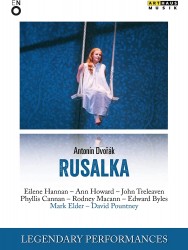 Following the announcement last Friday of Arts Council England’s new funding agreement, the arts world is currently taking stock of cuts and in some cases the complete withdrawal state funding to several high profile organisations. The general thrust of the new plans has been to move funding away from London to the regions, while bringing cuts to the overall budget during a time when the UK government is trying to find across-the-board reductions in public spending. (Arts Council England is notionally an independent body, but although it is a registered charity, its government funding comes via the Department for Digital, Culture, Media and Sport.)
The chief casualties in the musical world are by now well known: English National Opera has had its funding withdrawn completely, with a £17m relocation grant dependent on it moving its headquarters out of London (most likely to Manchester). While it will retain ownership of its current home, the London Coliseum, it will be expected to use the theatre to maximise profits – presumably by hosting yet more West End musicals rather than its own more classically-slanted productions of opera and operetta. Quite how this will pan out is currently anyone’s guess, although the signs are not encouraging. A wholesale clear-out of the current board (which got the organisation into its present sorry state) has been suggested in some quarters, but the real casualties are likely to be the hundreds of backstage and musical staff (chorus and orchestra) who have over the years given the organisation so much of its ‘company’ feel.
The other two major targets for withdrawal of ACE funding have been the London Sinfonietta – since the late 1960s a mainstay of the capital’s contemporary music scene – and the Cambridge-based Britten Sinfonia, which over the past 30 years has carved out an impressive niche for itself primarily with audiences in the East of England, championing new music as well as rare 20th-century repertoire. Quite how the complete withdrawal of funds from the Britten Sinfonia squares with the new regional brief is hard to see. It comes just 18 months after the orchestra completed its adventurous Beethoven symphony cycle (imaginatively coupled with works by Gerald Barry) under Thomas Adès. More recently, it has featured on both Vaughan Williams’s Pan’s Anniversary under William Vann, and accompanying acclaimed trumpeter Alison Balsom on her album Quiet City.
The London Sinfonietta’s back catalogue is even more extensive, ranging from Walton’s Façade conducted by the composer himself to premiere recordings of the ‘Manchester Three’ (Maxwell Davies, Birtwistle and Goehr), Oliver Knussen conducting his own music (including the Maurice Sendak collaboration Where the Wild Things Are), and a host of other contemporary composers from Adès to Venables. Although in recent years the Sinfonietta has faced increasing competition in the contemporary sphere, it would be sad indeed if this long-established and pioneering ensemble should founder because of short-sighted cutbacks to state support.
But the biggest blow, for many, will still be the soon-to-be-exiled ENO. Under the stewardship of such visionaries as the Earl of Harewood, Charles Mackerras, Peter Jonas, Mark Elder and David Pountney, it occupied a unique place in British musical life, bringing opera in the vernacular to audiences at affordable prices in often daring (sometimes controversial) productions. Generations of British singers have distinguished its productions, first at Sadler’s Wells and then at the Coliseum, including Janet Baker, Josephine Barstow, Rita Hunter, Valerie Masterson, Sarah Walker, Charles Craig, Alberto Remedios, Norman Bailey and John Rawnsley. Productions of Janáček’s Makropulos Case under Mackerras, Dvořák’s Rusalka directed as a post-Freudian fairy-tale by Pountney, and Verdi’s Rigoletto brilliantly updated by Jonathan Miller will live long in the memory, as will the now-legendary Ring cycle under veteran Wagnerian Reginald Goodall. Even its classic G&S productions were presented with a combination of wit and imagination that few other companies have matched. Happily, thanks to the support of the late Peter Moores, many of these productions have been preserved on CD by Chandos Records, while a precious few (including Gloriana, Rusalka and The Rape of Lucretia) are available on DVD. Still, the number of unreleased performances preserved on broadcast performances must be enormous, and many will be crying out for reissue.
If it is true that the administrative and artistic side of ENO has faltered (quite seriously in many respects), the musical side has remained strong, under such music directors as Paul Daniel, Edward Gardner and now Martyn Brabbins. Even if Manchester and the regions gain from ENO’s move outside London, the capital will lose: when the Royal Opera House started performing operas only in their original languages, with a roster of guest soloists, it was ENO that kept the flag flying for opera in the vernacular. Listening to some of their archive performances, the pronunciation and projection is such that no libretto is necessary. In recent years, those arts have suffered, with an increasing reliance on surtitles. ENO’s reputation as a breeding ground for English-speaking singers is no longer what it was. Most seriously, it has lost a sense of vision, purpose and being a true company. This should have been the time to ditch career arts administrators and bean-counters in favour of someone with real passion and ambition for opera: where are the Harewoods and Jonases of today? People with a combination of imagination and clout? Even in the current social and political climate, surely such figures (remembering also the late Michael Vyner of the London Sinfonietta) can’t have vanished forever? If ENO and other organisations are to prosper at a time when instant success and gratification are judged superior to the hard graft of making a performing arts organisation work, they are needed now more than ever.
A few indispensable recordings:
Dvořák – Rusalka (ENO / Elder, dir. Pountney) 109149 (DVD) / 109150 (Blu-ray)
Verdi - La traviata (Masterson, ENO / Mackerras) CHAN30232
Wagner - The Ring Cycle (ENO / Goodall) CHAN306516
Birtwistle - Punch and Judy (London Sinfonietta / Atherton) NMCD138
Knussen - Where the Wild Things Are (London Sinfonietta / Knussen) DKPCD9044
Beethoven - Symphonies 4-6; Barry - Viola Concerto, etc. (Britten Sinfonia / Adès) SIGCD639
MacMillan - Stabat mater (The Sixteen, Britten Sinfonia / Christophers) COR16150
Latest Posts
Music of the Iberian Peninsula, Part 3: More observations on the Golden Age
16th June 2026
Our last visit to the Iberian peninsula, a fortnight ago, was an insanely ambitious, necessarily broad-brush survey of the Spanish and Portuguese Golden Age, covering vocal and instrumental music, the sacred and the secular. This week, we take a more concise and (I hope) focussed look at a few of the sacred vocal masterpieces which exemplify the particular fervour and intensity of this remarkable period of musical history. They reflect the special place the peninsula had as a bulwark against the Reformation that had taken... read more
read more
Music of the Iberian Peninsula, Part 3: More observations on the Golden Age
16th June 2026
Our last visit to the Iberian peninsula, a fortnight ago, was an insanely ambitious, necessarily broad-brush survey of the Spanish and Portuguese Golden Age, covering vocal and instrumental music, the sacred and the secular. This week, we take a more concise and (I hope) focussed look at a few of the sacred vocal masterpieces which exemplify the particular fervour and intensity of this remarkable period of musical history. They reflect the special place the peninsula had as a bulwark against the Reformation that had taken... read more
read more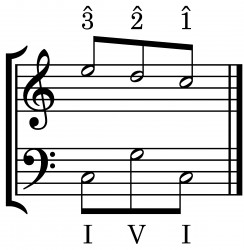
Carl Schachter, Arnold Whittall, and why music analysis matters
9th June 2026
Two recent deaths have robbed the world of music analysis of a pair of its most revered figures. Carl Schachter, who has died at the age of 93, was a pupil of (and subsequently collaborator with) Felix Salzer, himself one of Heinrich Schenker’s foremost students. Schachter continued to enrich and broaden the teaching of Schenkerian analysis, including important work on its application to issues of rhythm (which Schenker, focussing on harmonic and contrapuntal matters, largely bypassed). His influence went well beyond the... read more
read more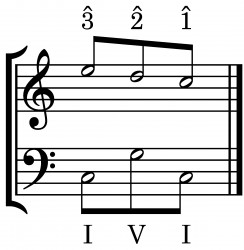
Carl Schachter, Arnold Whittall, and why music analysis matters
9th June 2026
Two recent deaths have robbed the world of music analysis of a pair of its most revered figures. Carl Schachter, who has died at the age of 93, was a pupil of (and subsequently collaborator with) Felix Salzer, himself one of Heinrich Schenker’s foremost students. Schachter continued to enrich and broaden the teaching of Schenkerian analysis, including important work on its application to issues of rhythm (which Schenker, focussing on harmonic and contrapuntal matters, largely bypassed). His influence went well beyond the... read more
read more
Music of the Iberian Peninsula, Part 2: ‘O quam gloriosum’ – The Spanish and Portuguese Golden Age
2nd June 2026
Over the past fortnight, I’ve been bathed in the most glorious, radiant, transformative light. Not the UK’s recent unseasonable heatwave, but the extraordinary vocal polyphony of the Siglo de Oro: the Spanish (and Portuguese) ‘Golden Century’. Extending from the late 15th to the early 17th century, this was a time of remarkable artistic flowering on the Iberian Peninsula, coinciding with the emergence of Spain and Portugal as global imperial powers with extensive colonial territories in the Americas, Africa and Asia. The... read more
read more