FREE UK SHIPPING OVER £35!

The Spin Doctor Europadisc's Weekly Column

Cost of Living, Quality of Life and the Arts

  2nd November 2022

2nd November 2022
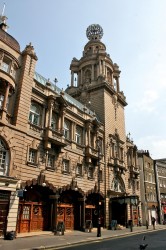

Following the stressful years of the Covid lockdowns, the current cost of living crisis has put extra pressure on almost all sectors of society, both domestically and globally. And it has added to the ongoing woes of the arts sector. Musicians and those who support them are not immune from these issues. With many people now worried about such basics as how to power their homes or afford basic foodstuffs (sometimes having to choose between the two), the arts might be seen as a luxury few can afford. Yet, as we've remarked on previous occasions, it's precisely at such times that music and other performing arts are for many people even more necessary and vital than ever.

In these situations, governments faced with stark choices over spending cuts often regard the arts and culture as soft targets. But for a sector still struggling to reestablish itself after the dark years of Covid, further cuts may sound the death knell. In Britain, which enjoys neither a US-style tradition of private and corporate sponsorship nor European levels of public subsidy and commitment, performing organisations may well feel stuck between a rock and a hard place. And at a time when only big energy and fuel companies seem to have the levels of profits to afford generous sponsorship, ethical issues also need to be considered. One doesn't need to have glued oneself to a famous painting to appreciate that funding sources can present organisations with moral problems.

For classical musicians, these problems are compounded by ever dwindling audiences. Listener figures for the UK's two main classical radio stations are down, as were audiences at this summer's BBC Proms. The eternal debate over exactly how classical music should address these cultural shifts rages on: music needs to renew itself to attract new audiences, but without descending into gimmickry or appealing to the lowest common denominator. Waiting until classical music is such a minority interest that it can attract preservation grants risks destroying the most valuable parts of tradition: the education and training that young musicians receive, and that experienced performers pass from one generation to the next. This, much more than any particular corner of the repertoire, is the tradition that needs to be maintained and nurtured above all else.

Cultivating appeal to new audiences is an endlessly debatable issue. No amount of gimmickry or box-ticking (diversity, outreach, etc.) will ever match the visceral pull of high-quality performance (whatever the repertoire) communicated with vividness, conviction and passion. But this in itself cannot be used as justification to defend stale repertoire, nor entrenched biases and prejudices. At the same time, music needs to attract - and provide opportunities for - new generations of performers. Whether London can really sustain two large professional opera companies and five symphony orchestras is once again being urgently debated, as is the fate of the nationwide BBC orchestras as a whole. Even if one admits the addition of Broadway-style musicals, film soundtracks and gaming music to the classical canon (much as popular ballads and potpourris were in the Victorian and Edwardian eras), the justification for maintaining such costly organisations needs to be very carefully argued.

The prospect of London's 'second' opera company failing is currently a real one. Such organisations take many years to build up (in this case with roots in the old Sadler's Wells Opera), but can be destroyed in a matter of months. Before taking such drastic action, every possible avenue needs to be explored, for the legacy of decades, and of generations of artists, is at risk. Among questions to be considered is the issue of venues. During and after the Second World War, workplace concerts were an important sphere of activity for many orchestras. With the decline of manufacturing industry in many western countries, what might the equivalent be? Concerts at transport hubs and in car parks, in shopping centres, at hospitals? These things already happen, but perhaps they need to be reimagined on a larger scale, combining popular repertoire, more demanding music and new works. (But please, avoid yet more Vivaldi or Mozart by candlelight!)

It ought to be possible to come up with imaginative solutions to the current crisis with a combination of imaginative programming and innovative use of venues. If staging a Ring cycle or a French grand opera is out of the question, a season of chamber or one-act operas tailored to suit smaller regional venues ought to be possible, utilising a large team of artists in relay across a week. The need for such a rethink is urgent, for even if the music of centuries past is not itself at risk, the living tradition which sustains it certainly is. To present the choice as one between cost of living and quality of life, between essentials on the one hand and luxuries on the other, is a false dichotomy. For those with the will and vision, it ought to be possible to secure both.


Latest Posts


Music of the Iberian Peninsula, Part 3: More observations on the Golden Age

16th June 2026

Our last visit to the Iberian peninsula, a fortnight ago, was an insanely ambitious, necessarily broad-brush survey of the Spanish and Portuguese Golden Age, covering vocal and instrumental music, the sacred and the secular. This week, we take a more concise and (I hope) focussed look at a few of the sacred vocal masterpieces which exemplify the particular fervour and intensity of this remarkable period of musical history. They reflect the special place the peninsula had as a bulwark against the Reformation that had taken... read more

read more
Music of the Iberian Peninsula, Part 3: More observations on the Golden Age

16th June 2026

Our last visit to the Iberian peninsula, a fortnight ago, was an insanely ambitious, necessarily broad-brush survey of the Spanish and Portuguese Golden Age, covering vocal and instrumental music, the sacred and the secular. This week, we take a more concise and (I hope) focussed look at a few of the sacred vocal masterpieces which exemplify the particular fervour and intensity of this remarkable period of musical history. They reflect the special place the peninsula had as a bulwark against the Reformation that had taken... read more

read more
Carl Schachter, Arnold Whittall, and why music analysis matters

9th June 2026

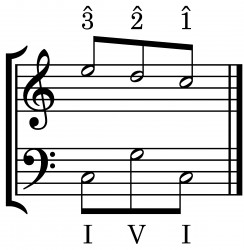
Two recent deaths have robbed the world of music analysis of a pair of its most revered figures. Carl Schachter, who has died at the age of 93, was a pupil of (and subsequently collaborator with) Felix Salzer, himself one of Heinrich Schenker’s foremost students. Schachter continued to enrich and broaden the teaching of Schenkerian analysis, including important work on its application to issues of rhythm (which Schenker, focussing on harmonic and contrapuntal matters, largely bypassed). His influence went well beyond the... read more

read more
Carl Schachter, Arnold Whittall, and why music analysis matters

9th June 2026

Two recent deaths have robbed the world of music analysis of a pair of its most revered figures. Carl Schachter, who has died at the age of 93, was a pupil of (and subsequently collaborator with) Felix Salzer, himself one of Heinrich Schenker’s foremost students. Schachter continued to enrich and broaden the teaching of Schenkerian analysis, including important work on its application to issues of rhythm (which Schenker, focussing on harmonic and contrapuntal matters, largely bypassed). His influence went well beyond the... read more

read more
Music of the Iberian Peninsula, Part 2: ‘O quam gloriosum’ – The Spanish and Portuguese Golden Age

2nd June 2026

Over the past fortnight, I’ve been bathed in the most glorious, radiant, transformative light. Not the UK’s recent unseasonable heatwave, but the extraordinary vocal polyphony of the Siglo de Oro: the Spanish (and Portuguese) ‘Golden Century’. Extending from the late 15th to the early 17th century, this was a time of remarkable artistic flowering on the Iberian Peninsula, coinciding with the emergence of Spain and Portugal as global imperial powers with extensive colonial territories in the Americas, Africa and Asia. The... read more

read more
View Full Archive