 FREE UK SHIPPING OVER £35!
The Spin Doctor Europadisc's Weekly Column
Works in Focus: Debussy’s ‘Jeux’
12th October 2022
12th October 2022
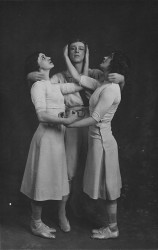 In the great succession of major works premiered in the early years of Diaghilev’s Ballets russes – The Firebird (1910), Petrushka (1911), Daphnis et Chloé (1912), The Rite of Spring (1913), Le Rossignol (1914) – Debussy’s Jeux (1913) is easily overlooked. At a little over a quarter of an hour in length, and with a far less exotic, almost prosaic plot (a nocturnal ménage à trois set in a tennis park), at a superficial level it’s a far less engaging work for the audience. It was premiered on 15 May 1913 at Paris’s Théâtre des Champs-Élysées, with choreography by Nijinsky, designs by Léon Bakst, and conducted by Pierre Monteux. Its reception was muted, and it was subsequently completely overshadowed by the notorious premiere just a fortnight later of The Rite of Spring. In Debussy's output of orchestral works, too, it tends to be sidelined by the more obvious delights, the more immediately striking musical ideas and structures of its predecessors, Prélude à l'après-midi d’un faune, the three Nocturnes, La Mer and the orchestral Images.
Yet Jeux – Debussy's last major completed orchestral and stage work – is regarded by many musical insiders as one of the composer’s greatest masterpieces, hailed by the likes of Edgard Varèse and Pierre Boulez as a totemic work of early modernism. Its elusive thematic and formal structure has been much pored over by experts. Debussy himself was not at all taken by the scenario (which, in an early version, had a clear homoerotic subtext), and it was only when Diaghilev doubled the fee for the work that he agreed to it, tossing off the score at miraculous speed within a month in the late summer of 1912.
The swiftness of its composition certainly helps to explain Jeux’s evanescent motivic workings: in a score of unusually heightened nuance and responsiveness, scored with a luminous clarity that has rarely been matched, individual ideas seem to emerge fleetingly, only to disappear before they have any chance of development. Boulez spoke of Debussy’s tendency towards a ‘perpetual “transition”’, and in Jeux, of all his orchestral works, we have the boldest example of ‘a form that is constantly renewing itself’. Everything appears attuned to the needs of the moment, and the most easily graspable musical idea – the whole-tone chords (a near-quotation from the opening of Dukas’s orchestral scherzo The Sorcerer’s Apprentice of 1897) heard after the hesitant first few bars – acts as a framing device, returning towards the end of the piece just after a falling tennis ball like the one that launched the action startles the three dancers.
With much of the music set in a brisk 3/8 triple time, there is certainly a scherzo-like feel to many passages (and several waltz-like moments too), as the male tennis player flirts first with one girl, then with her friend, and finally (after some deftly drawn sulking) all three together. Yet the work’s subtitle is ‘poème dansé’ (literally, ‘danced poem’), and it is the elliptical poetry of the score, its refusal – except for a few fleetingly passionate climaxes – to ‘fill the moment’, that led Varèse to identify ‘a higher state of tension than in any work before it’. The tenderness with which the tennis player’s dance with the first girl begins, the transport of his dance with the second girl, the hurt feelings of the first, the haunting tenor-register melody (bass clarinet, bassoons and horns) as the three characters dance together, and the impassioned climax (marked ‘violent’ in the score): all seem to flit by with barely a chance to register what is happening.
The marvel of Jeux, however, is that from this state of ‘perpetual becoming’ Debussy creates a work which breaks free of the bonds of conventional symphonic design – evident in the constituent movements and overall design of the Nocturnes, La Mer, even Images – and liberates the music to a heightened form of expressiveness. Minute gestures, tiny motifs and quicksilver orchestration, together with tempo nuances of infinite gradation, create a free-flowing form that is, in its own way, just as liberated from traditional constraints as Schoenberg’s monodrama Erwartung (1909, but not premiered until 1924).
Paradoxically, despite Jeux’s microscopic responsiveness to the stage scenario, even in its purely orchestral form the work sustains itself through its tight network of motifs and the attenuated lyricism of its often fragmentary orchestral surface. Although filmed video productions are rare – look out for an out-of-print Bregenz Festival production coupled with Debussy’s unfinished The Fall of the House of Usher (Capriccio, 2006) – Jeux has a rich discography to its name, starting with Victor de Sabata’s pioneering 1947 account (remarkably vivid despite the mono sound, and now available on Testament). Other notable Debussyans to have recorded the work include Monteux, Inghelbrecht and Ansermet, with the latter’s mono and stereo accounts both available on Eloquence.
However, the work’s infinite subtleties were only done full justice in stereo recordings from the mid-1960s onwards. Two recordings in particular stand out in any discussion of Jeux on disc. Bernard Haitink’s 1979 performance with the Concertgebouw Orchestra (formerly on Philips, now on Decca) is one of the marvels of the late analogue era, with wonderfully supple and transparent playing from the Amsterdam musicians, remarkable textural clarity and rhythmic nuance. At almost 19 minutes, it’s one of the more spacious accounts on disc. For a performance that really catches the expressive volatility and underlying playfulness of the score, as well as total command of instrumental textures and the ebb and flow of tempi, Pierre Boulez’s 1993 Deutsche Grammophon with the Cleveland Orchestra is unmatched, surpassing his fine 1966 reading with the New Philharmonia.
Of more recent recordings, our favourite remains François-Xavier Roth’s 2018 account for Harmonia Mundi. The dark-hued, richly textured sound of the period instruments (particularly woodwind and horns) employed by the musicians of Les Siècles shed fresh light on Debussy’s orchestral colours, the pacing is somewhere between Haitink’s spaciousness and Boulez’s fleet-footedness, and the whole performance casts beguilingly grainy shadows across Debussy’s late nocturnal masterpiece.
Recommended recordings:
- Debussy - Orchestral Music (Concertgebouw / Haitink) 4387422
- Boulez conducts Debussy and Ravel (Cleveland Orchestra / Boulez) 4790333
- Debussy - Jeux, Nocturnes (Les Siècles / Roth) HMM905291
Latest Posts
Music of the Iberian Peninsula, Part 3: More observations on the Golden Age
16th June 2026
Our last visit to the Iberian peninsula, a fortnight ago, was an insanely ambitious, necessarily broad-brush survey of the Spanish and Portuguese Golden Age, covering vocal and instrumental music, the sacred and the secular. This week, we take a more concise and (I hope) focussed look at a few of the sacred vocal masterpieces which exemplify the particular fervour and intensity of this remarkable period of musical history. They reflect the special place the peninsula had as a bulwark against the Reformation that had taken... read more
read more
Music of the Iberian Peninsula, Part 3: More observations on the Golden Age
16th June 2026
Our last visit to the Iberian peninsula, a fortnight ago, was an insanely ambitious, necessarily broad-brush survey of the Spanish and Portuguese Golden Age, covering vocal and instrumental music, the sacred and the secular. This week, we take a more concise and (I hope) focussed look at a few of the sacred vocal masterpieces which exemplify the particular fervour and intensity of this remarkable period of musical history. They reflect the special place the peninsula had as a bulwark against the Reformation that had taken... read more
read more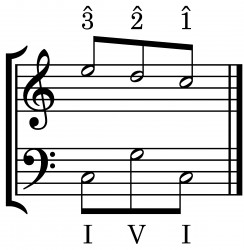
Carl Schachter, Arnold Whittall, and why music analysis matters
9th June 2026
Two recent deaths have robbed the world of music analysis of a pair of its most revered figures. Carl Schachter, who has died at the age of 93, was a pupil of (and subsequently collaborator with) Felix Salzer, himself one of Heinrich Schenker’s foremost students. Schachter continued to enrich and broaden the teaching of Schenkerian analysis, including important work on its application to issues of rhythm (which Schenker, focussing on harmonic and contrapuntal matters, largely bypassed). His influence went well beyond the... read more
read more
Carl Schachter, Arnold Whittall, and why music analysis matters
9th June 2026
Two recent deaths have robbed the world of music analysis of a pair of its most revered figures. Carl Schachter, who has died at the age of 93, was a pupil of (and subsequently collaborator with) Felix Salzer, himself one of Heinrich Schenker’s foremost students. Schachter continued to enrich and broaden the teaching of Schenkerian analysis, including important work on its application to issues of rhythm (which Schenker, focussing on harmonic and contrapuntal matters, largely bypassed). His influence went well beyond the... read more
read more
Music of the Iberian Peninsula, Part 2: ‘O quam gloriosum’ – The Spanish and Portuguese Golden Age
2nd June 2026
Over the past fortnight, I’ve been bathed in the most glorious, radiant, transformative light. Not the UK’s recent unseasonable heatwave, but the extraordinary vocal polyphony of the Siglo de Oro: the Spanish (and Portuguese) ‘Golden Century’. Extending from the late 15th to the early 17th century, this was a time of remarkable artistic flowering on the Iberian Peninsula, coinciding with the emergence of Spain and Portugal as global imperial powers with extensive colonial territories in the Americas, Africa and Asia. The... read more
read more