 FREE UK SHIPPING OVER £35!
The Spin Doctor Europadisc's Weekly Column
Art, Music and Paul Klee
21st September 2022
21st September 2022
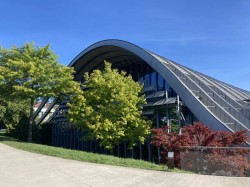 Visual arts like painting and sculpture are often presented as the antithesis of such performing as music and even theatre. Where painting and sculpture occupy physical space, music exists primarily in time. Painting is static and fixed, while music is dynamic, temporal and progressional. But are such distinctions really helpful? This weekend, the Spin Doctor was in Bern, and paid a visit to the Zentrum Paul Klee, a marvellous, undulating 2005 building designed by Renzo Piano and dedicated to the work of Swiss artist Paul Klee (1879-1940). That visit prompted reflections on the nature of painting, drawing and music, and particularly on some of their shared characteristics.
Klee was accomplished at representational drawing in his earliest years (particularly etchings and ink drawings). Although relatively little of his later output is completely abstract, his highly individual mature style included elements of expressionism, cubism, pointillism, futurism and surrealism in unforgettable paintings and drawings, many of which are now viewed as classics of modern art, placing him alongside such celebrated near-contemporaries as Klimt, Schiele, Kandinsky and Picasso. Klee’s parents were both musicians, and it was originally intended that he himself would become a musician. The pull of art was too strong, but Klee nevertheless remained a talented violinist and continued to enjoy playing – particularly Bach and Mozart – throughout his life.
Klee’s rich musical Hintergrund reveals itself in his art, in preoccupations with visual ‘polyphony’, as well as in such paintings as ‘In Bachian Style’ (1919), ‘Fugue in Red’ (1921) and ‘The Timpanist’ (1940). Many of his sketches and drawings are just as remarkable, poised somewhere between preparatory work and graphic musical analysis, while the abstract paintings of his maturity, exploring different shades of primary colours, organised in freehand rows and columns, sometimes flowing in gradations, sometimes presenting stronger contrasts, are concerned not just with tonal shading but also visual ‘harmony’.
Just as Klee’s paintings and drawings take up processes more often associated with musical contexts, so music itself can explore concepts more often associated with the visual arts. The idea of musical colour is a long-established one, whether one is talking about orchestration à la Berlioz, Rimsky-Korsakov or Ravel, or the gradually shifting harmonies and instrumentations of late-20th-century minimalism. Similarly, although it unfolds in time, music creates its own space, not just acoustically (the room, hall or theatre where it is performed), but through careful deployment of pitches (‘high’ and ‘low’), dynamics and instrumentation. Gurnemanz’s observation to Parsifal in Wagner’s final opera, ‘zum Raum wird hier die Zeit’ (‘here time becomes space’), is true not just of that extraordinary Act 1 transformation scene, but of many other works composed before and since, especially ones that employ specific spatial devices: multi-choral works by Gabrieli, Biber, etc., works for multiple orchestras from J.C. Bach to Stockhausen and beyond, as well as pieces that require the distant deployment of some or all of the performers. And then there are pieces like Sibelius’s later symphonies where the suggestion of space works not just at a surface level of ‘evocation’ but at a deep structural one too.
Frames often form an important part in Klee’s painting, as some elements appear pushed to the margins, while others retain a central position. And framing devices in music – slow introductions, cadenzas and codas – can fundamentally alter the listener’s perception of music, whether in the form of the majestic slow introductions to Baroque Ouvertures and symphonies by Haydn and Mozart, the greatly expanded coda section of Beethoven’s ‘Eroica’ first movement, or the increasingly complex and lengthy cadenzas (sometimes for more than just one soloist) in the post-Classical concerto.
In music, of course, time is directed by the sequence of events, though some modernist works featuring modular composition allow the performer to re-order elements of the composition so that they vary with each performance – much as Baroque harpsichordists could pick and choose which movements to play, and in what order, from a larger collection of keyboard music. And there are also those works that play with time by reversing it: not literally, but by having the sequence of pitches reversed, and sometimes turned upside-down, as in the fugues and canons of Bach and his Renaissance and Baroque forebears, as well as so many of his successors who fell under his spell (among them Beethoven, Brahms and Schoenberg). Directionality plays an important role in Klee’s drawings and paintings, where arrows and lines, pointing up, down, sideways or at various angles, direct the viewer’s gaze, and serve as a reminder that, when we see a painting, we don’t take it in all at once, but are drawn to particular elements at the behest of the artist. The picture is thus ‘read’ by the viewer, if not in quite such a determined way as in a musical performance, nevertheless in some sort of temporal sequence, in a further blurring of distinctions between pictorial and musical art.
Given all these potential overlaps, the vibrant, challenging, kaleidoscopic world of Paul Klee’s art, and particularly the quest for essentials such as line and harmony in his later works, has been a source of inspiration for many composers. They range from art has in its turn inspired composers from Sándor Veress and Edison Denisov to Tōru Takemitsu, Tan Dun and Judith Weir. Peter Maxwell Davies’s Five Klee Pictures, originally designed for a school orchestra and later, on the ‘rediscovery’ of its parts, revised for more expanded forces, is among the better-known works with a link to Klee. Its five separate movements, with stylistic nods to Messiaen and the Second Viennese School along the way, are tightly organised although essentially evocative, especially the plangent oboe solo in the second picture, ‘Oriental Garden’. The final movement, ‘Ad Parnassum’ (‘To Parnassus’), is taken from a stylised, pointillist picture of a mountain, its title alluding to Johann Joseph Fux’s seminal 1725 treatise on counterpoint.
But it is the central movement, ‘The Twittering Machine’, that is in many ways the most fascinating: it is based on a cartoon-like painting of bizarre, matchstick-bodied and -limbed birds with strange, tulip-shaped heads with angry tongues extruding, perched on a horizontal crankshaft. Part-natural, part-machine, are these real birds or automata? The intersection of the natural and the machine worlds is one that fascinated Klee, as it did for many artists across all mediums in the early 20th century. The mechanical element is suggested in Maxwell Davies’s piece by the continuous, awkward inflections of the orchestral ostinato, which re-emerges as if it had never gone away after the movement’s expressive climax. The same picture is the starting-point for Harrison Birtwistle’s 1977 London Sinfonietta commission Carmen Arcadiae Mechanicae Perpetuum (‘The Perpetual Song of Mechanical Arcadia’), which at nearly ten minutes is almost as long as Maxwell Davies’s Five Klee Pictures combined. Where the Klee Pictures are evocative, the surface ‘clockwork’ elements the Birtwistle work mask an underlying concern with processes. Birtwistle had an abiding fascination with Klee’s theoretical writings as well as his artistic output, and especially with the idea of ‘taking a line for a walk’. It is, when you think about it, a fundamental activity for artists, whether pictorial or musical, and one with limitless possibilities, whatever the medium.
Links and recordings:
Zentrum Paul Klee (official site, in English) https://www.zpk.org/en/startseite-245.html
Maxwell Davies - Five Klee Pictures & other works 8572363
Birtwistle - Carmen Arcadiae Mechanicae Perpetuum & other works NMCD148
McCabe - Le Poisson Magique: Organ Works by John McCabe RES10144
Latest Posts
Music of the Iberian Peninsula, Part 3: More observations on the Golden Age
16th June 2026
Our last visit to the Iberian peninsula, a fortnight ago, was an insanely ambitious, necessarily broad-brush survey of the Spanish and Portuguese Golden Age, covering vocal and instrumental music, the sacred and the secular. This week, we take a more concise and (I hope) focussed look at a few of the sacred vocal masterpieces which exemplify the particular fervour and intensity of this remarkable period of musical history. They reflect the special place the peninsula had as a bulwark against the Reformation that had taken... read more
read more
Music of the Iberian Peninsula, Part 3: More observations on the Golden Age
16th June 2026
Our last visit to the Iberian peninsula, a fortnight ago, was an insanely ambitious, necessarily broad-brush survey of the Spanish and Portuguese Golden Age, covering vocal and instrumental music, the sacred and the secular. This week, we take a more concise and (I hope) focussed look at a few of the sacred vocal masterpieces which exemplify the particular fervour and intensity of this remarkable period of musical history. They reflect the special place the peninsula had as a bulwark against the Reformation that had taken... read more
read more
Carl Schachter, Arnold Whittall, and why music analysis matters
9th June 2026
Two recent deaths have robbed the world of music analysis of a pair of its most revered figures. Carl Schachter, who has died at the age of 93, was a pupil of (and subsequently collaborator with) Felix Salzer, himself one of Heinrich Schenker’s foremost students. Schachter continued to enrich and broaden the teaching of Schenkerian analysis, including important work on its application to issues of rhythm (which Schenker, focussing on harmonic and contrapuntal matters, largely bypassed). His influence went well beyond the... read more
read more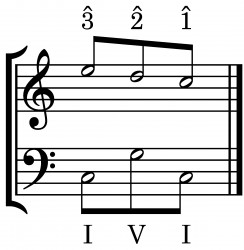
Carl Schachter, Arnold Whittall, and why music analysis matters
9th June 2026
Two recent deaths have robbed the world of music analysis of a pair of its most revered figures. Carl Schachter, who has died at the age of 93, was a pupil of (and subsequently collaborator with) Felix Salzer, himself one of Heinrich Schenker’s foremost students. Schachter continued to enrich and broaden the teaching of Schenkerian analysis, including important work on its application to issues of rhythm (which Schenker, focussing on harmonic and contrapuntal matters, largely bypassed). His influence went well beyond the... read more
read more
Music of the Iberian Peninsula, Part 2: ‘O quam gloriosum’ – The Spanish and Portuguese Golden Age
2nd June 2026
Over the past fortnight, I’ve been bathed in the most glorious, radiant, transformative light. Not the UK’s recent unseasonable heatwave, but the extraordinary vocal polyphony of the Siglo de Oro: the Spanish (and Portuguese) ‘Golden Century’. Extending from the late 15th to the early 17th century, this was a time of remarkable artistic flowering on the Iberian Peninsula, coinciding with the emergence of Spain and Portugal as global imperial powers with extensive colonial territories in the Americas, Africa and Asia. The... read more
read more