 FREE UK SHIPPING OVER £35!
The Spin Doctor Europadisc's Weekly Column
The New Elizabethans
14th September 2022
14th September 2022
 Seventy years ago, on the accession of the young Queen Elizabeth II, there was much talk of 'a New Elizabethan Age', bolstered by the success of the Festival of Britain a year earlier, and the pageantry of the coronation amid the gloom of postwar austerity a year later. There was a degree of hubris about this: one of those who invoked it, a misty-eyed Winston Churchill, had only recently been returned to power, and was keen to harness the patriotic potential of the young monarch. The first Elizabethan era had lasted 45 years and was a period of political and social upheaval as much as it was of consolidation. In 1952, no-one can quite have foreseen the length of Elizabeth II's reign, but the changes of the ensuing 70 years were if anything even more far-reaching.
Situating music within the overall picture is a tricky task of balancing perspective, and not one that can be undertaken in such a brief space as this. If the boundaries of the original 'Elizabethan music' are relatively well-drawn – with Byrd, Morley, Dowland and Gibbons as its central figures – those of the second Elizabethan age are much more diffuse, the more so as the benefit of historical hindsight is not yet with us. In 1952, the major figure among British composers was Ralph Vaughan Williams, his Sinfonia antartica just completed, and his final two symphonies still ahead of him. Arnold Bax (who was to die the following year) and Arthur Bliss were also in the ascendancy.
Yet already, with the 1945 premiere of Peter Grimes, the leader of a new triumvirate had emerged: Benjamin Britten, together with William Walton and Michael Tippett, came to dominate the compositional landscape for the next few decades. As has so often been the case with British composers, their position within the 'establishment' was by no means without irony: both Britten and Tippett were homosexual and ardently pacifist, although Walton had 'mellowed' somewhat since the sardonic brilliance of Façade (1922). And their interest in opera was to play a major part in the forging of a new postwar British musical identity.
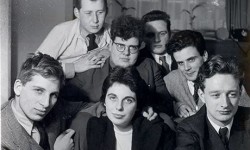
It was a younger generation, however, that was to give British music a much-needed shot in the arm, and they were based not in London but (at least initially) in Manchester, where they studied under Richard Hall at the Royal Manchester College of Music: the cosmopolitan Alexander Goehr (whose father was a Schoenberg pupil), the brilliant Peter Maxwell Davies, and the 'quiet one', Harrison Birtwistle, who subsequently emerged as the most profoundly original of the three. Goehr later became Professor of Music at Cambridge, Davies became Master of the Queen's Music in 2004, and even the avowedly non-establishment Birtwistle was appointed Companion of Honour in 2001. Max and Harry between them will surely be regarded as central 'New Elizabethans' by future generations.
The past seventy years have also been a time for the gradual emergence from the shadows of women composers. Elizabeth Maconchy (1907-1994) has occupied a relatively secure position in the canon of 20th-century British music, not least thanks to her cycle of 13 string quartets (1932-1983), while the output of Vaughan Williams protégée Ruth Gipps (1921-1999) is currently experiencing a revival, and even the uncompromisingly modernist output of Elisabeth Lutyens (1906-1983) is at last beginning to receive the attention it merits. Other figures including Thea Musgrave, Maconchy's daughter Nicola LeFanu, Cecilia McDowall, Judith Bingham, Judith Weir (the first female Master of the Queen's Music), Sally Beamish and Errollyn Wallen have all contributed to the growing profile of women composers over the last seven decades.
One reason that art music of the second Elizabethan age may prove resistant to categorisation is the sheer variety of styles and genres that have emerged. From the ‘new complexity’ of Brian Ferneyhough and James Dillon, via the sharply critical modernist voice of Michael Finnissy, to the ‘spiritual minimalism’ of John Tavener and the genre-straddling work of Michael Nyman, Steve Martland and Gavin Bryars, there are few traits that might be seen as defining the period apart from its sheer diversity. For the generation that came of age in the musty cultural fog of the postwar years, the continental modernism of Stockhausen, Boulez et al. was undoubtedly a key influence, but the pluralism and multiculturalism of the decades either side of the turn of the century have broken down so many boundaries that many ‘classical’ music collectors have sought refuge in British music of an earlier vintage and more traditional hue, as witnessed in the renewed interest in the symphonies of Daniel Jones (1912-1993) and George Lloyd (1913-1998).
Yet for those with open ears and a taste for variety of genre as well as style, British music in the early 21st century is a cultural space teeming with possibilities. Where the triumvirates of old once stood, now figures like James MacMillan, George Benjamin, Mark-Anthony Turnage and Thomas Adès arguably lead the field. The pioneering work of Britten, Tippett and Birtwistle in particular has ensured that opera and music theatre now form a key part of British musical creativity. Chamber music and song may now have replaced oratorio, and pop-up venues may now compete with vast concert halls, yet major orchestral works still emerge, many thanks to the commissioning power of a BBC that remains under constant political scrutiny and pressure. Musically as in other respects, the past seventy years have been transformational: for good or ill? Probably a mixture of both...
Latest Posts
Music of the Iberian Peninsula, Part 3: More observations on the Golden Age
16th June 2026
Our last visit to the Iberian peninsula, a fortnight ago, was an insanely ambitious, necessarily broad-brush survey of the Spanish and Portuguese Golden Age, covering vocal and instrumental music, the sacred and the secular. This week, we take a more concise and (I hope) focussed look at a few of the sacred vocal masterpieces which exemplify the particular fervour and intensity of this remarkable period of musical history. They reflect the special place the peninsula had as a bulwark against the Reformation that had taken... read more
read more
Music of the Iberian Peninsula, Part 3: More observations on the Golden Age
16th June 2026
Our last visit to the Iberian peninsula, a fortnight ago, was an insanely ambitious, necessarily broad-brush survey of the Spanish and Portuguese Golden Age, covering vocal and instrumental music, the sacred and the secular. This week, we take a more concise and (I hope) focussed look at a few of the sacred vocal masterpieces which exemplify the particular fervour and intensity of this remarkable period of musical history. They reflect the special place the peninsula had as a bulwark against the Reformation that had taken... read more
read more
Carl Schachter, Arnold Whittall, and why music analysis matters
9th June 2026
Two recent deaths have robbed the world of music analysis of a pair of its most revered figures. Carl Schachter, who has died at the age of 93, was a pupil of (and subsequently collaborator with) Felix Salzer, himself one of Heinrich Schenker’s foremost students. Schachter continued to enrich and broaden the teaching of Schenkerian analysis, including important work on its application to issues of rhythm (which Schenker, focussing on harmonic and contrapuntal matters, largely bypassed). His influence went well beyond the... read more
read more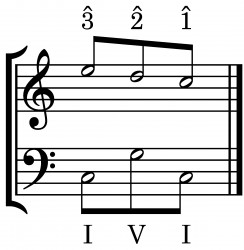
Carl Schachter, Arnold Whittall, and why music analysis matters
9th June 2026
Two recent deaths have robbed the world of music analysis of a pair of its most revered figures. Carl Schachter, who has died at the age of 93, was a pupil of (and subsequently collaborator with) Felix Salzer, himself one of Heinrich Schenker’s foremost students. Schachter continued to enrich and broaden the teaching of Schenkerian analysis, including important work on its application to issues of rhythm (which Schenker, focussing on harmonic and contrapuntal matters, largely bypassed). His influence went well beyond the... read more
read more
Music of the Iberian Peninsula, Part 2: ‘O quam gloriosum’ – The Spanish and Portuguese Golden Age
2nd June 2026
Over the past fortnight, I’ve been bathed in the most glorious, radiant, transformative light. Not the UK’s recent unseasonable heatwave, but the extraordinary vocal polyphony of the Siglo de Oro: the Spanish (and Portuguese) ‘Golden Century’. Extending from the late 15th to the early 17th century, this was a time of remarkable artistic flowering on the Iberian Peninsula, coinciding with the emergence of Spain and Portugal as global imperial powers with extensive colonial territories in the Americas, Africa and Asia. The... read more
read more