 FREE UK SHIPPING OVER £35!
The Spin Doctor Europadisc's Weekly Column
A few thoughts on Great Recordings; Lars Vogt
7th September 2022
7th September 2022
 What is it that makes a great recording? It’s a question that music lovers, critics and even performers themselves keep coming back to. Do Beethoven sonata recordings by pianists as diverse as Schnabel, Solomon, Gilels, Pollini and Levit have something in common, and what might it be? We’ve been musing on this question for a while. They are performances that instantly stand out from the crowd, yet simultaneously seem to capture the flavour of and set the standards for a whole era. They may be recorded live or in the studio, they may be ancient or recent – although ‘classic status’, like a fine wine, takes time to assess, so that older recordings will always predominate.
Great recordings also transcend any passing performance fashions (‘original’ instruments, one-per-part Bach, vibrato-less strings), even as they can encapsulate the sound-world of a particular age (Bruno Walter’s earliest Mahler recordings, Cortot’s Chopin, chamber music from the Busch Quartet). They are performances that embody a different kind of authenticity, ones which – however free-spirited they might be – have an artistic integrity in which the parts relate entirely naturally to the whole, without the appearance of being over-thought or micromanaged.
The late Charles Mackerras (whose own recordings of Janáček, above all his Vienna recording of the composer’s final opera, From the House of the Dead, surely qualify for the accolade), discussing the art of Carlos Kleiber, identified the Geramn concept of ‘Ausstrahlung’ (‘emanation’) as key. It’s a quality that both Wilhelm Furtwängler and Kleiber’s father Erich had too, and it goes far deeper than charisma or external platform manner. Performers with ‘Ausstrahlung’, whether outwardly demonstrative or not, simply seem to exude the music, their performances breathing its essence. In his later years, Claudio Abbado – a conductor of very few words in rehearsal – memorably embodied it. So, for rather longer, did pianist Sviatoslav Richter, something evident even when the only lighting in the hall was the angle-poise over the instrument's music stand.
While an inner consistency is a prerequisite for a great recording, technical and sonic perfection is not (think of Schnabel’s Beethoven, for instance, or the rather too reverberant acoustic of Wolfgang Sawallisch’s magnficently-played Dresden cycle of Schumann symphonies). There is some unevenness of casting in Solti’s legendary Ring on Decca, partly the result of its protracted recording over a number of years, yet overall the cast (led by Birgit Nilsson, Hans Hotter, Wolfgang Windgassen, Gustav Neidlinger and Gottlob Frick) is one that would be the envy of any opera house or record label today. Similar things could be said of Toscanini’s Verdi recordings, even though their sonic limitations may present challenges to some listeners.
Great recordings transcend personal taste – certain details may not be quite as one would ideally like, yet the all-round feeling is still of astonishing persuasiveness. Near-universal acclaim, however, also relies on availability as much as longevity. Recordings such as Carlos Kleiber's Beethoven’s Fifth have rarely been out of the catalogue since they were issued, and many have found new lives thanks to series such as Warner’s ‘Great Recordings of the Century’ and DG’s ‘Originals’. On the other hand, some recordings have missed out on ‘classic’ status because they were in the catalogue for too brief a period: Emmanuel Krivine’s remarkable Beethoven symphonies on Naïve would surely lead the pack among period-instrument cycles had they been around for longer than just a few years.
Greatness, as we’ve remarked before, tends to be defined in the monolithic terms of Austro-German Romanticism, which may explain the predominance of such repertoire in many lists of ‘great recordings’. Yet Munch’s Ravel, Desormière’s Debussy and Stravinsky’s (by no means always perfect) recordings of his own music, to name just three examples, are indisputable counterbalances. And while larger-scale works or cycles are often in the majority, recital discs such as Maurizio Pollini’s 20th-century album of Stravinsky, Prokofiev, Webern and Boulez, and Martha Argerich’s Debut Recital (also on DG) unquestionably number among classics of the catalogue.
Whether for their expressive fearlessness, technical dexterity, sense of line and depth, or sheer delicacy, great recordings – as much as new and rare repertoire – are the lifeblood of classical recording, not because they preserve in aspic a moment of the past, but because they set Olympian standards to which the performers of today and tomorrow can still strive. We are sure to return to this topic in the future; in the meantime, we’d love to hear what your personal ‘great recordings’ are (no more than a handful, please!).
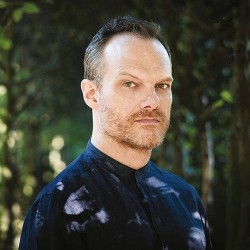
This week brought the death, a few days short of his 52nd birthday, of the much-loved German pianist Lars Vogt. Born in the western German town of Düren on 8 September 1970, Vogt first came to wider attention when he won second prize at the 1990 Leeds Leeds International Piano Competition. After initial recordings on EMI (including concertos by Schumann, Grieg and Beethoven with Simon Rattle), he recorded more extensively for the C-AVI and (most recently) Ondine labels. In a musical world where artistic egos still tend to muscle into the limelight, Vogt was remarkably free of affectation, and was loved and respected by both audiences and fellow musicians. As a pianist, he was as much at home in chamber music and song as he was as a soloist, and his catalogue of recordings bears witness to his close musical partnership with Christian and Tanja Tetzlaff in particular.
From 1998 onwards he ran his hugely successful Spannungen chamber music festival in a former power station in Heimbach, attracting new audiences to the world of classical music. He also had a notable parallel career as a conductor, first with the Royal Northern Sinfonia, and more recently with the Orchestre de chambre de Paris. His recordings, ranging from Bach to contemporary composers, with a strong focus on the music of Schubert and Brahms, reflect the breadth and depth of his musical interests. His cycles of Beethoven and Brahms piano concertos with the RNS, directed from the keyboard, received particular acclaim. His early death deprives the classical world of one of its most sensitive and likeable characters. Our sympathies are with his families, friends and colleagues.
Two essential recordings:
Janáček - Piano Works ODE13822
Brahms - Violin Sonatas (with Christian Tetzlaff) ODE12842
Latest Posts
Music of the Iberian Peninsula, Part 3: More observations on the Golden Age
16th June 2026
Our last visit to the Iberian peninsula, a fortnight ago, was an insanely ambitious, necessarily broad-brush survey of the Spanish and Portuguese Golden Age, covering vocal and instrumental music, the sacred and the secular. This week, we take a more concise and (I hope) focussed look at a few of the sacred vocal masterpieces which exemplify the particular fervour and intensity of this remarkable period of musical history. They reflect the special place the peninsula had as a bulwark against the Reformation that had taken... read more
read more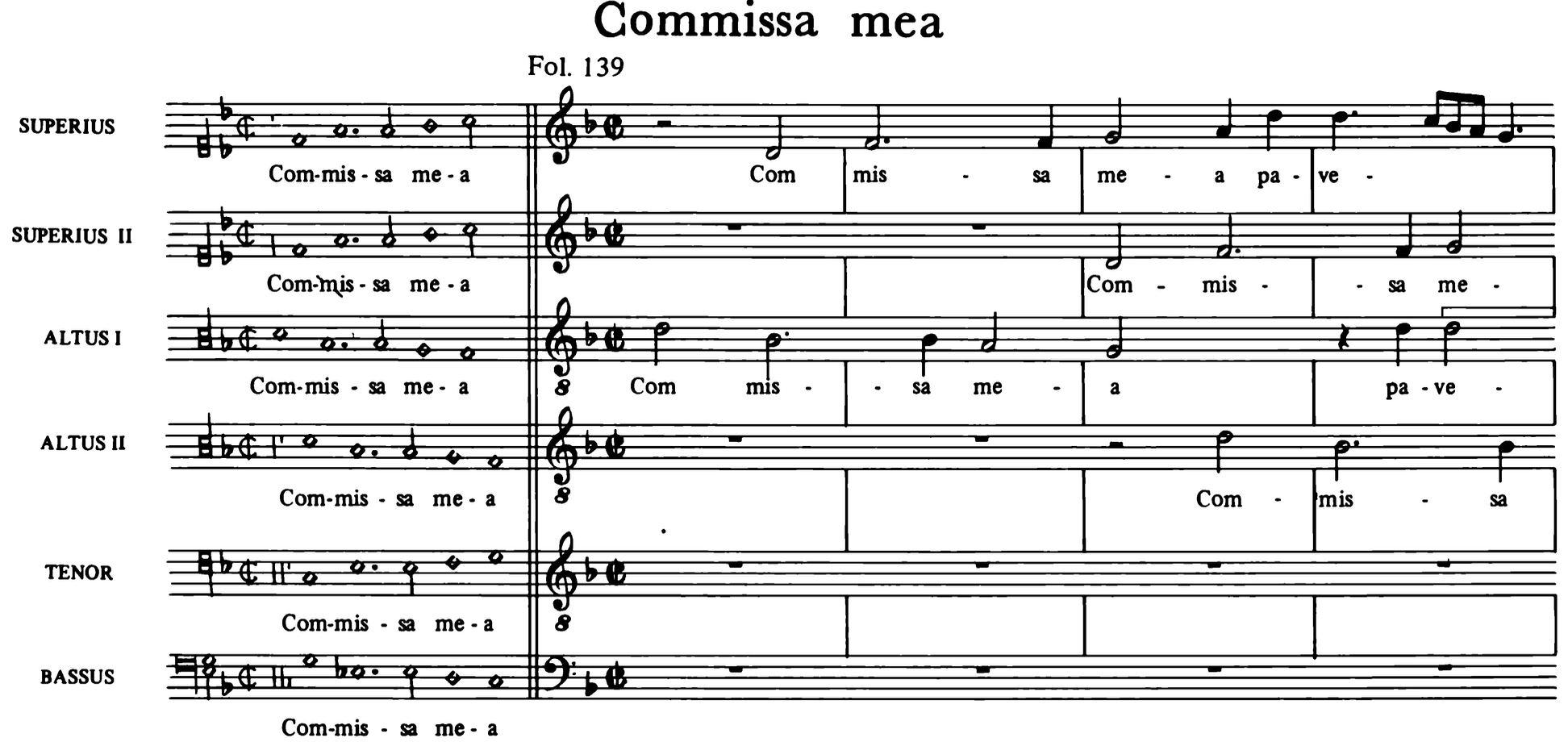
Music of the Iberian Peninsula, Part 3: More observations on the Golden Age
16th June 2026
Our last visit to the Iberian peninsula, a fortnight ago, was an insanely ambitious, necessarily broad-brush survey of the Spanish and Portuguese Golden Age, covering vocal and instrumental music, the sacred and the secular. This week, we take a more concise and (I hope) focussed look at a few of the sacred vocal masterpieces which exemplify the particular fervour and intensity of this remarkable period of musical history. They reflect the special place the peninsula had as a bulwark against the Reformation that had taken... read more
read more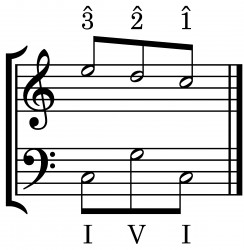
Carl Schachter, Arnold Whittall, and why music analysis matters
9th June 2026
Two recent deaths have robbed the world of music analysis of a pair of its most revered figures. Carl Schachter, who has died at the age of 93, was a pupil of (and subsequently collaborator with) Felix Salzer, himself one of Heinrich Schenker’s foremost students. Schachter continued to enrich and broaden the teaching of Schenkerian analysis, including important work on its application to issues of rhythm (which Schenker, focussing on harmonic and contrapuntal matters, largely bypassed). His influence went well beyond the... read more
read more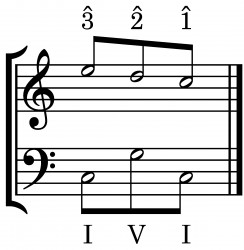
Carl Schachter, Arnold Whittall, and why music analysis matters
9th June 2026
Two recent deaths have robbed the world of music analysis of a pair of its most revered figures. Carl Schachter, who has died at the age of 93, was a pupil of (and subsequently collaborator with) Felix Salzer, himself one of Heinrich Schenker’s foremost students. Schachter continued to enrich and broaden the teaching of Schenkerian analysis, including important work on its application to issues of rhythm (which Schenker, focussing on harmonic and contrapuntal matters, largely bypassed). His influence went well beyond the... read more
read more
Music of the Iberian Peninsula, Part 2: ‘O quam gloriosum’ – The Spanish and Portuguese Golden Age
2nd June 2026
Over the past fortnight, I’ve been bathed in the most glorious, radiant, transformative light. Not the UK’s recent unseasonable heatwave, but the extraordinary vocal polyphony of the Siglo de Oro: the Spanish (and Portuguese) ‘Golden Century’. Extending from the late 15th to the early 17th century, this was a time of remarkable artistic flowering on the Iberian Peninsula, coinciding with the emergence of Spain and Portugal as global imperial powers with extensive colonial territories in the Americas, Africa and Asia. The... read more
read more