 FREE UK SHIPPING OVER £35!
The Spin Doctor Europadisc's Weekly Column
Rafael Kubelík: The All-Round Musician
31st August 2022
31st August 2022
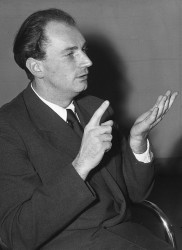 One of the great conductors of the 20th century, Rafael Kubelík has seen a resurgence of interest in recent years. His essentially lyrical yet unsentimental style of music-making, steeped in the Czech style and the traditions of central Europe, clear-textured and unaffected (with the podium manner and appearance of an eccentric but genial professor in later years), is the sort that ages well, when passing fashions have long since faded. Little wonder, then, that new generations of collectors have been discovering his fresh-sounding artistry for themselves.
Kubelík was born on 29 June 1914 (a day after the assassination of Archduke Franz Ferdinand) in the Bohemian village of Býchory, some 37 miles east of Prague. He was the sixth child and first son of the great Czech violinist Jan Kubelík and his wife, Countess Marianne Csáky-Széll. Initially taught violin by his father, at the age of 14 Rafael entered the Prague Conservatory, where he studied violin, piano, composition and conducting. His conducting début was at the age of just 19 with the Czech Philharmonic, which he brought on tour to Britain in 1937 and 1938. In 1939 he became musical director of the Brno Opera, where (in a sign of things to come) he gave the Czech premiere of Berlioz’s Les Troyens. When musical activities in Brno were curtailed by the Nazi occupation, he returned to Prague, and from 1942 to 1948 was chief conductor of the Czech Philharmonic (excepting a short period spent underground after failing to give the Nazi salute to ‘Reichsprotektor’ Karl Hermann Frank).
In the aftermath of the 1948 Czech Communist takeover, Kubelík – who had already experienced more than enough of totalitarian regime – emigrated, at first to Britain, where he had been invited by Carl Ebert to conduct Mozart’s Don Giovanni with the Glyndebourne company at the Edinburgh Festival. In 1950 he was appointed music director of the Chicago Symphony Orchestra. His appointment was brief: just three years, hounded out by critics who found his adventurous programming of 20th-century music too much. Yet his recorded legacy for Mercury Records from those years – embracing Bartók, Bloch, Hindemith and Schoenberg, as well as a renowned account of Mussorgsky’s Pictures at an Exhbition in Ravel’s orchestration, and such calling cards as Mozart, Smetana, Brahms, Tchaikovsky and Dvořák – forms a cornerstone of the early LP catalogue, recently re-released to great acclaim by Eloquence Classics.
Following his stint at Chicago, Kubelík forged a close relationship with Amsterdam’s Concertgebouw Orchestra (sadly too little documented on disc). Following a notable success at Sadler’s Wells in 1954 with Janáček’s Káťa Kabanová, he was appointed music director of the Royal Opera at Covent Garden. In his three seasons there his repertoire included not just mainstays like Mozart, Verdi and Wagner, but the British premieres of Janáček’s Jenůfa and Berlioz’s Les Troyens (both in 1956 and sung in English, an off-air recording of the latter subsequently issued by Testament). From the 1950s also date Kubelík’s first recordings for Decca, all with the Vienna Philharmonic, including his first cycle of Brahms’s symphonies, Dvořák, Smetana, Janáček’s Sinfonietta (which he had previously recorded with the Czech Philharmonic for HMV in 1946 – among the earliest of many recordings for that company) and Mahler’s First Symphony.
If the 1950s were productive for Kubelík, arguably greater things were still to come. In 1961 he succeeded Eugen Jochum at the helm of the Bavarian Radio Symphony Orchestra in Munich. Building on Jochum’s achievements, he raised the orchestra to truly international standing, broadening the repertoire (not just the Czech composers for whom he was torchbearer, but Baroque and Classical masterpieces as well as contemporary composers, among whom Karl Amadeus Hartmann became a close friend) and creating a substantial discography on Deutsche Grammophon. The highlight of Kubelík’s years is probably the complete set of Mahler symphonies, recorded between 1967 and 1971: wonderfully poetic, natural interpretations, devoid of unnecessary histrionics, swift-footed, lacking (for some) depth and gravity, but still – over 50 years later – one of the most all-round satisfying cycles of these now familiar works in the catalogue. Best are his accounts of the First (airy and uplifting), Fourth (with his second wife, Elsie Morrison, as the clear-voiced soprano soloist) and Fifth (the rhythmic pointing of the opening trumpet solo unequalled on disc). And the bracingly-paced Sixth can still take the breath away.
Other highlights of Kubelík’s DG years include cycles of Schumann and Dvořák symphonies (both with the Berliner Philharmoniker), the most sheerly thrilling recording ever of Janáček’s Taras Bulba (and a Sinfonietta not far behind), and a Beethoven symphony cycle recorded with nine different orchestras (LSO, Concertgebouw, Berlin Philharmonic, Israel Philharmonic, Boston Symphony, Orchestre de Paris, Vienna Philharmonic and BRSO). A life-enhancing 1967 broadcast recording of Wagner’s Meistersinger with Thomas Stewart as Hans Sachs was to have been issued by DG, but was vetoed by Dietrich Fischer-Dieskau, who recorded it far less successfully with Jochum, Domingo et al for the same company. Eventually released semi-officially by a number of smaller labels, Kubelík’s Meistersinger, spacious but full of human warmth, is still one of the very best accounts of a work that has not always been fortunate on disc.
Kubelík’s later years in Munich saw releases on CBS (another marvellously committed Schumann cycle, and readings of Bruckner’s Third and Fourth symphonies which demonstrate his warm sympathy for the composer’s music) and Orfeo. From the mid-1980s, however, Kubelík was plagued by arthritis, and effectively retired. He was tempted out of retirement in the wake of the Czech Velvet Revolution, returning to his homeland after a 42-year exile for a performance with the Czech Philharmonic of Smetana’s Má vlast at the 1990 Prague Spring (a festival he helped establish in the immediate post-war years) that sums up a lifetime’s experience as well as all the poignancy of that unique moment, and encapsulates like few others the ensemble’s unique sound. His final concerts (in Japan and Chicago) were the following year, and he died in Lucerne, where he had long since made his main home, on 11 August 1996 at the age of 82.
Opera is underrepresented in both Kubelík’s studio and live recordings, although his late-1970s accounts of Nicolai’s Merry Wives of Windsor and Weber’s Der Freischütz are welcome inclusions in Eloquence’s box set of the complete Decca recordings. Much of Kubelík’s Bavarian legacy has been issued on Orfeo and Orfeo d’Or, while his broadcast performances of Mahler’s symphonies (all except the Fourth) and a splendid Das Lied von der Erde with Janet Baker and Waldemar Kmentt are among several treasures released by the Audite label. They are about to be joined by a marvellous 1968 Lucerne Festival concert with the New Philharmonia of Haydn, Tchaikovsky and Schoenberg’s Piano Concerto (with John Ogdon as soloist), a tribute to the excitement that Kubelík could generate in live performance during his prime.
Finally, no Kubelík admirer should be without Reiner E. Moritz’s 2003 documentary film Rafael Kubelík: Music is my Country, including valuable archive footage of performances, rehearsals and interviews with Kubelík and his family. It’s a fitting tribute to one of the most humane and cultured of all 20th-century conductors.
Rafael Kubelík: Music is my Country (DVD) 100723
Latest Posts
Music of the Iberian Peninsula, Part 3: More observations on the Golden Age
16th June 2026
Our last visit to the Iberian peninsula, a fortnight ago, was an insanely ambitious, necessarily broad-brush survey of the Spanish and Portuguese Golden Age, covering vocal and instrumental music, the sacred and the secular. This week, we take a more concise and (I hope) focussed look at a few of the sacred vocal masterpieces which exemplify the particular fervour and intensity of this remarkable period of musical history. They reflect the special place the peninsula had as a bulwark against the Reformation that had taken... read more
read more
Music of the Iberian Peninsula, Part 3: More observations on the Golden Age
16th June 2026
Our last visit to the Iberian peninsula, a fortnight ago, was an insanely ambitious, necessarily broad-brush survey of the Spanish and Portuguese Golden Age, covering vocal and instrumental music, the sacred and the secular. This week, we take a more concise and (I hope) focussed look at a few of the sacred vocal masterpieces which exemplify the particular fervour and intensity of this remarkable period of musical history. They reflect the special place the peninsula had as a bulwark against the Reformation that had taken... read more
read more
Carl Schachter, Arnold Whittall, and why music analysis matters
9th June 2026
Two recent deaths have robbed the world of music analysis of a pair of its most revered figures. Carl Schachter, who has died at the age of 93, was a pupil of (and subsequently collaborator with) Felix Salzer, himself one of Heinrich Schenker’s foremost students. Schachter continued to enrich and broaden the teaching of Schenkerian analysis, including important work on its application to issues of rhythm (which Schenker, focussing on harmonic and contrapuntal matters, largely bypassed). His influence went well beyond the... read more
read more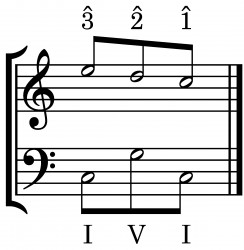
Carl Schachter, Arnold Whittall, and why music analysis matters
9th June 2026
Two recent deaths have robbed the world of music analysis of a pair of its most revered figures. Carl Schachter, who has died at the age of 93, was a pupil of (and subsequently collaborator with) Felix Salzer, himself one of Heinrich Schenker’s foremost students. Schachter continued to enrich and broaden the teaching of Schenkerian analysis, including important work on its application to issues of rhythm (which Schenker, focussing on harmonic and contrapuntal matters, largely bypassed). His influence went well beyond the... read more
read more
Music of the Iberian Peninsula, Part 2: ‘O quam gloriosum’ – The Spanish and Portuguese Golden Age
2nd June 2026
Over the past fortnight, I’ve been bathed in the most glorious, radiant, transformative light. Not the UK’s recent unseasonable heatwave, but the extraordinary vocal polyphony of the Siglo de Oro: the Spanish (and Portuguese) ‘Golden Century’. Extending from the late 15th to the early 17th century, this was a time of remarkable artistic flowering on the Iberian Peninsula, coinciding with the emergence of Spain and Portugal as global imperial powers with extensive colonial territories in the Americas, Africa and Asia. The... read more
read more