 FREE UK SHIPPING OVER £35!
The Spin Doctor Europadisc's Weekly Column
Musical Romanticism: Prologue
29th March 2022
29th March 2022
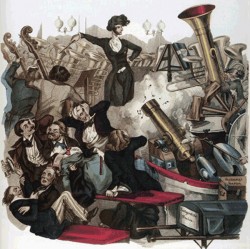 It is the musical period that still comfortably outnumbers all others in terms of commercial recordings and airtime on classical radio stations. The Romantic era encompasses the music of well over a century, although the 19th century was undoubtedly its heyday. Its early roots lay in classicism (much as the wider Romantic movement in the arts, philosophy and politics had its origins in 18th-century Enlightenment rationalism), while its late blossoming in the hands of such figures as Richard Strauss and Sergei Rachmaninov comfortably overlapped with Impressionism, Expressionism and modernism. (One still has to pinch oneself when noting that Boulez's 12 Notations for piano, First Piano Sonata and Le Visage nuptial all predate Strauss's Four Last Songs!)
Some idea of the sheer range of musical Romanticism can be gathered from considering the composers covered in Hyperion's Romantic Piano Concerto series (83 volumes and still counting!): the earliest repertoire includes Beethoven's friend and pupil Ferdinand Ries (1784-1838). and Carl Maria von Weber (1786-1826), while among the most recent works represented are pieces by Arnold Bax (188-1953), Arthur Bliss (1891-1975) and Edmund Rubbra (1901-1986). If the virtuoso piano concerto was one of the most characteristic genres of the period (which is one of many reasons why this ongoing collection has proved so popular with collectors), other quintessentially Romantic genres are instrumental and vocal miniatures (the former epitomised by the character-piece for solo piano, the latter by the art song (Lied, Mélodie, etc.) and, at the other extreme, the through-composed symphonic poem for large orchestra pioneered by Liszt and soon taken up by Smetana, Franck and many, many others. And then there's the huge range of chamber music and opera to consider, everything from violin sonatas and string quartets with Beethoven's shadow firmly in the background, to the sprawling canvases of Wagnerian music dramas which, paradoxically, still owe an enormous debt to the Master from Bonn.
The geographic sweep is just as daunting: from the neo-Brahmsian Dubliner Charles Villiers Stanford in the west to the 'Mighty Handful' of Russians in Moscow, from Sibelius in the north to the Sicilian-born Bellini in the south. (And even this picture excludes Romantic musical voices from the other side of the Atlantic.)
How to make sense of this vast chronolgical, generic and geographic spread is one of the perennial problems facing those who think, write or talk about music, those who perform it and their audiences. One solution is simply to dismiss the catch-all term 'Romantic music' in popular parlance as too wide-ranging, and to limit discussion to what most music lovers would now regard as the 'early Romantics', up to about 1850 and largely from the German-speaking lands. Yet this approach has its drawbacks, too: the extraordinary fertility of ideas and attitudes unlocked in the late 18th and early 19th centuries still reverberate today, and to circumscribe discussion to a mere four or five decades seems both miserly and unambitious.
Over the next few weeks, we hope to explore some of the most potent ideas, trends and figures from this remarkably protean period of musical and artistic history. Yet they all, at some level or other, bear witness to one of the defining traits of Romanticism in general: the focus on the individual, whether that be the individual creative artist, a hero in a narrative, or the aesthetic response of the individual listener or viewer. This is perhaps the most distinguishing feature of the Romantic era as opposed to the universalism of the Enlightenment period, with its roots in the philosphy of Rousseau, Kant and Herder, and it left its mark particularly strongly on early modernism, which sought to make sense of the individual's place in a world of ever more dizzying change, innovation and alienation.
And it is no doubt Romanticism's reflection of and appeal to the individual human consciousness (as opposed to more universal concepts derived from folk tradition, religion or scientific positivism) that accounts for its continuing appeal to so many, in a world now very far removed from the circumstances of its original creation. In the next few weeks, we will explore the origins of musical Romanticism and its earliest exponents; the huge variety that characterises the ‘high’ Romanticism of the 1850s onwards, particularly in opera; and the late Romanticism of the 1890s onwards, a pre-modernist period that many still look back on with nostalgia and regret.
In the meantime, some suggested reading to get the grey cells rolling:
Carl Dahlhaus (transl. J Bradford Robinson): Nineteenth-Century Music (University of California Press, 1992)
D Heath & Judy Boreham: Introducing Romanticism (Icon Books, 1999)
Charles Rosen: The Romantic Generation (Harvard University Press, 1995)
Latest Posts
Music of the Iberian Peninsula, Part 3: More observations on the Golden Age
16th June 2026
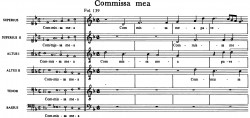
Our last visit to the Iberian peninsula, a fortnight ago, was an insanely ambitious, necessarily broad-brush survey of the Spanish and Portuguese Golden Age, covering vocal and instrumental music, the sacred and the secular. This week, we take a more concise and (I hope) focussed look at a few of the sacred vocal masterpieces which exemplify the particular fervour and intensity of this remarkable period of musical history. They reflect the special place the peninsula had as a bulwark against the Reformation that had taken... read more
read more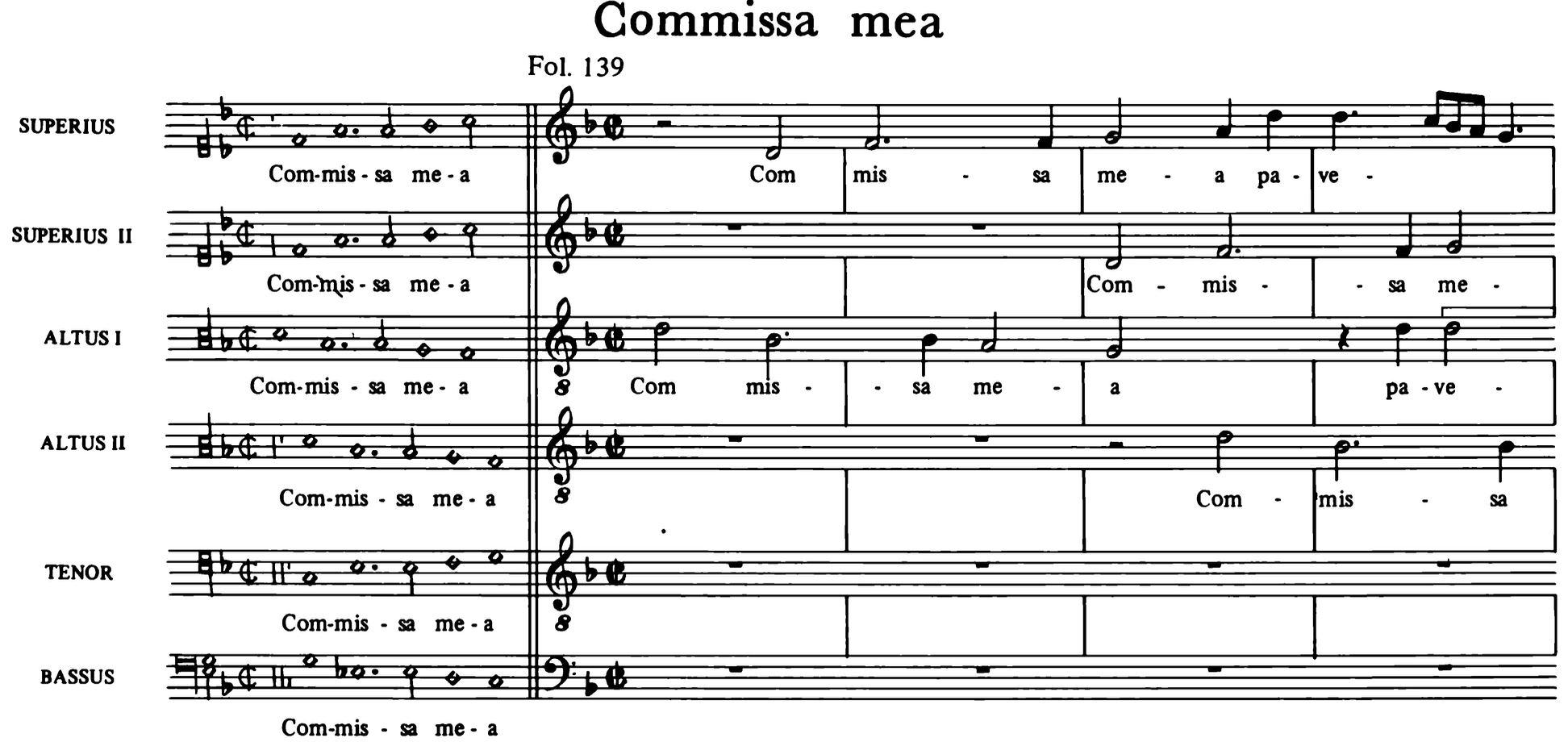
Music of the Iberian Peninsula, Part 3: More observations on the Golden Age
16th June 2026
Our last visit to the Iberian peninsula, a fortnight ago, was an insanely ambitious, necessarily broad-brush survey of the Spanish and Portuguese Golden Age, covering vocal and instrumental music, the sacred and the secular. This week, we take a more concise and (I hope) focussed look at a few of the sacred vocal masterpieces which exemplify the particular fervour and intensity of this remarkable period of musical history. They reflect the special place the peninsula had as a bulwark against the Reformation that had taken... read more
read more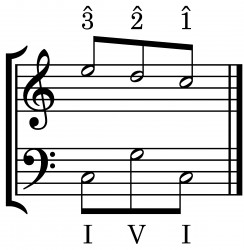
Carl Schachter, Arnold Whittall, and why music analysis matters
9th June 2026
Two recent deaths have robbed the world of music analysis of a pair of its most revered figures. Carl Schachter, who has died at the age of 93, was a pupil of (and subsequently collaborator with) Felix Salzer, himself one of Heinrich Schenker’s foremost students. Schachter continued to enrich and broaden the teaching of Schenkerian analysis, including important work on its application to issues of rhythm (which Schenker, focussing on harmonic and contrapuntal matters, largely bypassed). His influence went well beyond the... read more
read more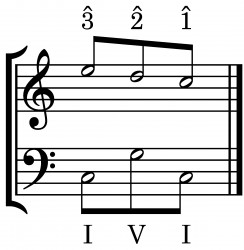
Carl Schachter, Arnold Whittall, and why music analysis matters
9th June 2026
Two recent deaths have robbed the world of music analysis of a pair of its most revered figures. Carl Schachter, who has died at the age of 93, was a pupil of (and subsequently collaborator with) Felix Salzer, himself one of Heinrich Schenker’s foremost students. Schachter continued to enrich and broaden the teaching of Schenkerian analysis, including important work on its application to issues of rhythm (which Schenker, focussing on harmonic and contrapuntal matters, largely bypassed). His influence went well beyond the... read more
read more
Music of the Iberian Peninsula, Part 2: ‘O quam gloriosum’ – The Spanish and Portuguese Golden Age
2nd June 2026
Over the past fortnight, I’ve been bathed in the most glorious, radiant, transformative light. Not the UK’s recent unseasonable heatwave, but the extraordinary vocal polyphony of the Siglo de Oro: the Spanish (and Portuguese) ‘Golden Century’. Extending from the late 15th to the early 17th century, this was a time of remarkable artistic flowering on the Iberian Peninsula, coinciding with the emergence of Spain and Portugal as global imperial powers with extensive colonial territories in the Americas, Africa and Asia. The... read more
read more