 FREE UK SHIPPING OVER £35!
The Spin Doctor Europadisc's Weekly Column
More on Ukraine, the power of music... and Tchaikovsky
16th March 2022
16th March 2022
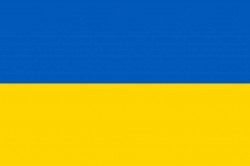 Few people can have been prepared for – or unmoved by – the grim stories that have dominated news headlines for the past three weeks. At times such as these the arts can seem, paradoxically, both self-indulgently frivolous, and yet more necessary and inspirational than ever. One of the more extraordinary films to have emerged online is of a Ukrainian mother, Irina Maniukina, playing for one last time on her white, now dust-covered grand piano in the rubble of her shelled-out apartment in Bila Tserkva, some 80km south of Kyiv. After a few bars of Schubert’s E flat Impromptu, she launches into a more than usually urgent rendition of Chopin’s A flat ‘Aeolian Harp’ Étude, proving at a stroke that in times of war music can provide both consolation and defiance.
Another powerful message was sent by the members of the opera company in Lviv, a city which has so far, mercifully, largely escaped the brunt of the fighting, but has been inundated with refugees fleeing the intense battles further to the east, north and south. In front of the opera house (and perhaps remembering how the corresponding theatre and Philharmonic concert hall in Kharkiv were struck just days earlier in a Russian bombardment) they gave a stirring open-air performance of a work that, since the mid-19th century, has been a rallying cry for nations and peoples subjected to the rule of more powerful neighbours: the Chorus of the Hebrew Slaves ‘Va, pensiero’, from Verdi’s 1842 opera Nabucco. The chorus’s noble melody, of popular cast and sung in unison before blossoming into harmony, has over the years come to be regarded as the perfect embodiment of quiet, resolute patriotism.
As well as such inspiring moments, however, there has also been much preoccupation with the issue of sanctions and countersanctions as a non-violent means of creating leverage for peace. The targets have largely been political, economic and oligarchic, but sport and culture have also been affected. The musical press has concentrated on the actions, pronouncements or even deafening silences of certain conductors, singers and instrumentalists – and even some opera companies and orchestras have been pulled from international schedules. But certain composers – long since dead, and blameless regarding the present conflict – have suffered amid the protracted soul-searching. The decision by a Welsh orchestra to cancel and all-Tchaikovsky concert, widely mocked as a knee-jerk reaction by even more knee-jerk commentators – was understandable given that it was to have ended with a performance of Tchaikovsky’s 1812 Overture. A commissioned work commemorating the 1812 victory of Russia over Napoleon’s Grande Armée, it may be a popular crowd-pleaser, but it was regarded with scorn by its composer and as a pièce d’occasion it is far from being among his finest works. Triumphalist bombast complete with cannon fire is really not what is needed in our concert halls right now. But the episode illustrates how loaded with meaning certain composers and pieces can become.
When they include melodies of folk and popular derivation, musical works can take on extramusical meaning, and both programmers and critics tread a fine line. Musical nationalism is something we have considered here before: if music can express national identity, it can be used for good or ill, and it is open to a wide variety of interpretations. The extravagant grandeur of some of Tchaikovsky’s later works, such as the last three symphonies, has been described as his ‘imperial style’ (even where the music deals with the composer’s own personal torment, it also has a ‘public’ aspect), and the victorious finales of both the Fourth and Fifth symphonies can easily tip over into the histrionic and triumphalist. But Tchaikovsky’s music is not unique in this regard, either in Russian music or further afield. The distinction between popular and populist, patriotic and nationalistic or even jingoistic, is a fine one – witness the perennial debate over the traditional programme of the Last Night of the Proms.
Such extramusical ‘tipping points’ echo the development of musical nationalism in the 19th century. What started out from progressive liberal ideals was soon appropriated by more conservative forces, whose nation-building aspirations rested on both self-definition and identification of the ‘other’ (most catastrophically so in the 1930s and 40s). Almost every act of inclusion, no matter how well-meaning, inevitably entails some measure of exclusion. And the suppression of smaller nations by larger ones – a recurring theme in European history for centuries now – has in recent times fostered the hope and achievement of an independence which cannot lightly be trampled on.
Musical expressions and articulations of nationhood and nationalism can seem rather quaintly exotic in normal times. But, as recent events have shown, they can also be used as powerful tools in the battle for hearts and minds. Suddenly, just a few weeks ago, orchestras around the world included the Ukrainian national anthem ‘Shche ne vmerla Ukrainy’ (‘Ukraine has not yet perished’) in their programmes. As an expression of support, this was an admirable and widely appreciated gesture, but a more lasting legacy (as we’ve noted previously) would be greater attention paid to Ukrainian music, composers, performers and other artists, at a time when Ukraine’s cultural, from ancient wooden churches to museums, cathedrals and opera houses, is under dire threat.
As Ukraine’s most recognised living composer Valentyn Silvestrov (successfully evacuated from Kyiv to Poland just last week) has enjoyed increased attention and performances recently. Other composers, both contemporary and from as far back as the 18th century, will find new audiences. On 5 March, the City of Birmingham Symphony Orchestra made one of their welcome visits to Nottingham under their music director Mirga Gražinytė-Tyla, in a Russian programme. Tchaikovsky’s Fantasy Overture Romeo and Juliet and Fourth Symphony framed a stunning performance of Stravinsky’s Violin Concerto by the force of nature that is Patricia Kopatchinskaja. Introducing the programme, the orchestra’s chief executive Stephen Maddock made no apologies for its contents, pointing out – to evident agreement from the audience – that neither composer bore any responsibility for the present war. But, following the headlong rush of the Symphony’s final bars, Gražinytė-Tyla introduced a short encore: the Melody in A minor (originally for piano) by Ukrainian composer Myroslav Skoryk (1938–2020). Understated, tender, yet plangent, with distinct echoes of folk idioms, on a purely musical level it made a perfect palette cleanser after the Tchaikovsky. More importantly, however, after the hard-won yet exultant triumphalism of the Symphony, it seemed to catch the mood of the occasion more effectively than you’d have guessed from its slight dimensions…
Myroslav Skoryk: Melody | Mirga Gražinytė-Tyla and the CBSO
https://www.youtube.com/watch?v=I1uriKGQmLc
https://www.lrb.co.uk/blog/2022/march/why-cancel-tchaikovsky
Latest Posts
Music of the Iberian Peninsula, Part 3: More observations on the Golden Age
16th June 2026
Our last visit to the Iberian peninsula, a fortnight ago, was an insanely ambitious, necessarily broad-brush survey of the Spanish and Portuguese Golden Age, covering vocal and instrumental music, the sacred and the secular. This week, we take a more concise and (I hope) focussed look at a few of the sacred vocal masterpieces which exemplify the particular fervour and intensity of this remarkable period of musical history. They reflect the special place the peninsula had as a bulwark against the Reformation that had taken... read more
read more
Music of the Iberian Peninsula, Part 3: More observations on the Golden Age
16th June 2026
Our last visit to the Iberian peninsula, a fortnight ago, was an insanely ambitious, necessarily broad-brush survey of the Spanish and Portuguese Golden Age, covering vocal and instrumental music, the sacred and the secular. This week, we take a more concise and (I hope) focussed look at a few of the sacred vocal masterpieces which exemplify the particular fervour and intensity of this remarkable period of musical history. They reflect the special place the peninsula had as a bulwark against the Reformation that had taken... read more
read more
Carl Schachter, Arnold Whittall, and why music analysis matters
9th June 2026
Two recent deaths have robbed the world of music analysis of a pair of its most revered figures. Carl Schachter, who has died at the age of 93, was a pupil of (and subsequently collaborator with) Felix Salzer, himself one of Heinrich Schenker’s foremost students. Schachter continued to enrich and broaden the teaching of Schenkerian analysis, including important work on its application to issues of rhythm (which Schenker, focussing on harmonic and contrapuntal matters, largely bypassed). His influence went well beyond the... read more
read more
Carl Schachter, Arnold Whittall, and why music analysis matters
9th June 2026
Two recent deaths have robbed the world of music analysis of a pair of its most revered figures. Carl Schachter, who has died at the age of 93, was a pupil of (and subsequently collaborator with) Felix Salzer, himself one of Heinrich Schenker’s foremost students. Schachter continued to enrich and broaden the teaching of Schenkerian analysis, including important work on its application to issues of rhythm (which Schenker, focussing on harmonic and contrapuntal matters, largely bypassed). His influence went well beyond the... read more
read more
Music of the Iberian Peninsula, Part 2: ‘O quam gloriosum’ – The Spanish and Portuguese Golden Age
2nd June 2026
Over the past fortnight, I’ve been bathed in the most glorious, radiant, transformative light. Not the UK’s recent unseasonable heatwave, but the extraordinary vocal polyphony of the Siglo de Oro: the Spanish (and Portuguese) ‘Golden Century’. Extending from the late 15th to the early 17th century, this was a time of remarkable artistic flowering on the Iberian Peninsula, coinciding with the emergence of Spain and Portugal as global imperial powers with extensive colonial territories in the Americas, Africa and Asia. The... read more
read more