 FREE UK SHIPPING OVER £35!
The Spin Doctor Europadisc's Weekly Column
One Size Fits All?
21st April 2026
21st April 2026
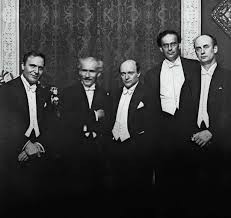 The photograph, taken in Berlin in the summer of 1929, is a famous one. The occasion was a reception marking the visit of Milan’s La Scala opera company to the German capital. It features La Scala’s celebrated music director, Arturo Toscanini (second left), together with the conductors of Berlin’s leading musical institutions: Bruno Walter (conductor of the Städtische Oper), Erich Kleiber (Berlin Staatsoper), Wilhelm Furtwängler (Berlin Philharmonic) and Otto Klemperer (Kroll Opera). Although of varying temperaments, ranging from Toscanini’s legendary precision to Furtwängler’s famed flexibility, all were celebrated Mozartians and Wagnerians. Prior to their slowing down in later years, both Walter and Klemperer were could be just as incisive as the other three maestri in their conducting style, although Klemperer was already renowned for a more objective approach to scores, while Walter was more Romantic in his sensibilities; both, of course, were colleagues of Gustav Mahler, whose music they championed.
Is there other music where physical attributes can have a similar influence on musical performance? Are the operas of Verdi, for instance, a more natural ‘fit’ for shorter conductors (Toscanini and Tullio Serafin)? In the piano repertoire, hand size can be a distinct advantage in virtuoso music. Both Liszt and Rachmaninov had hands that could comfortably span intervals of an 11th or even 12th on the piano, as did Clara Schumann. Yet pianists less manually well-endowed have found ways around the seemingly insurmountable difficulties posed by these and other composers’ most technically stretching scores. And, of course, effective span is only one element, alongside touch, agility and clarity. For violinists, excessively large hand size (especially with thick digits) could be an obstacle: better, then, to change to the viola, cello or even double bass. And early keyboard instruments in particular can be a veritable minefield for those without slender fingers.
Perhaps, after all, size isn’t everything, but in certain music and on particular instruments it can help. And, for singers, a certain level of verisimilitude is also an advantage. A Ring in which Alberich towers over Wotan, or Mime dwarfs (if you’ll pardon the pun) Siegfried would take some persuasiveness to bring off, but opera, in which the beautiful heroines or handsome heroes of yore have long challenged conventional aesthetic norms, is a special case. These days, vocal and acting ability are paramount, and rightly so. (That said, at 6'4", Hans Hotter is still regarded by many as the greatest Wotan ever, for his physical presence as much as a Lieder-like attention to textual nuance.)
As ever, we’d love to hear your views on size and music. Do you buy into our Bruckner theory? Do shorter conductors tend toward the more dictatorial? Do big hands = better pianists? The best answers will receive a big... THANK YOU!
Latest Posts
Music of the Iberian Peninsula, Part 3: More observations on the Golden Age
16th June 2026
Our last visit to the Iberian peninsula, a fortnight ago, was an insanely ambitious, necessarily broad-brush survey of the Spanish and Portuguese Golden Age, covering vocal and instrumental music, the sacred and the secular. This week, we take a more concise and (I hope) focussed look at a few of the sacred vocal masterpieces which exemplify the particular fervour and intensity of this remarkable period of musical history. They reflect the special place the peninsula had as a bulwark against the Reformation that had taken... read more
read more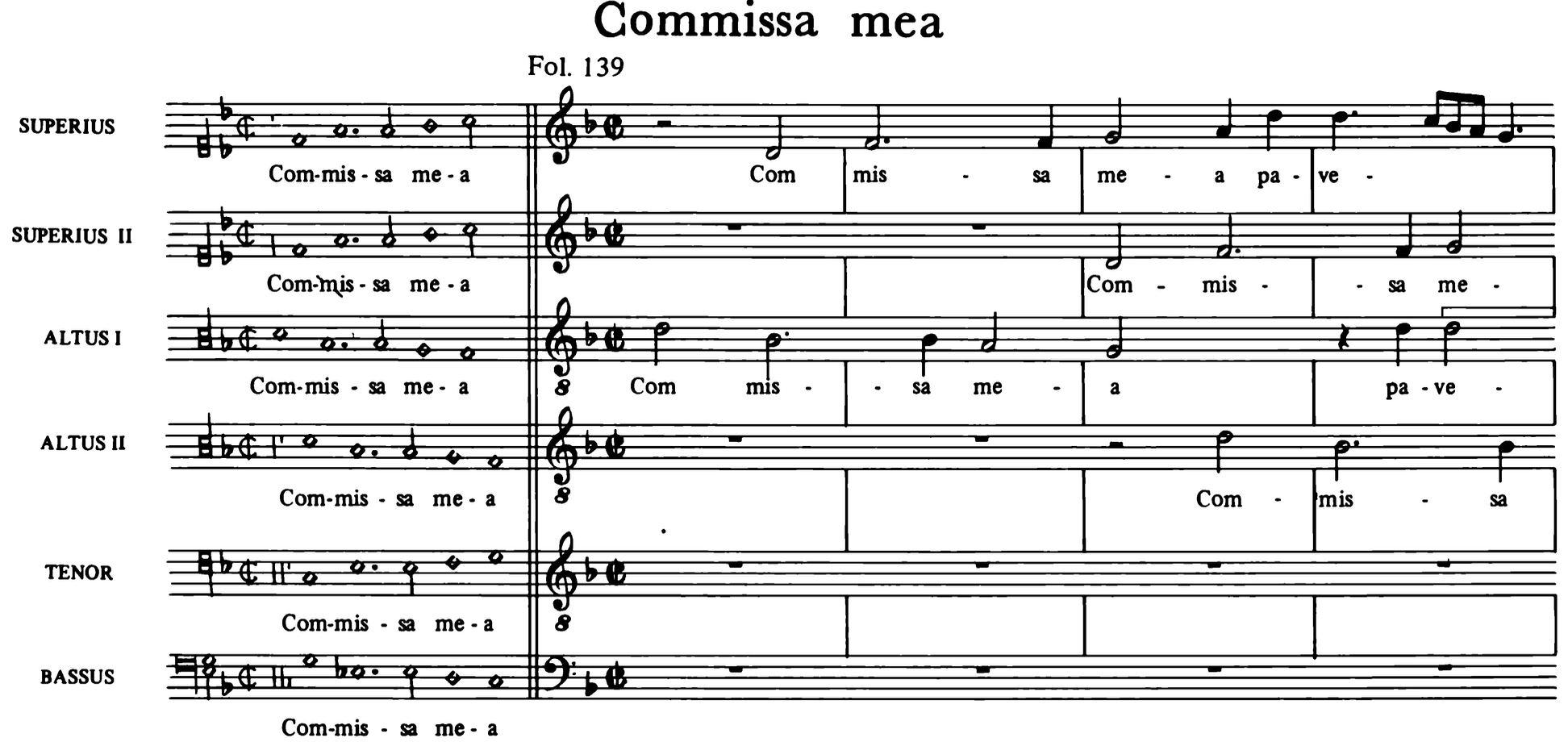
Music of the Iberian Peninsula, Part 3: More observations on the Golden Age
16th June 2026
Our last visit to the Iberian peninsula, a fortnight ago, was an insanely ambitious, necessarily broad-brush survey of the Spanish and Portuguese Golden Age, covering vocal and instrumental music, the sacred and the secular. This week, we take a more concise and (I hope) focussed look at a few of the sacred vocal masterpieces which exemplify the particular fervour and intensity of this remarkable period of musical history. They reflect the special place the peninsula had as a bulwark against the Reformation that had taken... read more
read more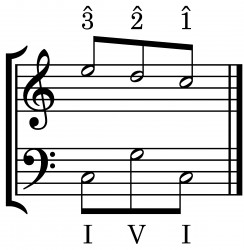
Carl Schachter, Arnold Whittall, and why music analysis matters
9th June 2026
Two recent deaths have robbed the world of music analysis of a pair of its most revered figures. Carl Schachter, who has died at the age of 93, was a pupil of (and subsequently collaborator with) Felix Salzer, himself one of Heinrich Schenker’s foremost students. Schachter continued to enrich and broaden the teaching of Schenkerian analysis, including important work on its application to issues of rhythm (which Schenker, focussing on harmonic and contrapuntal matters, largely bypassed). His influence went well beyond the... read more
read more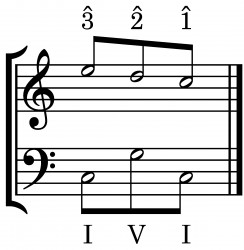
Carl Schachter, Arnold Whittall, and why music analysis matters
9th June 2026
Two recent deaths have robbed the world of music analysis of a pair of its most revered figures. Carl Schachter, who has died at the age of 93, was a pupil of (and subsequently collaborator with) Felix Salzer, himself one of Heinrich Schenker’s foremost students. Schachter continued to enrich and broaden the teaching of Schenkerian analysis, including important work on its application to issues of rhythm (which Schenker, focussing on harmonic and contrapuntal matters, largely bypassed). His influence went well beyond the... read more
read more
Music of the Iberian Peninsula, Part 2: ‘O quam gloriosum’ – The Spanish and Portuguese Golden Age
2nd June 2026
Over the past fortnight, I’ve been bathed in the most glorious, radiant, transformative light. Not the UK’s recent unseasonable heatwave, but the extraordinary vocal polyphony of the Siglo de Oro: the Spanish (and Portuguese) ‘Golden Century’. Extending from the late 15th to the early 17th century, this was a time of remarkable artistic flowering on the Iberian Peninsula, coinciding with the emergence of Spain and Portugal as global imperial powers with extensive colonial territories in the Americas, Africa and Asia. The... read more
read more