 FREE UK SHIPPING OVER £35!
The Spin Doctor Europadisc's Weekly Column
A Master of English Song: Gerald Finzi 70 Years On
31st March 2026
31st March 2026
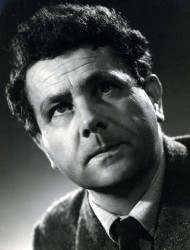 Against a backdrop of culture shifts and economic constraints, surely the most resilient form of art music is the one that has been with us for the longest: the song. From medieval minstrels via the lute songs of Dowland, the Lieder of Schubert and the mélodies of Fauré to the present day, the art of storytelling and reflection through the medium of the sung voice has proved astonishingly durable. And, when reality bites and large-scale opera productions (not to mention symphony concerts) eventually become unsustainable (not for a while yet, we hope), song will still be a vital form of artistic communication. Whether in childhood rhymes and lullabies, folksongs or settings of more sophisticated ‘high’ literature, song speaks to something fundamental in the human psyche.
Among English song composers, one who deserves more attention – not least because of his lifelong passion for literature and his responsiveness to texts centring on lost innocence – is Gerald Finzi, the 70th anniversary of whose death falls this September. Finzi was born in London on 14 July 1901 to Jewish parents: his father was a shipbroker whose 18th-century forebears had moved to England from Italy. He studied music with Edward Farrar near Harrogate, then with Edward Bairstow in York. Farrar’s death in World War I, together with the deaths of his three older brothers and the loss of his father when Finzi was just eight years old, had a profound effect on him, forming an individual given to deep introspection as well as an urgent dedication to music.
From early on, Finzi found solace in literature, including both poetry and philosophy. He was also drawn to the music and landscapes of Elgar and Vaughan Williams, and in 1922 he moved to Painswick in Gloucestershire. A London performance of his Severn Rhapsody was favourably reviewed, and Adrian Boult suggested that Finzi should study counterpoint with R.O. Morris. Moving back to London, he became friends with Howard Ferguson, Edmund Rubbra and Arthur Bliss, and also met Holst and Vaughan Williams. It was on the latter’s recommendation that he obtained a teaching post at the Royal Academy of Music. He also avidly attended London concerts, exhibitions and the theatre.
Yet Finzi, who worked best in isolation, was never really comfortable in London. Soon after his marriage in 1933 to the artist Joyce Black, the couple moved to Aldbourne in Wiltshire, and then in 1937 to Ashmansworth in the Hampshire hills. There he amassed a large personal library, both of literature and of 18th-century English music including Boyce, Stanley and Charles Wesley. He also collected and catalogued the music of Hubert Parry, and was a keen supporter of Gurney as well as founding the Newbury String Players, which kept going not just through the war years when Finzi worked for the Ministry of War Transport, but after his death in 1956 by his son, Christopher. He also established an orchard devoted to rare varieties of apples. As the New Grove dictionary puts it, Finzi had ‘a need to consolidate, collect and cultivate’.
The cantata Dies natalis for upper voice and string orchestra, setting texts by Thomas Traherne and premiered modestly in 1940 before a more full-scale airing at the 1946 Three Choirs Festival, brought Finzi wider recognition, as did the Clarinet Concerto of 1949. Both remain his most popular works. What should have been a glorious late creative flowering was cut short by a 1951 diagnosis of Hodgkin’s Disease; when he contracted shingles in 1956, the decline was precipitous, and he died on 27 September in the Radcliffe Infirmary, Oxford. Just the night before, the first performance of his Cello Concerto, with its turbulent first movement and serene slow movement, had been broadcast.
Apart from Traherne, Finzi’s great passion was the poetry of Thomas Hardy: no fewer than six of his song cycles (i.e. the vast majority) are setting of his words. As well as the yearning for lost innocence, what seems to have appealed to him was the gritty realism of the poetry, which he set in mainly syllabic style but with a wide range of expression and accompaniments that are imitative rather than conventionally pianistic. Although the musical language is steeped in the harmonies and pastoralism of Elgar, Vaughan Williams and Parry, there is often an edginess to the style that is entirely Finzi’s own. The earliest of the cycles, By Footpath and Stile, is scored for baritone and string quartet. Alongside the Hardy works, another essential is Let us Garlands Bring, op.18, setting five of Shakespeare’s song texts. In all these works, a keen feeling for the power of the texts and malleable arioso style more than offset the comparative regularity of the harmonic rhythm.
Finzi’s songs will provide the central focus at this year’s Ludlow English Song Weekend (10–12 April). Masterminded by artistic director and experienced accompanist Iain Burnside, it includes performances by renowned baritone and exponent of English song Roderick Williams, as well as actors Alex Jennings and Joanna Scanlon in events devoted to Hardy, and musicologist and broadcaster Katy Hamilton discussing Finzi’s legacy, and the art of word-setting with reference to Hardy and Shakespeare. It’s a fitting tribute to one of the 20th century’s great creators of English song, which we’re happy to recommend here. And, for those who can’t make the journey to south Shropshire, we append a few top picks as a way into Finzi’s song output: if you’re not already familiar with this music, these are a most attractive introduction
The Ludlow English Song Weekend
https://ludlowenglishsongweekend.com/
Recommended recordings:
Finzi - Oh Fair to See: Songs (Gilchrist/Tilbrook) CKD253
Finzi - Earth and Air and Rain, By Footpath and Stile, To a Poet (R Williams/Burnside/Sacconi Qt) 8557963
Finzi - I Said to Love, Let Us Garlands Bring, etc. (R Williams/Burnside) 8557644
Finzi - Dies natalis, Farewell to Arms, etc. (Gilchrist/Bournemouth SO/Hill) 8570417
Latest Posts
Music of the Iberian Peninsula, Part 3: More observations on the Golden Age
16th June 2026
Our last visit to the Iberian peninsula, a fortnight ago, was an insanely ambitious, necessarily broad-brush survey of the Spanish and Portuguese Golden Age, covering vocal and instrumental music, the sacred and the secular. This week, we take a more concise and (I hope) focussed look at a few of the sacred vocal masterpieces which exemplify the particular fervour and intensity of this remarkable period of musical history. They reflect the special place the peninsula had as a bulwark against the Reformation that had taken... read more
read more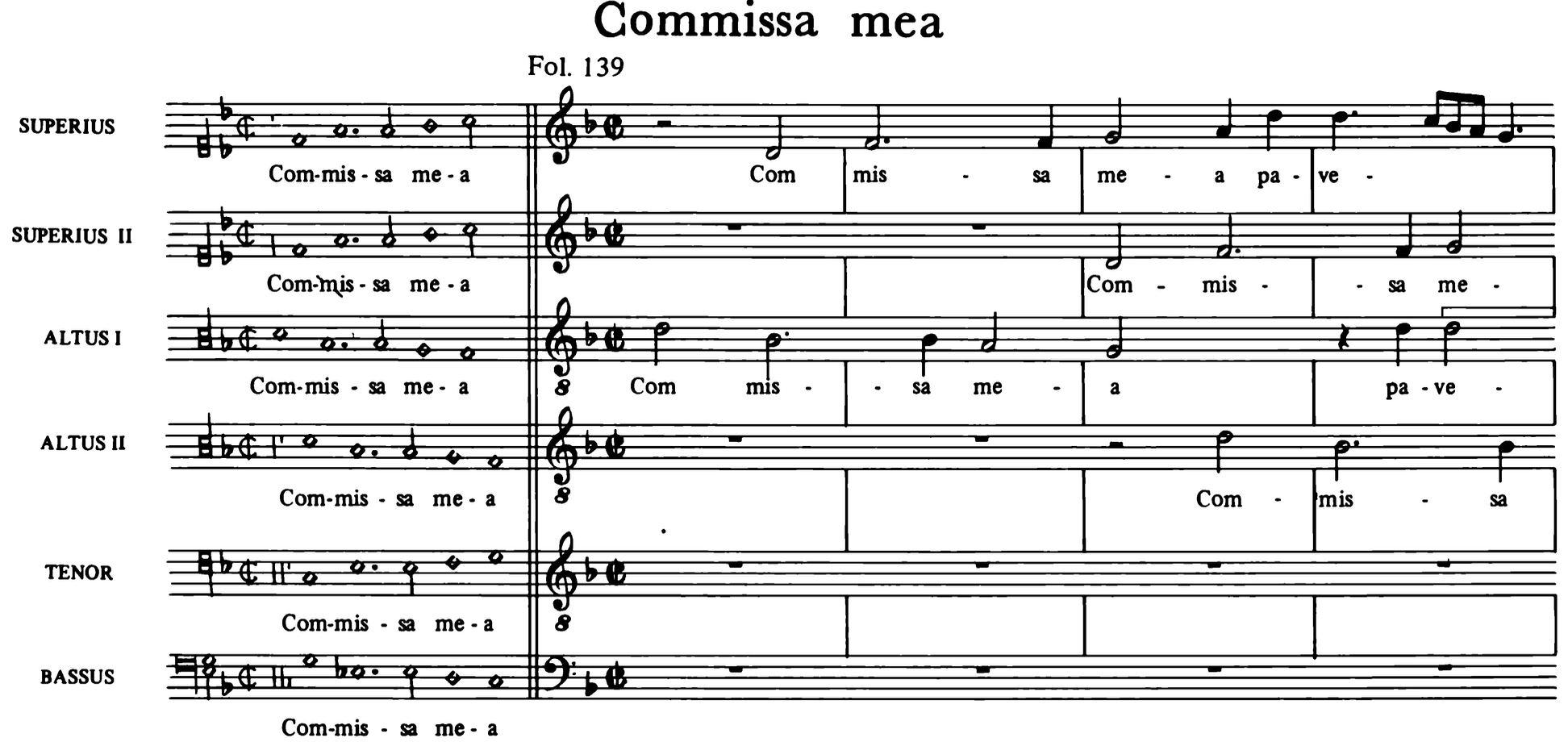
Music of the Iberian Peninsula, Part 3: More observations on the Golden Age
16th June 2026
Our last visit to the Iberian peninsula, a fortnight ago, was an insanely ambitious, necessarily broad-brush survey of the Spanish and Portuguese Golden Age, covering vocal and instrumental music, the sacred and the secular. This week, we take a more concise and (I hope) focussed look at a few of the sacred vocal masterpieces which exemplify the particular fervour and intensity of this remarkable period of musical history. They reflect the special place the peninsula had as a bulwark against the Reformation that had taken... read more
read more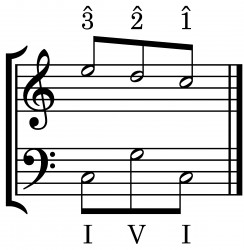
Carl Schachter, Arnold Whittall, and why music analysis matters
9th June 2026
Two recent deaths have robbed the world of music analysis of a pair of its most revered figures. Carl Schachter, who has died at the age of 93, was a pupil of (and subsequently collaborator with) Felix Salzer, himself one of Heinrich Schenker’s foremost students. Schachter continued to enrich and broaden the teaching of Schenkerian analysis, including important work on its application to issues of rhythm (which Schenker, focussing on harmonic and contrapuntal matters, largely bypassed). His influence went well beyond the... read more
read more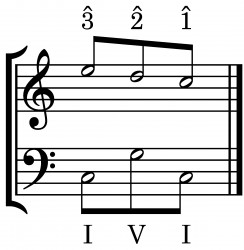
Carl Schachter, Arnold Whittall, and why music analysis matters
9th June 2026
Two recent deaths have robbed the world of music analysis of a pair of its most revered figures. Carl Schachter, who has died at the age of 93, was a pupil of (and subsequently collaborator with) Felix Salzer, himself one of Heinrich Schenker’s foremost students. Schachter continued to enrich and broaden the teaching of Schenkerian analysis, including important work on its application to issues of rhythm (which Schenker, focussing on harmonic and contrapuntal matters, largely bypassed). His influence went well beyond the... read more
read more
Music of the Iberian Peninsula, Part 2: ‘O quam gloriosum’ – The Spanish and Portuguese Golden Age
2nd June 2026
Over the past fortnight, I’ve been bathed in the most glorious, radiant, transformative light. Not the UK’s recent unseasonable heatwave, but the extraordinary vocal polyphony of the Siglo de Oro: the Spanish (and Portuguese) ‘Golden Century’. Extending from the late 15th to the early 17th century, this was a time of remarkable artistic flowering on the Iberian Peninsula, coinciding with the emergence of Spain and Portugal as global imperial powers with extensive colonial territories in the Americas, Africa and Asia. The... read more
read more