 FREE UK SHIPPING OVER £35!
The Spin Doctor Europadisc's Weekly Column
Always in good taste: Clémence de Grandval
24th March 2026
24th March 2026
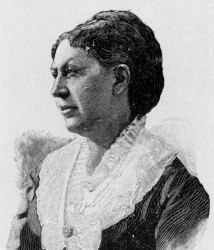
Grandval was born Marie Félicie Clémence de Reiset on 21 January 1828 in Saint-Rémy-des-Monts in the east of the Pays de la Loire. She was the youngest of four children in a well-to-do family: her father was a distinguished army officer and accomplished pianist, while her mother, a published writer of stories, had aristocratic roots. It was at their home (as well as at their Parisian salon) that the young Marie encountered many distinguished composers and artists; when she decided on a musical path, her parents were supportive. However, unable to enter the all-male elite educational establishments of the day, her development was largely through connections made in the artistic salons. Many of her works were published under pseudonyms to hide her connections.
Marie/Clémence had already begun to make her mark as a composer by her later teens with chamber works for salon combinations of winds, strings and piano. In 1849 she submitted a symphony for performance at the august Société des Concerts du Conservatoire, but it was turned down in preference for works by artists ‘who did not possess the same advantages’. This, and her status as an amateur, would becoming recurring hinderances to her success. Nevertheless, the Andante of the symphony was championed by no less a figure than Berlioz at a concert by the Grande Société Philharmonique de Paris in February 1851. (He would later commend her 1863 opera Les Fiancés de Rosa as ‘generally secure in style and always in good taste’.) The following month, she married Charles-Grégoire-Amable Enlart, Viscomte de Grandval, and although he, too, was supportive of his new wife’s musical activities, her new titled status only compounded the prejudices she faced from some musical quarters. Barred as a woman from competing for the prestigious Prix de Rome, she did however win the Prix Rossini in 1880 for her cantata La Fille de Jaïre, as well as the Prix Chartier in recognition of her chamber music.
Clémence de Grandval began writing operas in the late 1850s (her first example is, however, lost), and her half-dozen or so surviving works in the genre range from operettas and opéras comiques to larger scale works, of which the five-act Mazeppa (composed after an operatic hiatus during which she transferred her energies to orchestral music) is the most ambitious. Premiered not in Paris (as Grandval had hoped) but at the Grand Théâtre in Bordeaux on 24 April 1892, it sets a libretto by Charles Grandmougin and Georges Hartmann, based on Pushkin’s narrative poem Poltava but also incorporating elements from Byron and Victor Hugo. Mazeppa was a popular subject in 19th-century music, and alongside well-known works by Liszt and Tchaikovsky there is a tone poem for piano by Carl Loewe and a cantata by Michael William Balfe, among much else besides.
Grandval’s Mazeppa proved a late-career success, and although it never made it to the stage of the Paris Opéra, it was well-received elsewhere in provincial and foreign performances. While not blazingly original, it reveals a sure dramatic and musical instinct, with distinctive motifs, several of which recur over the course of the opera, and some elegant touches which evoke the Ukrainian/Polish settings. A new recording – the work’s first ever – from the ever-enterprising Bru Zane label is the fruit of typically thorough musicological detective work, reconstructing several passages that have been incompletely transmitted in the sources. It even incorporates the Act 4 ballet sequence (including a mazurka, Ukrainian dance and waltz). The cast is led by baritone Tassis Christoyanis in a sympathetic portrayal of the title role, with soprano Nicole Car as the heroine Matrena, whose descent into madness is harrowingly depicted in the final act, and the ringing tenor of Julien Dran as the scheming Iskra.
From the opening Prelude, which depicts Mazeppa’s famous ride while tethered to a galloping horse, through the various machinations and celebrations of the plot, to the tragic close, this is a work which grips the attention. Some contemporary reviews were all too ready to characterise the vigorous musical style with well-worn tropes of the sort which Ethel Smyth had to contend with, but the music for Matrena in particular is radiantly expressive, and the conciseness with which Grandval traverses the potentially complex plot is commendable. The music of Massenet in particular is never far away. At the head of an international cast, conductor Mihhail Gerts coaxes some splendidly committed singing and playing from the Bavarian Radio Chorus and the Munich Radio Orchestra.
Bru Zane’s luxuriant presentation includes not just helpfully full background on Grandval and the historical background to the Mazeppa story, but a detailed discussion of the music and (of course) full libretto and translation. As a valuable window onto the achievement of one of the more neglected figures of French Romanticism, this new release could hardly be bettered. Other Grandval albums are distinctly thin on the ground, an exception being a Haenssler Classic disc of her extensive output for oboe (a consequence of her friendship with the great French oboist Georges Gillet). With Grandval’s bicentenary just two years off, let’s hope more from this fascinating but overlooked figure in the near future.
The Recording:
- Grandval: Mazeppa (Christoyanis, Car, Dran, et al.) BZ1063
Latest Posts
Music of the Iberian Peninsula, Part 3: More observations on the Golden Age
16th June 2026
Our last visit to the Iberian peninsula, a fortnight ago, was an insanely ambitious, necessarily broad-brush survey of the Spanish and Portuguese Golden Age, covering vocal and instrumental music, the sacred and the secular. This week, we take a more concise and (I hope) focussed look at a few of the sacred vocal masterpieces which exemplify the particular fervour and intensity of this remarkable period of musical history. They reflect the special place the peninsula had as a bulwark against the Reformation that had taken... read more
read more
Music of the Iberian Peninsula, Part 3: More observations on the Golden Age
16th June 2026
Our last visit to the Iberian peninsula, a fortnight ago, was an insanely ambitious, necessarily broad-brush survey of the Spanish and Portuguese Golden Age, covering vocal and instrumental music, the sacred and the secular. This week, we take a more concise and (I hope) focussed look at a few of the sacred vocal masterpieces which exemplify the particular fervour and intensity of this remarkable period of musical history. They reflect the special place the peninsula had as a bulwark against the Reformation that had taken... read more
read more
Carl Schachter, Arnold Whittall, and why music analysis matters
9th June 2026
Two recent deaths have robbed the world of music analysis of a pair of its most revered figures. Carl Schachter, who has died at the age of 93, was a pupil of (and subsequently collaborator with) Felix Salzer, himself one of Heinrich Schenker’s foremost students. Schachter continued to enrich and broaden the teaching of Schenkerian analysis, including important work on its application to issues of rhythm (which Schenker, focussing on harmonic and contrapuntal matters, largely bypassed). His influence went well beyond the... read more
read more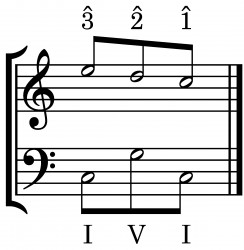
Carl Schachter, Arnold Whittall, and why music analysis matters
9th June 2026
Two recent deaths have robbed the world of music analysis of a pair of its most revered figures. Carl Schachter, who has died at the age of 93, was a pupil of (and subsequently collaborator with) Felix Salzer, himself one of Heinrich Schenker’s foremost students. Schachter continued to enrich and broaden the teaching of Schenkerian analysis, including important work on its application to issues of rhythm (which Schenker, focussing on harmonic and contrapuntal matters, largely bypassed). His influence went well beyond the... read more
read more
Music of the Iberian Peninsula, Part 2: ‘O quam gloriosum’ – The Spanish and Portuguese Golden Age
2nd June 2026
Over the past fortnight, I’ve been bathed in the most glorious, radiant, transformative light. Not the UK’s recent unseasonable heatwave, but the extraordinary vocal polyphony of the Siglo de Oro: the Spanish (and Portuguese) ‘Golden Century’. Extending from the late 15th to the early 17th century, this was a time of remarkable artistic flowering on the Iberian Peninsula, coinciding with the emergence of Spain and Portugal as global imperial powers with extensive colonial territories in the Americas, Africa and Asia. The... read more
read more