 FREE UK SHIPPING OVER £35!
The Spin Doctor Europadisc's Weekly Column
A Journey Backwards in Time: Early Music Catch-Up
11th March 2026
11th March 2026
 Every month we continue to be impressed by the vast numbers of quality early music recordings that are still released on disc, with repertoire ranging from the Middle Ages to the Classical and Romantic eras. Doing justice to even a fraction of them is all but impossible, but it is some time since our last Early Music Catch-Up, so a look at recent and forthcoming early music releases is long overdue. This time, we’ve decided to take a backwards path, starting in the Classical era and working back to the Renaissance.
The use of bassoon as a concertante soloist goes back to Vivaldi, who wrote no fewer than 39 concertos for the instrument, a total no other composer has matched. In the Classical period, Mozart’s Bassoon Concerto remains the best known, but several other composers wrote for an instrument whose capabilities were steadily being expanded. Among them were the Bohemian-born Johann Baptist Wanhal (1739–1813, aka Jan Křtitel Vaňhal) and his less familiar Slovak contemporary Anton Zimmermann (1741–1781). A recent Supraphon release featuring Ondřej Šindelář and Risonanza Praga couples Wanhal’s C major Concerto and Zimmermann’s in F major, with Šindelář’s former teacher Sergio Azzolini joining in for Zimmermann’s Concerto for 2 bassoons. All three works last around 25 minutes, and demonstrate a fluent command of Classical style, with cantabile slow movements and exciting finales. The two Zimmermann pieces are premiere recordings, and the recordings are excellent.
A more archaic solo instrument in concertos is the lute; Vivaldi (again!) wrote one Concerto for the instrument, in D major, RV93, and it’s the starting point for an enterprising disc from lutenist Evangelina Mascardi on the Arcana label entitled ‘Beyond Vivaldi’. Sensitively played and recorded, it features rarities by Bernhard Joachim Hagen, Jakob Friedrich Kleinknect, Carl Kohaut and the somewhat more familiar Johann Ludwig Krebs (a pupil of J.S. Bach). Mascardi is a most persuasive advocate of this unexpected territory, and the spirit of the Red Priest is evident throughout.
From the neglected to the ubiquitous: Handel’s Messiah surely counts as his most famous work. Originally written for performance during Lent, in anticipation of Easter, these days you’re as likely to encounter it in the run-up to Christmas. Of course, there’s no shortage of recordings, but a new account of the original ‘Dublin’ version of the score from the Irish Baroque Choir and Orchestra under the stylish direction of Peter Whelan has special claims to authenticity. With soloists including mezzo-soprano Helen Charlston and countertenor Alexander Chance, what’s particularly noticeable is the sense of forward momentum, achieved not by breakneck speeds but by the way in which numbers often dovetail directly from one to another.
Only relatively recently has Handel’s slightly later oratorio Theodora (1750) emerged from the shadows, but recordings in the past few years under the direction of Maxim Emelyanychev and Jonathan Cohen have revealed the emotional and dramatic potency of a work whose charms escaped its original audiences. A new account from the Chœur de Chambre de Namur and Millenium Orchestra under Leonardo García-Alarcón doesn’t altogether eclipse memories of Louise Alder in the title role for Cohen, but soloists Sophie Junker, Christopher Lowrey and Matthew Newlin lead a characterful cast, and García-Alarcón demonstrates why he is one of today’s most dependable and engaging Handelians.
Handel’s great contemporary Johann Sebastian Bach is seldom off the release lists, especially in the period of Lent and Holy Week. A new recording from the ensemble Le Banquet Céleste features two of his cantatas including violoncello piccolo (BWV 85 and BWV 115), which frame a performance of the Cello Suite no.6 by Julien Barre. It’s an unlikely coupling, but one that works most successfully, not least thanks to the chamber-like intimacy of the one-voice-per-part cantatas. And BWV 115 includes, in the alto aria ‘Ach schläfrige Seele, wie?’, one of Bach’s most heartrending vocal creations outside the great Passion settings.
The recent acclaimed release on the Ricercar label of the complete ‘Leipzig’ cantatas by Johann Sebastian’s distant cousin Johann Ludwig Bach has shone a welcome spotlight on the wider Bach clan, and another disc from the same label features the complete organ chorale preludes by a cousin of the previous generation, Johann Michael Bach (1648–1694). Played by Cindy Castillo on the splendid Thomas organ of Saint-Loup, Namur, it is organised in the manner of Johann Sebastian’s, grouping the preludes according to the liturgical calendar, and is accordingly entitled ‘Ein Orgelbüchlein...’.
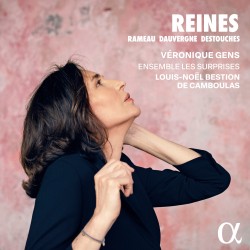
Swapping from Lutheran sacred music to the Gallic world of Baroque opera, the latest album from the present-day grande dame of the French Baroque, Véronique Gens, is ‘Reines’ on the Alpha label. These portraits of operatic queens including Medea and Armida, in works by (among others) Rameau, Antoine Dauvergne and Henry Desmarest suit Gens’s velvety, commanding yet endlessly expressive and touching voice down to the ground. The Ensemble Surprises under Louis-Noël Bestion de Camboulas not only provide splendidly vivid accompaniments but also feature in several purely orchestral tracks, starting with a brief but thrilling earthquake from Dauvergne’s Polyxène.
The world of French Baroque sacred music is hardly less sumptuous than its opera. A new account of François Couperin’s Leçons de ténèbres, coupled with Michel Richard de Lalande’s Miserere and three of Charpentier’s Répons de ténèbres, will likely raise a few eyebrows with its use of unison rather than solo female voices. But the performances (again on Alpha) by Hervé Niquet’s Le Concert Spirituel have been finely honed through repeated performance over the years, and few other musicians understand as well as him the rhetorical and expressive demands of this repertoire.
At the earlier end of the Baroque period, Giacomo Carissimi’s Historia di Jephte is redolent of the world of early Italian opera, and this version of the Old Testament story from the book of Judges comes courtesy of the excellent Voces Suaves ensemble under Michele Vannelli on the Arcana label. It features a particularly fine group of vocal soloists, as well as two of Carissimi’s motets and (perhaps most beguiling of all) Domenico Mazzocchi’s duskily-tinged ‘dialogo’ Cristo smarrito col lamento della Beata Vergine, with soprano Christina Boner as the Blessed Virgin.
A generation or so earlier, the Spanish composer Francisco Garro was one of the most acclaimed composers on the Iberian peninsula. An upcoming release on the Delphian label features two of his masses preserved in partbooks in Lisbon, the Missa Saeculorum and the Missa Magdalena. Performed by the singers and instrumentalists of Ensemble Pro Victoria under Toby Ward, they are evidence of the group’s marvellously idiomatic way with Portuguese and Spanish music of this period. Also illustrating how successful the combination of voices and colla parte instruments can be in music of the late Renaissance, a new recording of Orlando di Lasso’s penitential Lagrime di San Pietro and Lodovico Agostino’s Le lagrime di peccatore from Alpha Classics, with the musicians of Doulce Mémoire under Denis Raisin Dadre, is another superbly classy release.
Last, but by no means least, the singers of Cut Circle under their director Jesse Rodin add to their acclaimed discography on the Musique en Wallonie label with Josquin Desprez’s Missa L’ami Baudichon and two of the Franco-Flemish master’s Milanese motets, Vultum tuum deprecabuntur and Qui velatus facie fuisti. The close recording and attention to period tuning only underscore quite how unlike anything else reviewed here this music is. Produced by MEW with customary care an attention to detail, it makes a suitable conclusion to this musical journey into the past.
The Recordings
Duality - Zimmermann & Vaňhal: Bassoon Concertos (Šindelář, Azzolini, Risonanza Praga) SU43752
Beyond Vivaldi: Lute Concertos by Hagen, Kleinknecht, Kohaut, Krebs (Evangelina Mascardi, Estrovagante/Doni) A593
JS Bach: Mein Geist - Cantatas 85 & 115, Cello Suite no.6 (Julien Barre, Le Banquet Céleste) ALPHA1190
JM Bach: Ein Orgelbuchlein... (Cindy Castillo) RIC491
Reines: Rameau, Dauvergne, Destouches (Véronique Gens, Ensemble Les Surprises/Bestion de Camboulas) ALPHA1205
Couperin: Leçons de ténèbres; Lalande: Miserere (Le Concert Spirituel/Niquet) ALPHA1210
Carissimi: Historia di Jephte, Motets (Voces Suaves/Vannelli) A592
Garro: From Fire & Earthquake (Ensemble Pro Victoria/Ward) DCD34305
Lasso & Agostini: Lagrime di San Pietro (Doulce Mémoire/Dadre) ALPHA1209
Josquin: Missa L’ami Baudichon, Milanese Motets (Cut Circle/Rodin) MEW2514
Latest Posts
Music of the Iberian Peninsula, Part 3: More observations on the Golden Age
16th June 2026
Our last visit to the Iberian peninsula, a fortnight ago, was an insanely ambitious, necessarily broad-brush survey of the Spanish and Portuguese Golden Age, covering vocal and instrumental music, the sacred and the secular. This week, we take a more concise and (I hope) focussed look at a few of the sacred vocal masterpieces which exemplify the particular fervour and intensity of this remarkable period of musical history. They reflect the special place the peninsula had as a bulwark against the Reformation that had taken... read more
read more
Music of the Iberian Peninsula, Part 3: More observations on the Golden Age
16th June 2026
Our last visit to the Iberian peninsula, a fortnight ago, was an insanely ambitious, necessarily broad-brush survey of the Spanish and Portuguese Golden Age, covering vocal and instrumental music, the sacred and the secular. This week, we take a more concise and (I hope) focussed look at a few of the sacred vocal masterpieces which exemplify the particular fervour and intensity of this remarkable period of musical history. They reflect the special place the peninsula had as a bulwark against the Reformation that had taken... read more
read more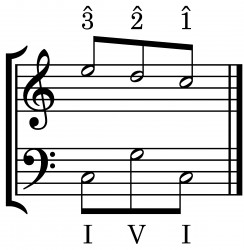
Carl Schachter, Arnold Whittall, and why music analysis matters
9th June 2026
Two recent deaths have robbed the world of music analysis of a pair of its most revered figures. Carl Schachter, who has died at the age of 93, was a pupil of (and subsequently collaborator with) Felix Salzer, himself one of Heinrich Schenker’s foremost students. Schachter continued to enrich and broaden the teaching of Schenkerian analysis, including important work on its application to issues of rhythm (which Schenker, focussing on harmonic and contrapuntal matters, largely bypassed). His influence went well beyond the... read more
read more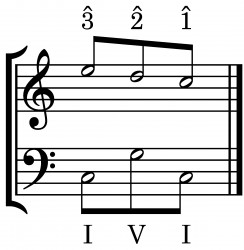
Carl Schachter, Arnold Whittall, and why music analysis matters
9th June 2026
Two recent deaths have robbed the world of music analysis of a pair of its most revered figures. Carl Schachter, who has died at the age of 93, was a pupil of (and subsequently collaborator with) Felix Salzer, himself one of Heinrich Schenker’s foremost students. Schachter continued to enrich and broaden the teaching of Schenkerian analysis, including important work on its application to issues of rhythm (which Schenker, focussing on harmonic and contrapuntal matters, largely bypassed). His influence went well beyond the... read more
read more
Music of the Iberian Peninsula, Part 2: ‘O quam gloriosum’ – The Spanish and Portuguese Golden Age
2nd June 2026
Over the past fortnight, I’ve been bathed in the most glorious, radiant, transformative light. Not the UK’s recent unseasonable heatwave, but the extraordinary vocal polyphony of the Siglo de Oro: the Spanish (and Portuguese) ‘Golden Century’. Extending from the late 15th to the early 17th century, this was a time of remarkable artistic flowering on the Iberian Peninsula, coinciding with the emergence of Spain and Portugal as global imperial powers with extensive colonial territories in the Americas, Africa and Asia. The... read more
read more