 FREE UK SHIPPING OVER £35!
The Spin Doctor Europadisc's Weekly Column
Revisiting Old Favourites: Historic Classical Labels
4th March 2026
4th March 2026
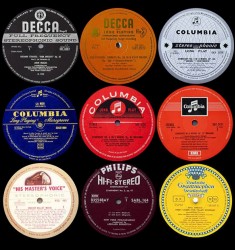 For many classical music listeners and collectors, they can inspire as much devotion as the greatest composers and performers. To marketing and consumer experts, it’s known as ‘brand loyalty’, but there’s also a strong whiff of nostalgia to it. The earliest recordings one can remember (perhaps from the family record collection) make an often indelible impression: in my case, it was the Band of HM Royal Marines on His Master’s Voice, and The Goons on an old Decca 78 as well as a 45rpm vinyl EP. Later on, one’s own first purchases can also have a lasting impact (Handel’s Fireworks Music, an Archiv Produktion recording reissued on Deutsche Grammophon).
Old record labels – whether defunct or subsumed into larger companies – are big business these days, tapping into a seam of nostalgia and a perception that historic recording techniques (particularly from the pioneering early days of the stereo era) had a mixture of warmth and immediacy that has rarely since been matched. A few years ago, the boxes of Mercury Living Presence recordings issued by Universal, and of RCA Living Stereo from Sony, were huge hits with collectors, and artist-themed reissues of the former series now appearing on Eloquence Classics have a similarly enthusiastic following.
Thanks to their fabled recording techniques (whether microphone placement or recording onto 35mm film), American labels seem to score particularly strongly among collectors. Vox Turnabout recordings featuring regional US orchestras under the likes of Maurice Abravanel, Sergiu Comissiona, Stanislaw Skrowaczewski and Walter Susskind have recently impressed critics and collectors alike, while Westminster Records (with artists including Hermann Scherchen, Hans Knappertsbusch and the Vienna Konzerthaus Quartet) and William Steinberg’s Pittsburgh recordings for Command Records have also been enthusiastically received.
European record labels proliferated from the pioneering work of Emile Berliner and others. The British Gramophone Company (with its distinctive His Master’s Voice trademark painting featuring the terrier Nipper peering attentively at an old-style horn gramophone) parted company from its German counterpart Deutsche Grammophon Gesellschaft at the outbreak of World War I. The latter still retained the German rights to the Nipper trademark until 1949, when they were sold to EMI’s Electrola division. In 1931 the Gramophone Company merged with the Columbia Graphophone Company (another English-based firm, not to be confused with the American Columbia Records) to create Electric and Musical Industries Ltd (EMI), although the use of EMI as a label imprint didn’t come until the 1970s (as a successor to the Columbia and Parlophone imprints).
The merger of labels into ever larger conglomerates is a continued source of confusion for many customers. Both RCA and Columbia/CBS are now part of Sony Classical, while Deutsche Grammophon and Decca (the latter historically EMI’s chief British rival) are part of Universal Music, with the revered Dutch Philips label having been absorbed into Decca in 1999. Smaller labels are often born from such mergers: Pentatone was formed in 2001 by three former Philips executives, and is now one of the best-regarded medium-sized classical imprints out there, with an impressive roster of artists; in 2022 it was acquired by the San Francisco Conservatory of Music, and accordingly boasts prominent performers from both Europe and the United States.
The much-missed ASV Records (Academy Sound and Vision) was founded by former Argo Records executives when the latter’s parent company, Decca, became part of the PolyGram group in 1980. Defunct since 2007, its artists included conductors Enrique Bátiz and Loris Tjeknavorian, the Cardinall's Musick vocal ensemble, the Lindsay String Quartet, and pianists Gordon Fergus-Thompson and John Lill. ASV recordings have since reappeared (rather fitfully) on reissue labels including Eloquence Classics and Alto. We are regularly asked by frustrated customers whether we can obtain old ASV recordings: a more comprehensive reissue programme is badly needed!
From Telefunken and Heliodor, via Fonit Cetra (with its impressive list of Italian operatic rarities featuring now legendary singers) and Everest, to Collins Classics and Pickwick, the history of classical records is positively awash with names that will prompt wistful reminiscences from many a music lover. Do write to tell us about your favourites!
Latest Posts
Music of the Iberian Peninsula, Part 3: More observations on the Golden Age
16th June 2026
Our last visit to the Iberian peninsula, a fortnight ago, was an insanely ambitious, necessarily broad-brush survey of the Spanish and Portuguese Golden Age, covering vocal and instrumental music, the sacred and the secular. This week, we take a more concise and (I hope) focussed look at a few of the sacred vocal masterpieces which exemplify the particular fervour and intensity of this remarkable period of musical history. They reflect the special place the peninsula had as a bulwark against the Reformation that had taken... read more
read more
Music of the Iberian Peninsula, Part 3: More observations on the Golden Age
16th June 2026
Our last visit to the Iberian peninsula, a fortnight ago, was an insanely ambitious, necessarily broad-brush survey of the Spanish and Portuguese Golden Age, covering vocal and instrumental music, the sacred and the secular. This week, we take a more concise and (I hope) focussed look at a few of the sacred vocal masterpieces which exemplify the particular fervour and intensity of this remarkable period of musical history. They reflect the special place the peninsula had as a bulwark against the Reformation that had taken... read more
read more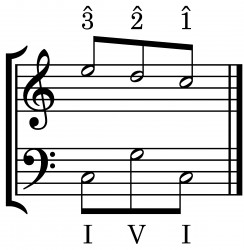
Carl Schachter, Arnold Whittall, and why music analysis matters
9th June 2026
Two recent deaths have robbed the world of music analysis of a pair of its most revered figures. Carl Schachter, who has died at the age of 93, was a pupil of (and subsequently collaborator with) Felix Salzer, himself one of Heinrich Schenker’s foremost students. Schachter continued to enrich and broaden the teaching of Schenkerian analysis, including important work on its application to issues of rhythm (which Schenker, focussing on harmonic and contrapuntal matters, largely bypassed). His influence went well beyond the... read more
read more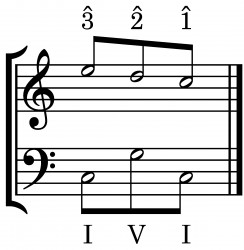
Carl Schachter, Arnold Whittall, and why music analysis matters
9th June 2026
Two recent deaths have robbed the world of music analysis of a pair of its most revered figures. Carl Schachter, who has died at the age of 93, was a pupil of (and subsequently collaborator with) Felix Salzer, himself one of Heinrich Schenker’s foremost students. Schachter continued to enrich and broaden the teaching of Schenkerian analysis, including important work on its application to issues of rhythm (which Schenker, focussing on harmonic and contrapuntal matters, largely bypassed). His influence went well beyond the... read more
read more
Music of the Iberian Peninsula, Part 2: ‘O quam gloriosum’ – The Spanish and Portuguese Golden Age
2nd June 2026
Over the past fortnight, I’ve been bathed in the most glorious, radiant, transformative light. Not the UK’s recent unseasonable heatwave, but the extraordinary vocal polyphony of the Siglo de Oro: the Spanish (and Portuguese) ‘Golden Century’. Extending from the late 15th to the early 17th century, this was a time of remarkable artistic flowering on the Iberian Peninsula, coinciding with the emergence of Spain and Portugal as global imperial powers with extensive colonial territories in the Americas, Africa and Asia. The... read more
read more