 FREE UK SHIPPING OVER £35!
The Spin Doctor Europadisc's Weekly Column
JL Bach and his Cantatas
24th February 2026
24th February 2026
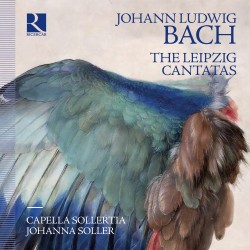 If you haven’t previously encountered the astonishing music of Johann Ludwig Bach (1677–1731), don’t worry: neither had we! This distant cousin of J.S. Bach (their great-grandfathers were brothers, and sons of the Bach family patriarch, Veit Bach) was also a native of Thuringia, born on 4 February 1677 in Thal, near the ‘Bach town’ of Eisenach where Johann Sebastian himself was born eight years later. It was thanks to the aspirations of his father, town organist Johann Jacob, that the young Johann Ludwig attended the gymnasium in Gotha, where he probably first expanded his musical horizons to absorb Italianate and (eventually) French influences which, like Johann Sebastian, he combined with elements of Germanic formal rigour.
Biographical details about Johann Ludwig are relatively sparse, but by the late 1690s he was employed as a court musician at Meiningen (possibly after a period spent in Italy), and by 1703 he had risen to the post of Kantor; from 1711 until his death twenty years later he occupied the position of Meiningen court Kapellmeister. His output would likely have included extensive chamber and orchestral works, but hardly any have survived. In 1725 he wrote a large-scale funeral work for the burial of Duke Ernst Ludwig; there are also a Mass and Magnificat, and almost a dozen motets. However, it is the complete annual cycle of sacred cantatas he composed in 1718–19 that established his reputation; by order of the duke, they were performed throughout the Meiningen lands. Originally there would have been about seventy of these, for the Sundays and feast days of the church year. However, only eighteen of them survive intact, and for this we have to thank Johann Sebastian, who copied them out for his own use in Leipzig in 1726, when a number of factors saw his own cantata output dwindle.
How J.S. came across these cantatas is unknown; he and Johann Ludwig are not known to have met, so perhaps it was by their reputation that the younger cousin’s interest was aroused. In any case, he was a shrewd judge of quality as well as famously proud of his Bachian heritage. The cantatas themselves are in a slightly older form than that used by J.S. himself in the 1720s, and follow the pattern of an Old Testament quotation (or dictum) followed by a recitative and aria, then a New Testament dictum, another recitative and aria, leading to a free chorus and concluding chorale. Within this basic formal template variety is introduced sometimes by extra movements, and also by duets or even chorus in the biblical quotations.
The default scoring is four-part voices in the choruses plus strings, continuo and (most typically) a pair of oboes as the wind component, but trumpets and drums add a thrilling sound to the Easter cantata Denn du wirst meine Seele nicht in der Hölle lassen, JLB21 (once thought to be the work of J.S. Bach), and a pair of hunting horns feature in Ich will meinen Geist in euch geben, JLB7. Against the sensitively deployed instrumental writing, the voices – whether solo or in consort – demonstrate a well-developed talent for word-setting combined with a natural grace and flow. As Jonathan Freeman-Attwood observes in February’s Gramophone magazine, ‘somehow this music “sounds Bach” as if there’s an imperceptible thread running through the family tree’.
All this and much more springs vividly to life in a new four-disc set from the Ricercar label, masterminded by Johanna Soller and her Capella Sollertia, and recorded across six sessions (three cantatas apiece) between 2022 and 2025. These are performers we haven’t encountered before, but they bring an engaging freshness and vitality to their performances which perfectly complements the music’s own qualities. A rotating team of soloists comprising four sopranos and pairs of countertenors, tenors and basses brings a youthful focus and brightness to the recitatives, arias and (especially) duets, and the smallish choir is equally adept at bring out the changing moods and dramatic trajectory of each work. They are partnered by an accomplished band of instrumentalists, nimble and responsive to Johann Ludwig’s often intricate yet never (compared with J.S.) unfeasibly virtuosic writing. Soller shapes the attractive melodies, underlying harmonies and handsomely set chorales with the greatest care, with an excellent sense of forward momentum and no fussy micromanaging impeding the flow.
Quite apart from the aforementioned Easter cantata, you might dip in at any point and still be astounded at the expressive richness and inventiveness of any of these works. To have them all gathered together in such a handsome set is a dream for Bachians everywhere. Beautifully presented, with inner packaging featuring J.S. Bach’s distinctive title pages to four of the cantatas, and Albrecht Dürer’s remarkable Wing of a Blue Roller gracing the cover, the texts and translations are partnered with an excellent and detailed essay by Bach expert Peter Wollny. I can’t recommend this set highly enough. It will certainly rank among the classical recording highlights of this year, and awards will surely follow. Not just Johann Ludwig Bach but also the Capella Sollertia are now firmly on the map. Let’s hope they record more from this hugely rewarding composer in the very near future!
The Recording:
Johann Ludwig Bach - The Leipzig Cantatas (Capella Sollertia/Soller) RIC482
Latest Posts
Music of the Iberian Peninsula, Part 3: More observations on the Golden Age
16th June 2026
Our last visit to the Iberian peninsula, a fortnight ago, was an insanely ambitious, necessarily broad-brush survey of the Spanish and Portuguese Golden Age, covering vocal and instrumental music, the sacred and the secular. This week, we take a more concise and (I hope) focussed look at a few of the sacred vocal masterpieces which exemplify the particular fervour and intensity of this remarkable period of musical history. They reflect the special place the peninsula had as a bulwark against the Reformation that had taken... read more
read more
Music of the Iberian Peninsula, Part 3: More observations on the Golden Age
16th June 2026
Our last visit to the Iberian peninsula, a fortnight ago, was an insanely ambitious, necessarily broad-brush survey of the Spanish and Portuguese Golden Age, covering vocal and instrumental music, the sacred and the secular. This week, we take a more concise and (I hope) focussed look at a few of the sacred vocal masterpieces which exemplify the particular fervour and intensity of this remarkable period of musical history. They reflect the special place the peninsula had as a bulwark against the Reformation that had taken... read more
read more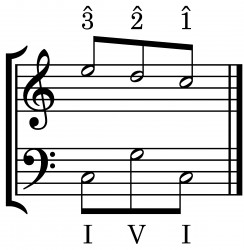
Carl Schachter, Arnold Whittall, and why music analysis matters
9th June 2026
Two recent deaths have robbed the world of music analysis of a pair of its most revered figures. Carl Schachter, who has died at the age of 93, was a pupil of (and subsequently collaborator with) Felix Salzer, himself one of Heinrich Schenker’s foremost students. Schachter continued to enrich and broaden the teaching of Schenkerian analysis, including important work on its application to issues of rhythm (which Schenker, focussing on harmonic and contrapuntal matters, largely bypassed). His influence went well beyond the... read more
read more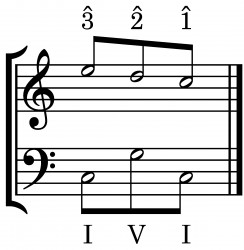
Carl Schachter, Arnold Whittall, and why music analysis matters
9th June 2026
Two recent deaths have robbed the world of music analysis of a pair of its most revered figures. Carl Schachter, who has died at the age of 93, was a pupil of (and subsequently collaborator with) Felix Salzer, himself one of Heinrich Schenker’s foremost students. Schachter continued to enrich and broaden the teaching of Schenkerian analysis, including important work on its application to issues of rhythm (which Schenker, focussing on harmonic and contrapuntal matters, largely bypassed). His influence went well beyond the... read more
read more
Music of the Iberian Peninsula, Part 2: ‘O quam gloriosum’ – The Spanish and Portuguese Golden Age
2nd June 2026
Over the past fortnight, I’ve been bathed in the most glorious, radiant, transformative light. Not the UK’s recent unseasonable heatwave, but the extraordinary vocal polyphony of the Siglo de Oro: the Spanish (and Portuguese) ‘Golden Century’. Extending from the late 15th to the early 17th century, this was a time of remarkable artistic flowering on the Iberian Peninsula, coinciding with the emergence of Spain and Portugal as global imperial powers with extensive colonial territories in the Americas, Africa and Asia. The... read more
read more