 FREE UK SHIPPING OVER £35!
The Spin Doctor Europadisc's Weekly Column
England’s Finest: John Dowland
18th February 2026
18th February 2026
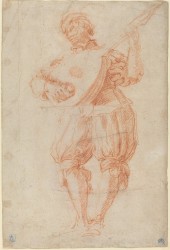 György Kurtág’s 100th birthday (see last week’s Spin Doctor column) is not the only major musical anniversary to fall this week. This Friday marks 400 years since the death of a composer who (along with his older contemporary, William Byrd) has a fair claim to be called England’s greatest, regardless of period. John Dowland (c.1563–20 February 1626) was not only the greatest lutenist of his time, but also one of the great songwriters. Starting with his First Booke of Songes or Ayres (1597, reprinted several times during the composer’s lifetime), his books of songs were publishing phenomena, earning wide audiences thanks to their performer-friendly table-top format. And his music’s recurring themes of nostalgia and aching melancholy launched a seam of deep, pained lyricism which has formed a distinct strand in English music ever since.
Little is known about Dowland’s earliest years, but he was probably born in London and served an apprenticeship to an established lute teacher from about the age of ten. In 1579, he moved to Paris in the service of England’s ambassador to the French court, Sir Henry Cobham. There he would have absorbed the musical atmosphere of the times, both the vogue for lute music and the genre of airs, the French term for courtly songs which features in the titles of three of his own published collections. It was in Paris, too, that he was first drawn to the Catholic faith, which caused him problems later when he sought official position at the Elizabethan court. After returning to England in 1584, he soon gained a Bachelor of Music degree at Christ Church, Oxford, but from the mid-1590s his failure to secure a post worthy of his talents at home led to a series of foreign travels in the German and Italian lands.
From 1598, Dowland was court lutenist to Christian IV of Denmark. Although his second and third books of songs, as well as the consort collection Lachrimae, or Seaven Teares (1604), were all published in London, in employment terms he remained on the margins in his native land. It was only in 1612 (the year of his final published collection of songs, A Pilgrimes Solace) that he was hired into the service of James I of England, nine years after the latter had succeeded Elizabeth I. And it was at James’s magnificent funeral in May 1625 at Westminster Abbey that he participated as one of the court lutenists, less than a year before his own death.
Both professional frustration and the fervid atmosphere of turbulent times undoubtedly added to the overarching mood of melancholy that characterises all but the cheeriest of Dowland’s works. But it is his skills as a songwriter (often setting memorable verses of his own), and his gifts at fashioning a short phrase pregnant with potential that mark him out as a musical genius. He turned the Lachrimae pavane of 1596, with its distinctive ‘weeping’ descents, leap of a minor sixth and affecting harmonic support, into the song ‘Flow my teares’ in The Second Booke of Songs or Ayres (1600). It also served as the basis for the seven Lachrimae for viol consort of 1604, a set of ensemble variations which ranks among the greatest works by any British composer.
No less powerful are such songs as ‘Sorrow stay’ (also from The Second Booke) or the astonishing ‘In darkness let me dwell’ from the Musicall Banquet published by Dowland’s son Robert in 1610. The repetition of key phrases and words is as crucial to them as their melodic and harmonic turns. The consort piece Semper Dowland, semper dolens from the broader Lachrimae collection is another essential work, its punning title translating as ‘Always Dowland, always doleful’. Even such toe-tapping dances as The King of Denmark’s Galliard and The Earl of Essex Galliard from the same collection seem to come with a melancholic undertow.
Although Dowland’s music never fell fully into neglect, even as the lute itself fell out of fashion, it was with the early-20th-century ‘rediscovery’ of his music as part of the early music revival that his posthumous reputation was really given a shot in the arm. From Granville Bantock and Benjamin Britten to Thomas Adès and Harrison Birtwistle, 20th- and 21st-century composers have found in him an enduringly fruitful source of inspiration, as have contemporary songwriters working in more popular genres like Elvis Costello and Sting.
While the groundbreaking recording of Dowland’s complete works by The Consort of Musicke under Anthony Rooley on Decca’s L’Oiseau-Lyre imprint is currently deleted (snap up a copy if you find one!), and 400th anniversary issues are scandalously few, there are still plenty of fine recordings to choose from for those wanting to investigate further the music of this greatest of English musical geniuses. Below we offer a handful of our top recommendations.
Recommended recordings:
Dowland - First Booke of Songes or Ayres (G Davidson, D Miller) SIGCD553
Dowland - Lachrimae or Seven Tears (Phantasm) CKR527
Dowland - Lachrimae or Seaven Teares (Hesperion XX, Savall) AVSA9901
Dowland – Complete Solo Lute Music (J Lindberg) BISCD72224
Songs of Passion: Dowland + Purcell (L Desandre, T Dunford, Jupiter Ensemble) 2173282845
Further reading:
Latest Posts
Music of the Iberian Peninsula, Part 3: More observations on the Golden Age
16th June 2026
Our last visit to the Iberian peninsula, a fortnight ago, was an insanely ambitious, necessarily broad-brush survey of the Spanish and Portuguese Golden Age, covering vocal and instrumental music, the sacred and the secular. This week, we take a more concise and (I hope) focussed look at a few of the sacred vocal masterpieces which exemplify the particular fervour and intensity of this remarkable period of musical history. They reflect the special place the peninsula had as a bulwark against the Reformation that had taken... read more
read more
Music of the Iberian Peninsula, Part 3: More observations on the Golden Age
16th June 2026
Our last visit to the Iberian peninsula, a fortnight ago, was an insanely ambitious, necessarily broad-brush survey of the Spanish and Portuguese Golden Age, covering vocal and instrumental music, the sacred and the secular. This week, we take a more concise and (I hope) focussed look at a few of the sacred vocal masterpieces which exemplify the particular fervour and intensity of this remarkable period of musical history. They reflect the special place the peninsula had as a bulwark against the Reformation that had taken... read more
read more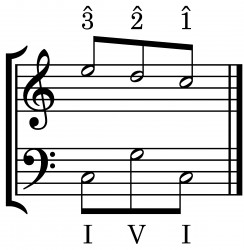
Carl Schachter, Arnold Whittall, and why music analysis matters
9th June 2026
Two recent deaths have robbed the world of music analysis of a pair of its most revered figures. Carl Schachter, who has died at the age of 93, was a pupil of (and subsequently collaborator with) Felix Salzer, himself one of Heinrich Schenker’s foremost students. Schachter continued to enrich and broaden the teaching of Schenkerian analysis, including important work on its application to issues of rhythm (which Schenker, focussing on harmonic and contrapuntal matters, largely bypassed). His influence went well beyond the... read more
read more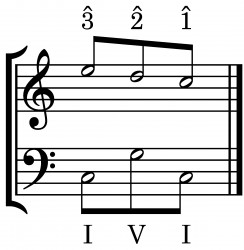
Carl Schachter, Arnold Whittall, and why music analysis matters
9th June 2026
Two recent deaths have robbed the world of music analysis of a pair of its most revered figures. Carl Schachter, who has died at the age of 93, was a pupil of (and subsequently collaborator with) Felix Salzer, himself one of Heinrich Schenker’s foremost students. Schachter continued to enrich and broaden the teaching of Schenkerian analysis, including important work on its application to issues of rhythm (which Schenker, focussing on harmonic and contrapuntal matters, largely bypassed). His influence went well beyond the... read more
read more
Music of the Iberian Peninsula, Part 2: ‘O quam gloriosum’ – The Spanish and Portuguese Golden Age
2nd June 2026
Over the past fortnight, I’ve been bathed in the most glorious, radiant, transformative light. Not the UK’s recent unseasonable heatwave, but the extraordinary vocal polyphony of the Siglo de Oro: the Spanish (and Portuguese) ‘Golden Century’. Extending from the late 15th to the early 17th century, this was a time of remarkable artistic flowering on the Iberian Peninsula, coinciding with the emergence of Spain and Portugal as global imperial powers with extensive colonial territories in the Americas, Africa and Asia. The... read more
read more