 FREE UK SHIPPING OVER £35!
The Spin Doctor Europadisc's Weekly Column
Audiences Behaving Badly? (or: Rumble at the Garden)
3rd February 2026
3rd February 2026
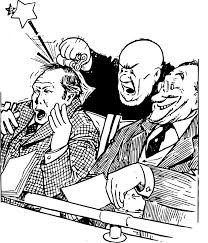 We live in volatile times. Anyone who has been brave enough to watch the news for even a few seconds will know this. The same is true, it seems, of our concert halls and opera houses, and I’m not talking here about the funding cuts and other threats hanging over so many venues and art organisations. The widespread booing at the end of a recent truncated Covent Garden performance of Puccini’s Turandot made headlines because it was so uncharacteristic of normal British behaviour. The circumstances, however, were highly unusual: tenor Roberto Alagna, singing the lead role of Prince Calaf, was announced as having fallen ill after Act 2 of the opera. As a result, Act 3 started after the work’s signature aria ‘Nessun dorma’ (the very reason that many in the audience will have been there), and resumed with the Royal Ballet and Opera’s head of music, Richard Hetherington, singing from the wings, and choreologist Tatiana Novaes Coelho acting out the part of Calaf in costume. The performance also terminated before the final pages. No wonder so many punters were, to put it mildly, upset.
Several elements of this incident need unpacking. Firstly, Richard Hetherington is not a trained tenor, and it was extremely brave of him to step up in ‘the show must go on’ spirit. But many have expressed astonishment that there was no standby for this demanding role, although it seems that it’s common practice at Covent Garden for standbys to be stood down once the show is under way (!). RBO (as we must now learn to call them after their recent rebranding) did offer patrons a 50% refund, which is little comfort if you’ve splashed out on an expensive evening out to hear your favourite aria in context. But it seems that Covent Garden may have been less than transparent about the precise reasons for Alagna’s withdrawal, which should probably be the real headline as further details emerge of what went on backstage. In any event, the many indignant booers should perhaps have considered the plight of poor Mr Hetherington in all this: it was a cruel way to be thrust into the limelight, and he merits some sort of award (or, at the very least, a bonus).
While on this occasion the RBO may have shot itself in the foot, audiences are becoming more restive than once they were. Just recently, there was an altercation between two Covent Garden audience members over the fact that one of them was using a phone during the performance: an increasingly widespread and maddening trend, whatever the management of Birmingham’s Symphony Hall (where photographs and posts are encouraged) may think. If anything is likely to stir the passions, it’s Italian opera, and Italian audiences are famously vocal in both their praise and their criticism. Wagner audiences can be demonstrative, too, but their boos are usually reserved for overindulgent and wilful productions and production teams.
The increasingly boisterous behaviour of some audiences may be a sign of the times we live in, and also of the constant atmosphere hype that now surrounds so much of the arts. Continental audiences are somewhat less reserved about these matters, although the days when the average Viennese cab driver could tell you what was showing at the Staatsoper on any particular evening (as was the case when I first visited the Austrian capital) are probably long gone. It is, of course, great if people feel passionately about the art form, but is this really what lies behind such ugly behaviour?
Those who wish for more well-behaved times, however, might pause to consider that, historically, listening to a classical performance in impeccable silence, and applauding only at the end of a symphony, concerto or act of an opera, really is quite a recent phenomenon. Even Mahler’s symphonies were sometimes greeted with ovations between movements (as happened after the first movement of the Third Symphony in Krefeld, when Richard Strauss actually went up to the podium to congratulate the composer). In Beethoven and Mozart’s time, such applause was the rule rather than the exception, and the goings-on in opera houses in the Baroque, Classical and even Romantic periods would make most modern audiences blush.
Of course, much of the more recent repertoire – certainly from Wagner onwards, and especially in Anglo-German lands – was composed in the expectation that audiences would listen in attentive, even reverential silence. In this respect, classical music supplanted churchgoing as a spiritual ritual to be undertaken by the ‘faithful’. (Not for nothing do Wagnerians undertake the so-called ‘pilgrimage’ to Bayreuth...) And, as earlier music was added to the repertoire, it too became subject to a devoted focus on the part of listeners that it would seldom have been treated to when originally performed.
Another factor needs to be considered: the part played by recording in fostering a ‘sterile’ atmosphere around a piece of music, devoid of such intrusions as audience coughing, page turning, seat shuffling and the like. The increasingly high fidelity of recordings fostered expectations of a similarly silent ‘aura’ around live performances. Those who favour ‘live’ recordings (by which I mean really live ones, caught in one take, on the wing, in public) over studio performances will know exactly what this trend robs us of. On the other hand, is preserving such live performances, however thrilling they may be, in aspic (or rather, on disc) really any better? So many revered musicians gave of their best in the immediacy of a live performance, fluffs, coughs, applause and all, that I still find it astonishing when people prefer more antiseptic and improbably sumptuous studio accounts. There are, admittedly, some performances where muddy sound and poor balance really cast too much of a veil over proceedings, but there are very many that don’t.
As for audience behaviour, perhaps increasing boorishness is where we’re heading at the moment (certainly a sign of the times). It would be nice to think, however, that if audiences were to treat artists and one another with more respect and consideration while preserving their underlying passion for music, arts organisations (and some more wayward performers) could do the same.
Latest Posts
Music of the Iberian Peninsula, Part 3: More observations on the Golden Age
16th June 2026
Our last visit to the Iberian peninsula, a fortnight ago, was an insanely ambitious, necessarily broad-brush survey of the Spanish and Portuguese Golden Age, covering vocal and instrumental music, the sacred and the secular. This week, we take a more concise and (I hope) focussed look at a few of the sacred vocal masterpieces which exemplify the particular fervour and intensity of this remarkable period of musical history. They reflect the special place the peninsula had as a bulwark against the Reformation that had taken... read more
read more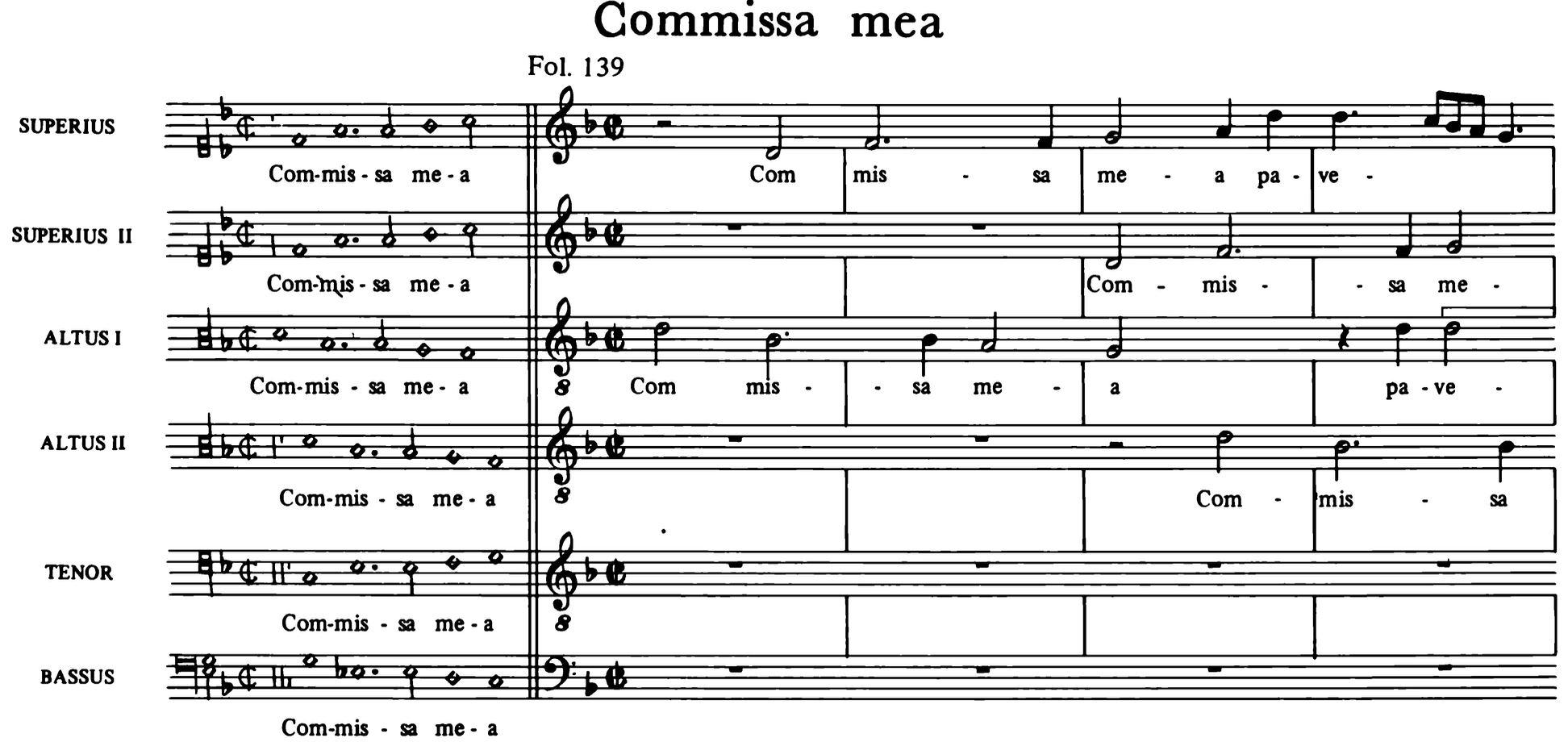
Music of the Iberian Peninsula, Part 3: More observations on the Golden Age
16th June 2026
Our last visit to the Iberian peninsula, a fortnight ago, was an insanely ambitious, necessarily broad-brush survey of the Spanish and Portuguese Golden Age, covering vocal and instrumental music, the sacred and the secular. This week, we take a more concise and (I hope) focussed look at a few of the sacred vocal masterpieces which exemplify the particular fervour and intensity of this remarkable period of musical history. They reflect the special place the peninsula had as a bulwark against the Reformation that had taken... read more
read more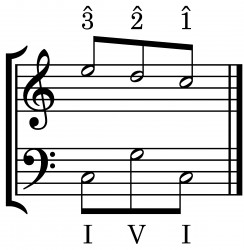
Carl Schachter, Arnold Whittall, and why music analysis matters
9th June 2026
Two recent deaths have robbed the world of music analysis of a pair of its most revered figures. Carl Schachter, who has died at the age of 93, was a pupil of (and subsequently collaborator with) Felix Salzer, himself one of Heinrich Schenker’s foremost students. Schachter continued to enrich and broaden the teaching of Schenkerian analysis, including important work on its application to issues of rhythm (which Schenker, focussing on harmonic and contrapuntal matters, largely bypassed). His influence went well beyond the... read more
read more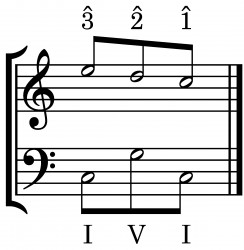
Carl Schachter, Arnold Whittall, and why music analysis matters
9th June 2026
Two recent deaths have robbed the world of music analysis of a pair of its most revered figures. Carl Schachter, who has died at the age of 93, was a pupil of (and subsequently collaborator with) Felix Salzer, himself one of Heinrich Schenker’s foremost students. Schachter continued to enrich and broaden the teaching of Schenkerian analysis, including important work on its application to issues of rhythm (which Schenker, focussing on harmonic and contrapuntal matters, largely bypassed). His influence went well beyond the... read more
read more
Music of the Iberian Peninsula, Part 2: ‘O quam gloriosum’ – The Spanish and Portuguese Golden Age
2nd June 2026
Over the past fortnight, I’ve been bathed in the most glorious, radiant, transformative light. Not the UK’s recent unseasonable heatwave, but the extraordinary vocal polyphony of the Siglo de Oro: the Spanish (and Portuguese) ‘Golden Century’. Extending from the late 15th to the early 17th century, this was a time of remarkable artistic flowering on the Iberian Peninsula, coinciding with the emergence of Spain and Portugal as global imperial powers with extensive colonial territories in the Americas, Africa and Asia. The... read more
read more