 FREE UK SHIPPING OVER £35!
The Spin Doctor Europadisc's Weekly Column
Performance Diary: A Late Renaissance Tale of Murder & Death + When More is Less
21st January 2026
21st January 2026
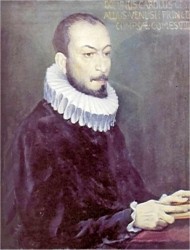 During the past week I managed to find time to attend not one but two memorable concerts in London, spurred on by the New Year’s resolutions featured here a couple of weeks ago. The Church of St Martin-in-the-Fields, situated at the north-east corner of Trafalgar Square, was built to a neoclassical design by Scottish architect James Gibbs between 1722 and 1726. It launched its tercentenary celebrations in highly distinctive fashion with two performances of a ‘theatrical concert’ entitled ‘The Death of Gesualdo’. Directed by Bill Barclay and choreographed by Will Tuckett, it featured the considerable vocal talents of The Gesualdo Six under director Owain Park, and the production by Concert Theatre Works starred a cast of actors led by Markus Weinfurter as the tormented late-Renaissance genius.
Any retelling of Gesualdo’s life will not be for the faint-hearted: born into an Italian noble family that had acquired the principality of Venosa, he originally seemed destined for a career in the church, but in 1586 he married his first cousin, Donna Maria d’Avalos. He was devoted to music from an early age, and played the lute, harpsichord and guitar. His musical acquaintances included Giovanni de Macque. In October 1590, Donna Maria and her lover, Fabrizio Carafa, Duke of Andria, were caught by Gesualdo in flagrante delicto at the Palazzo San Severo in Naples; he murdered them on the spot, and their bodies were mutilated. It is said that he even returned to the bedroom as ‘he wasn't certain yet they were dead’, but the Gran Corte della Vicaria found that he had not committed a crime.
Gesualdo remarried in 1594 (to Leonora d’Este, niece of the Duke of Ferrara), but his new wife later accused him of abuse and attempted to divorce him. The grisly end to his first marriage overshadowed not just his posthumous reputation but also his creative output. It is almost impossible to listen to the increasingly tortuous chromaticism of his later madrigals and his late settings of the Tenebrae responsories without being aware of this double homicide or his depression and appetite for daily beatings administered by his servants. Yet the stark textural and harmonic contrasts that sound to us so modern (the major–minor juxtapositions, for instance, astonishingly prescient of Mahler) occur within a context that is a direct extension of late Renaissance mannerist counterpoint, rather than an embracing of the direct new style of the nascent Italian Baroque.
Another composer who left uniquely powerful music while occupying a highly individualist niche in a rapidly changing musical world was Leoš Janáček. The latest in Simon Rattle’s ongoing survey of the operas with the London Symphony Orchestra took place at the Barbican last Tuesday and Thursday with The Makropulos Affair. Apart from some appropriate gestures, entrances and exits on the part of the cast, this was essentially a concert performance of Janáček’s penultimate opera, but the superb playing of the orchestra and the sheer sense of involvement from the cast (headed by the magnetic Marlis Petersen as Emilia Marty) created a vivid sense of drama. The fractured lyricism of the score only takes wing in the opera’s closing pages, but Petersen relished the challenges, alongside the unmistakable tenor of Aleš Briscein as her distant descendant Albert Gregor, Svatopluk Sem as his rival in litigation, Baron Prus, and the imposing Jan Martiník as the lawyer, Dr Kolenatý.
The Rattle cycle is appearing on the orchestra’s own label, LSO Live; hearing it in the flesh (as it were), one was more aware of the problems in mounting so ambitious a work with the orchestra on stage directly behind the singers. There were many moments where one struggled to hear the voices and words, and this wasn’t helped by Rattle’s way of forcefully underlining and exaggerating any momentary climax. The ovations at the end and subsequent press reviews were all ecstatic, yet I came away with a mixed sense of awe at the music itself and the marvellous individual performances, and frustration at Rattle’s interventionist approach. The opening Prelude, for instance, though brilliantly played, was far too fast, while the orchestral coda felt like Bluebeard on steroids. Sometimes, more is less! Ultimately I longed for the more idiomatic approach of Jakub Hrůša at Covent Garden last November, or indeed the altogether earthier manner of the late Charles Mackerras, steeped in the Janáček tradition and the tiniest corners of the score, yet never letting that detailed knowledge get in the way of the overall dramatic flow.
Recommended recordings:
Gesualdo - Tenebrae Responsories for Maundy Thursday + Tallis (Gesualdo Six) CDA68348
Gesualdo: Death for Five Voices (A Film by Werner Herzog) 109208 (DVD) / 109209 (Blu-ray)
Latest Posts
Music of the Iberian Peninsula, Part 3: More observations on the Golden Age
16th June 2026
Our last visit to the Iberian peninsula, a fortnight ago, was an insanely ambitious, necessarily broad-brush survey of the Spanish and Portuguese Golden Age, covering vocal and instrumental music, the sacred and the secular. This week, we take a more concise and (I hope) focussed look at a few of the sacred vocal masterpieces which exemplify the particular fervour and intensity of this remarkable period of musical history. They reflect the special place the peninsula had as a bulwark against the Reformation that had taken... read more
read more
Music of the Iberian Peninsula, Part 3: More observations on the Golden Age
16th June 2026
Our last visit to the Iberian peninsula, a fortnight ago, was an insanely ambitious, necessarily broad-brush survey of the Spanish and Portuguese Golden Age, covering vocal and instrumental music, the sacred and the secular. This week, we take a more concise and (I hope) focussed look at a few of the sacred vocal masterpieces which exemplify the particular fervour and intensity of this remarkable period of musical history. They reflect the special place the peninsula had as a bulwark against the Reformation that had taken... read more
read more
Carl Schachter, Arnold Whittall, and why music analysis matters
9th June 2026
Two recent deaths have robbed the world of music analysis of a pair of its most revered figures. Carl Schachter, who has died at the age of 93, was a pupil of (and subsequently collaborator with) Felix Salzer, himself one of Heinrich Schenker’s foremost students. Schachter continued to enrich and broaden the teaching of Schenkerian analysis, including important work on its application to issues of rhythm (which Schenker, focussing on harmonic and contrapuntal matters, largely bypassed). His influence went well beyond the... read more
read more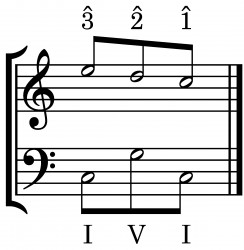
Carl Schachter, Arnold Whittall, and why music analysis matters
9th June 2026
Two recent deaths have robbed the world of music analysis of a pair of its most revered figures. Carl Schachter, who has died at the age of 93, was a pupil of (and subsequently collaborator with) Felix Salzer, himself one of Heinrich Schenker’s foremost students. Schachter continued to enrich and broaden the teaching of Schenkerian analysis, including important work on its application to issues of rhythm (which Schenker, focussing on harmonic and contrapuntal matters, largely bypassed). His influence went well beyond the... read more
read more
Music of the Iberian Peninsula, Part 2: ‘O quam gloriosum’ – The Spanish and Portuguese Golden Age
2nd June 2026
Over the past fortnight, I’ve been bathed in the most glorious, radiant, transformative light. Not the UK’s recent unseasonable heatwave, but the extraordinary vocal polyphony of the Siglo de Oro: the Spanish (and Portuguese) ‘Golden Century’. Extending from the late 15th to the early 17th century, this was a time of remarkable artistic flowering on the Iberian Peninsula, coinciding with the emergence of Spain and Portugal as global imperial powers with extensive colonial territories in the Americas, Africa and Asia. The... read more
read more