 FREE UK SHIPPING OVER £35!
The Spin Doctor Europadisc's Weekly Column
Quiet Focus: Celebrating Morton Feldman
14th January 2026
14th January 2026
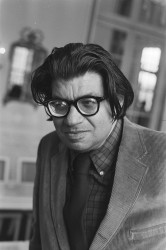 Most classical music of the standard repertoire – from the Baroque period to the present day – takes the idea of musical development (of motifs, themes and tunes) as a fundamental principle, within a variety of forms that vary from period to period, and often within some sort of narrative framework (explicit or implicit). The music of the American composer Morton Feldman (1926–1987) is quite different. It is concerned with extension rather than development, often evolving quietly and gradually over large time-spans. It shares some features with the post-war minimalist movement, but stands apart from it because, rather than surrendering to a hypnotic, pulse-driven regularity, it moves slowly and morphs unexpectedly, requiring from composer, performer and listener alike an intense concentration. It is music of precision, most often conceived on a ‘flat’, neutral plane, as far away as one can imagine from conventional ideas of narrative process.
Among formative influences on the New York City-born Feldman was the music of two other iconoclastic individualists, Erik Satie and Edgard Varèse, but even more crucial was the abstract art of such New York artists as Robert Rauschenberg, Frank O’Hara and Philip Guston. Feldman studied composition with the German-Jewish émigré Stefan Wolpe (himself a student of Schreker and Webern), but early on he rejected traditional compositional systems, whether tonal or serial. The indeterminacy of his early music (eschewing traditional notation in favour of graphic scores which indicate gesture, register and texture without specifying particular pitches) reflects his friendship with John Cage. By the 1970s, however, Feldman had moved to more precise notation, using traditional staves and noteheads, but the way in which he took simple gestures and clusters, allowing them to change without the feeling of being manipulated was anything but traditional: ‘My past experience was not to “meddle” with the material, but use my concentration as a guide to what might transpire.’
Over time, Feldman’s music grew in scale from the shorter early works, via the more standard scale of what might be termed his ‘middle period’, to the vast durations of his later works (the 75-minute piano work For Bunita Marcus, the four-hour For Philip Guston (for flute, percussion and piano), and the even longer String Quartet II. Yet even as the duration of his works increased (reflecting a preoccupation with ‘scale’ over ‘form’, with textile-like patterns rather than representational allusions), the dynamic range remained largely at the quiet end of the spectrum, drawing the listener in and requiring extreme focus. Each gesture seems to drip of its own accord, yet each has been carefully considered and placed by the composer. I once saw Feldman (from a frustrating distance, at the other side of a publisher’s office) make a revision to one of his later scores. The manuscript was brought out and set in front of him; he stared at one particular page for what must have been a good 10 to 15 minutes, then took his pencil and, with a single stroke, made one tiny adjustment – and that was it!
One of his last works, the orchestral piece Coptic Light (1986), whose 25-minute length makes it an ideal starting point for any newcomer to Feldman’s music, is nevertheless wonderfully dynamically contained, even when the textures are at their most dense. Other essential works include the series of pieces for solo and accompanied viola The Viola in My Life (1970–71), Rothko Chapel (1971) for soprano, alto, mixed choir and instruments, and the one-act opera Neither (1977) for soprano and orchestra, to a text by Samuel Beckett.
Several studies of various aspects of Feldman’s output are in print, but are as pricey as academic volumes tend to be these days. Better to start with the writings of the man himself, so try searching out a copy of his collected writings, Give my regards to Eighth Street. Once entered into, Feldman’s musical world is a uniquely compelling one. Often larger than life, like the very man, yet with the same quiet focus, it represents one of the most fascinating alternatives to the prevailing orthodoxies (modernist, minimalist, post-modernist) of the late 20th century. Happy Birthday, Morty!
Contemporary music has lost one of its most eloquent champions with the death of the music critic Andrew Clements, who passed away at the weekend at the age of 75. Well known as the chief music critic of The Guardian for over 30 years, he wrote intelligently, passionately, persuasively and with commendable clarity about a wide range of music, with a particular focus on 20th-century and contemporary works as well as a broad range of piano music. Before joining The Guardian, he wrote for the New Statesman and the Financial Times. For many years, he also wrote informed and perceptive programme notes for first performances of works by Harrison Birtwistle and others. His wide-ranging expertise will be missed by anyone with an enthusiasm for the vibrant contemporary music scene.
Morton Feldman - Recommended recordings:
Feldman - The Early Years (+ John Cage) 806642String Quartet II [1983] (Flux Quartet) MODE11216
For Philip Guston [1984] (California Ear Unit) BRIDGE9078AD
For Bunita Marcus [1985] (Marc-André Hamelin) CDA68048
Coptic Light [1986] (ORF Vienna Radio Symphony Orch/M Boder) C5378
New York: Music by Feldman, Varese, Carter, Reich, Cage, etc. (EIC/Pintscher) ALPHA274
Further reading:
Give my regards to Eighth Street: Collected Writings of Morton Feldman (Exact Change: Cambridge, MA, 2000)
Latest Posts
Music of the Iberian Peninsula, Part 3: More observations on the Golden Age
16th June 2026
Our last visit to the Iberian peninsula, a fortnight ago, was an insanely ambitious, necessarily broad-brush survey of the Spanish and Portuguese Golden Age, covering vocal and instrumental music, the sacred and the secular. This week, we take a more concise and (I hope) focussed look at a few of the sacred vocal masterpieces which exemplify the particular fervour and intensity of this remarkable period of musical history. They reflect the special place the peninsula had as a bulwark against the Reformation that had taken... read more
read more
Music of the Iberian Peninsula, Part 3: More observations on the Golden Age
16th June 2026
Our last visit to the Iberian peninsula, a fortnight ago, was an insanely ambitious, necessarily broad-brush survey of the Spanish and Portuguese Golden Age, covering vocal and instrumental music, the sacred and the secular. This week, we take a more concise and (I hope) focussed look at a few of the sacred vocal masterpieces which exemplify the particular fervour and intensity of this remarkable period of musical history. They reflect the special place the peninsula had as a bulwark against the Reformation that had taken... read more
read more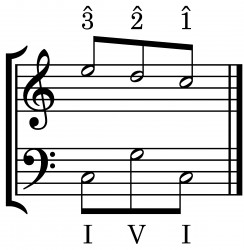
Carl Schachter, Arnold Whittall, and why music analysis matters
9th June 2026
Two recent deaths have robbed the world of music analysis of a pair of its most revered figures. Carl Schachter, who has died at the age of 93, was a pupil of (and subsequently collaborator with) Felix Salzer, himself one of Heinrich Schenker’s foremost students. Schachter continued to enrich and broaden the teaching of Schenkerian analysis, including important work on its application to issues of rhythm (which Schenker, focussing on harmonic and contrapuntal matters, largely bypassed). His influence went well beyond the... read more
read more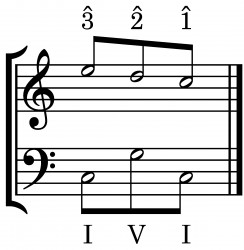
Carl Schachter, Arnold Whittall, and why music analysis matters
9th June 2026
Two recent deaths have robbed the world of music analysis of a pair of its most revered figures. Carl Schachter, who has died at the age of 93, was a pupil of (and subsequently collaborator with) Felix Salzer, himself one of Heinrich Schenker’s foremost students. Schachter continued to enrich and broaden the teaching of Schenkerian analysis, including important work on its application to issues of rhythm (which Schenker, focussing on harmonic and contrapuntal matters, largely bypassed). His influence went well beyond the... read more
read more
Music of the Iberian Peninsula, Part 2: ‘O quam gloriosum’ – The Spanish and Portuguese Golden Age
2nd June 2026
Over the past fortnight, I’ve been bathed in the most glorious, radiant, transformative light. Not the UK’s recent unseasonable heatwave, but the extraordinary vocal polyphony of the Siglo de Oro: the Spanish (and Portuguese) ‘Golden Century’. Extending from the late 15th to the early 17th century, this was a time of remarkable artistic flowering on the Iberian Peninsula, coinciding with the emergence of Spain and Portugal as global imperial powers with extensive colonial territories in the Americas, Africa and Asia. The... read more
read more