 FREE UK SHIPPING OVER £35!
The Spin Doctor Europadisc's Weekly Column
2026: A Year of Resolve?
6th January 2026
6th January 2026
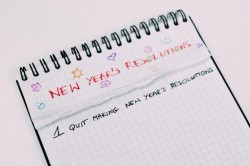 The beginning of the New Year typically brings a mixture of hopes and fears as we look forward to what is to come in the months and years ahead. If the end of the old year is often a time of reflection, early January brings (like the run-up to Christmas) a mood of anticipation, although the joyful focus of the Advent season is usually replaced by more worldly concerns, as well as self-examination. Often, it may simply be a need to shed the extra pounds put on over the festive season, but New Year’s resolutions can of course cover much wider ground (like me after too many mince pies). And – even if you’re not an England cricket supporter – they can help to focus away from the dreaded winter blues.
So, as the hours of daylight in the northern hemisphere gradually get longer, and even while we’re still wrapping ourselves up against the seasonal cold, here are a few resolutions (mostly musical) for 2026 to keep you entertained, and perhaps even to inspire you to ones of your own. As with all such lists, they’re made more in hope than expectation, and are designed with flexibility rather than strictness in mind. Perhaps, a little later in the year, I’ll share with you a progress report, although (in the spirit of the list itself) I make no promises...
1. Try to listen to at least one piece of music a day that’s entirely new to me. (And I mean listen, not merely have playing in the background.) This sounds like a fairly modest challenge – after all, there is more music out there than anyone could possibly listen to. But it will be more of a challenge on those days when one just craves the comfort of the familiar, or is simply short of time and opportunity. Yet there are plenty of shorter works to be explored, and getting out of one’s comfort zone is surely much healthier than cocooning oneself in the familiar. At the same time, I won’t set the bar too high: I have a fair idea of what genres and styles are likely to bring out the worst in me. Life’s too short to waste on guaranteed turkeys...
2. Make an effort to attend more live performances. Yes, I make this one almost every year, yet with the passing of the years one gets pickier (and, perhaps, pricklier): I often choose events with what I like to think is care, but may just be ingrained prejudice. And there’s often a nagging feeling that present-day performances can’t possibly stand comparison with favourite experiences of the past. The good thing is that I’m often proved wrong; and performances often don’t need to be better than the ones in my memory, just different and convincing on their own terms. For those who can’t get out, make a point of trying to listen to more live (or ‘as live’) broadcasts: the best will capture the thrill and warts-and-all feeling of the live event.
3. Try to support more local arts organisations. Even small, relatively isolated communities will have something on at some point in the year. It doesn’t have to be classical music (these days, it rarely is), but getting along to anything – be it an art exhibition, a local choir, or a community activities day – can help nurture the arts in your locality. And it is at this grassroots level that the seed of a lifelong love of the arts can be planted for younger generations. Not everywhere is a St Ives or a Purbeck, but a surprisingly large number of communities away from the big cities often have something going on, and it boosts the confidence as well as the coffers of organisations that frequently exist on a shoestring. None is too small or esoteric to overlook. Often one feels helpless when reading of the plight of big performing arts companies, but at a local level we can all make a big difference.
4. Spread the word. Share one’s love of the arts, or even just a particular composer or work, with others. Not every such encounter will result in a Damascene conversion, but even clumsily articulated enthusiasm can be infectious. Never insist, nor oversell, but coax, or simply play and give space for a response. Sometimes, even if the particular contents of a live performance fail to hit the mark, the simple experience of attending can be transformative.
5. Make a conscious effort not to disparage things I don’t like. Or, as the old adage goes, if you can’t say something positive, don’t say anything at all. Of course, some very popular online classical music sites are renowned for their barbed, snarky, or tongue-in-cheek views on certain issues, but the internet too often brings out and magnifies people’s worst instincts. How much better to focus on those things one really has a feeling for, and convey that enthusiasm with unashamed passion. The best teachers at school were always those who had an obvious love as well as deep knowledge of their subject.
6. Make more time for reading! Whether it’s music-related or not, one of the great joys of (eventually) finishing my studies was that I can now read what I want, and largely when I want to. A mixture of modern and classic fiction, biography (last year: Charles Nicholl’s magisterial biography of Leonardo da Vinci) and books on music (to inform the day job). The ever-growing pile of unread books greatly exceeds those read, but I take some comfort from knowing that there are excellent precedents for this (see the late Umberto Eco’s thoughts on books one will never get around to reading).
7. Try, try, try to make time for playing an instrument! It’s many years since I touched either violin or piano: I need to get back to at least one of them while my fingers are still reasonably pliable. A particular joy comes with playing an instrument or singing, whether with others or simply for oneself. They say it’s never to late to start (or, in my case, restart). Here’s hoping...
Lastly, to all of you who take the time to read this weekly column, a very Happy New Year!
Latest Posts
Music of the Iberian Peninsula, Part 3: More observations on the Golden Age
16th June 2026
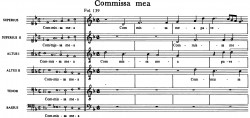
Our last visit to the Iberian peninsula, a fortnight ago, was an insanely ambitious, necessarily broad-brush survey of the Spanish and Portuguese Golden Age, covering vocal and instrumental music, the sacred and the secular. This week, we take a more concise and (I hope) focussed look at a few of the sacred vocal masterpieces which exemplify the particular fervour and intensity of this remarkable period of musical history. They reflect the special place the peninsula had as a bulwark against the Reformation that had taken... read more
read more
Music of the Iberian Peninsula, Part 3: More observations on the Golden Age
16th June 2026
Our last visit to the Iberian peninsula, a fortnight ago, was an insanely ambitious, necessarily broad-brush survey of the Spanish and Portuguese Golden Age, covering vocal and instrumental music, the sacred and the secular. This week, we take a more concise and (I hope) focussed look at a few of the sacred vocal masterpieces which exemplify the particular fervour and intensity of this remarkable period of musical history. They reflect the special place the peninsula had as a bulwark against the Reformation that had taken... read more
read more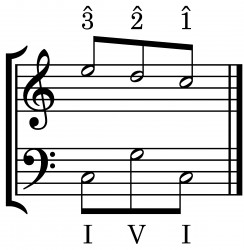
Carl Schachter, Arnold Whittall, and why music analysis matters
9th June 2026
Two recent deaths have robbed the world of music analysis of a pair of its most revered figures. Carl Schachter, who has died at the age of 93, was a pupil of (and subsequently collaborator with) Felix Salzer, himself one of Heinrich Schenker’s foremost students. Schachter continued to enrich and broaden the teaching of Schenkerian analysis, including important work on its application to issues of rhythm (which Schenker, focussing on harmonic and contrapuntal matters, largely bypassed). His influence went well beyond the... read more
read more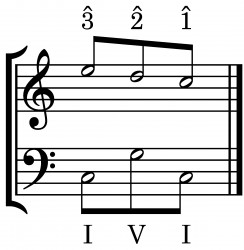
Carl Schachter, Arnold Whittall, and why music analysis matters
9th June 2026
Two recent deaths have robbed the world of music analysis of a pair of its most revered figures. Carl Schachter, who has died at the age of 93, was a pupil of (and subsequently collaborator with) Felix Salzer, himself one of Heinrich Schenker’s foremost students. Schachter continued to enrich and broaden the teaching of Schenkerian analysis, including important work on its application to issues of rhythm (which Schenker, focussing on harmonic and contrapuntal matters, largely bypassed). His influence went well beyond the... read more
read more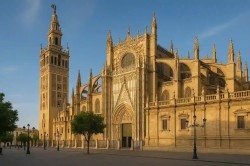
Music of the Iberian Peninsula, Part 2: ‘O quam gloriosum’ – The Spanish and Portuguese Golden Age
2nd June 2026
Over the past fortnight, I’ve been bathed in the most glorious, radiant, transformative light. Not the UK’s recent unseasonable heatwave, but the extraordinary vocal polyphony of the Siglo de Oro: the Spanish (and Portuguese) ‘Golden Century’. Extending from the late 15th to the early 17th century, this was a time of remarkable artistic flowering on the Iberian Peninsula, coinciding with the emergence of Spain and Portugal as global imperial powers with extensive colonial territories in the Americas, Africa and Asia. The... read more
read more