 FREE UK SHIPPING OVER £35!
The Spin Doctor Europadisc's Weekly Column
Christmas Focus: Charpentier’s Messe de minuit
3rd December 2025
3rd December 2025
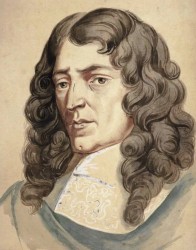 This month’s Christmas edition of BBC Music magazine takes a wry look at the festive pieces that critics love to hate. This is the time of year when reviewers are bombarded with a steady supply of Yuletide releases. It is little wonder that years of over-exposure to some pieces – almost all from the Anglo-German Christmas traditions – should engender strong feelings in music journalists (just as the ever-earlier appearance of Christmas merchandise and decorations in shops regularly prompts feelings of exasperation in many members of the general public). For those music-lovers who also feel assailed by the endless strains of O come, all ye faithful, Silent night, Jauchzet, frohlocket!, or, indeed, Slade’s Merry Xmaƨ [sic] Everybody, help is at hand from a Gallic source.
While the Anglo-German tradition of Christmas music is a particularly dominant one, the French can boast an equally illustrious tradition, even if it has not quite permeated to the same level internationally. And among those composers who contributed to this repertoire, none is more celebrated than the Baroque genius Marc-Antoine Charpentier (1643–1704). Born in or near Paris, Charpentier studied for three years in Rome with Giacomo Carissimi, and on his return to France set about creating a unique fusion of Italianate brilliance and Gallic elegance, including the structural and textural innovations which mark his extensive and largely sacred output. After 17 years in the service of ‘Mlle de Guise’ (Marie de Lorraine), he was employed by the Parisian Jesuits, first at the collège of Louis-le-Grand, and then at the Église Saint-Paul-Saint-Louis in the Marais quarter. For the last six years of his life, Charpentier was then maître de musique at the Dauphin’s chapel, the great Sainte-Chapelle.
Charpentier’s output of Christmas music, much of it combining secular carols (noëls) with sacred and liturgical text was particularly prolific during his years with the Jesuits, and pride of place goes to a work which (alongside his celebrated Te Deum, H146) is his most famous: the Messe de minuit pour Noël, H9. Composed around 1694 for the Église Saint-Paul-Saint-Louis, it has gained widespread fame through recordings, and has come a long way since the celebrated account by the Choir of King’s College, Cambridge, under David Willcocks in 1967. Among notable later recordings, that by Les Arts Florissants and William Christie on the Erato label was especially influential and successful, but its relatively dry recording is now beginning to show its age. More recently, an account from Sébastien Daucé and his Ensemble Correspondances won critical plaudits, but is already deleted.
All of which makes two new recordings of this unique Midnight Mass setting especially appealing in the lead-up to the festive season. One is from the Monteverdi Choir and English Baroque Soloists on the SDG label, the first fruits on disc of their recent collaborations with an expert in music of the French Baroque: Christophe Rousset. The other is an all-French affair from Château de Versailles Spectacles, with Gaétan Jarry directing the Marguerite Louise chorus and orchestra. Both demonstrate a natural flair for Charpentier’s idiom, particularly in terms of gracefulness of expression. Rousset’s performance, with somewhat smaller forces, is the more intimate and contemplative, while Jarry, with double the number of singers on the top line and a larger orchestra, is the more exuberant. Yet both bring out the abundant characterfulness of Charpentier’s music, his seemingly effortless fusion of the secular and the sacred, and its joyously uplifting nature.
In choosing between them, much will depend on the couplings. Rousset includes no fewer than eight of Charpentier’s instrumental Noëls, the tunes of most of them occurring in the Mass itself, as well as one of the composer’s dramatic motets for the Christmas season, In nativitatem Domini canticum, H416, its two parts (Old Testament anticipation and New Testament narrative) separated by an evocative depiction of night, and with some perky instrumental music for the shepherds.
Jarry and the Marguerite Louise ensembles opt instead for a less familiar dramatic motet, the Dialogus inter angelos et pastores Judae, H420 (which also features an instrumental evocation of night and a ‘Réveil des bergers’, as well as a generous selection of instrumental Noëls and no fewer than three instrumental interpolations in the Mass itself, plus a bracing organ setting by Nicolas Lebègue of the noël ‘Où s’en vont ces gays bergers’. They also include one of Charpentier’s half-dozen settings of the Vespers psalm Dixit Dominus (H202), which is launched by a particularly imposing Prélude. Forced to choose, I’d marginally prefer the Marguerite Louise disc, both for its more adventurous programming and its unmistakably French way with those delicious appoggiaturas that colour many of the cadences; but neither of these fine new recordings of this seasonal masterpiece will disappoint anyone looking for something a little different but still infectiously joyous this festive season. Whether a present for someone else or yourself, they can both be heartily recommended!
The Recordings:
Charpentier - Baroque Christmas (Monteverdi Choir, EBS / Rousset) SDG737
Charpentier - Messe de minuit (Marguerite Louise / Jarry) CVS173
Latest Posts
Music of the Iberian Peninsula, Part 3: More observations on the Golden Age
16th June 2026
Our last visit to the Iberian peninsula, a fortnight ago, was an insanely ambitious, necessarily broad-brush survey of the Spanish and Portuguese Golden Age, covering vocal and instrumental music, the sacred and the secular. This week, we take a more concise and (I hope) focussed look at a few of the sacred vocal masterpieces which exemplify the particular fervour and intensity of this remarkable period of musical history. They reflect the special place the peninsula had as a bulwark against the Reformation that had taken... read more
read more
Music of the Iberian Peninsula, Part 3: More observations on the Golden Age
16th June 2026
Our last visit to the Iberian peninsula, a fortnight ago, was an insanely ambitious, necessarily broad-brush survey of the Spanish and Portuguese Golden Age, covering vocal and instrumental music, the sacred and the secular. This week, we take a more concise and (I hope) focussed look at a few of the sacred vocal masterpieces which exemplify the particular fervour and intensity of this remarkable period of musical history. They reflect the special place the peninsula had as a bulwark against the Reformation that had taken... read more
read more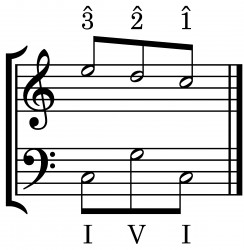
Carl Schachter, Arnold Whittall, and why music analysis matters
9th June 2026
Two recent deaths have robbed the world of music analysis of a pair of its most revered figures. Carl Schachter, who has died at the age of 93, was a pupil of (and subsequently collaborator with) Felix Salzer, himself one of Heinrich Schenker’s foremost students. Schachter continued to enrich and broaden the teaching of Schenkerian analysis, including important work on its application to issues of rhythm (which Schenker, focussing on harmonic and contrapuntal matters, largely bypassed). His influence went well beyond the... read more
read more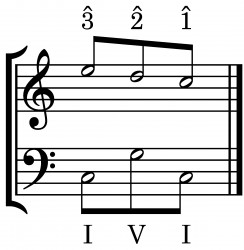
Carl Schachter, Arnold Whittall, and why music analysis matters
9th June 2026
Two recent deaths have robbed the world of music analysis of a pair of its most revered figures. Carl Schachter, who has died at the age of 93, was a pupil of (and subsequently collaborator with) Felix Salzer, himself one of Heinrich Schenker’s foremost students. Schachter continued to enrich and broaden the teaching of Schenkerian analysis, including important work on its application to issues of rhythm (which Schenker, focussing on harmonic and contrapuntal matters, largely bypassed). His influence went well beyond the... read more
read more
Music of the Iberian Peninsula, Part 2: ‘O quam gloriosum’ – The Spanish and Portuguese Golden Age
2nd June 2026
Over the past fortnight, I’ve been bathed in the most glorious, radiant, transformative light. Not the UK’s recent unseasonable heatwave, but the extraordinary vocal polyphony of the Siglo de Oro: the Spanish (and Portuguese) ‘Golden Century’. Extending from the late 15th to the early 17th century, this was a time of remarkable artistic flowering on the Iberian Peninsula, coinciding with the emergence of Spain and Portugal as global imperial powers with extensive colonial territories in the Americas, Africa and Asia. The... read more
read more