 FREE UK SHIPPING OVER £35!
The Spin Doctor Europadisc's Weekly Column
Celebrating the Mackerras Centenary
18th November 2025
18th November 2025
 The Earl of Harewood – who knew a thing or two about such matters – once described Charles Mackerras as ‘probably the most complete opera conductor of his generation’. Across a career lasting more than six decades, Mackerras not only led performances of all the classics from Handel and Mozart to Verdi, Wagner and beyond, but revolutionised the approach to ornamentation in Baroque and Classical repertoire, championed the work of Benjamin Britten, and almost single-handedly introduced English-speaking audiences to the operas of Leoš Janáček, becoming their most eloquent and radical champion. The secure technical grounding provided by his operatic work also served as foundation for his activities in the concert hall, with an unerring feel for the breathing points in phrasing, rhythmic vitality and keen sense of drama all becoming Mackerras trademarks.
Born on 17 November 1925 in Shenectady, New York, to Australian parents, Mackerras was descended on his mother’s side from the ‘father of Australian music’, Isaac Nathan (1792–1864), and among his earliest musical activities were family performances of Gilbert & Sullivan – giving rise to the first of his lifelong musical passions. He grew up in the suburbs of Sydney, enrolling at the age of 16 at the New South Wales State Conservatorium of Music, where he studied oboe, piano and composition. In 1943 he joined the ABC Symphony Orchestra as second oboist, and soon rose to become principal oboe. In February 1947 he set sail for England, where he joined the orchestra of the Sadler’s Wells Theatre as oboist and cor anglais player. Alongside him in the pit was a young clarinettist, Judy Wilkins, and soon the two were married.
A chance encounter in a London café led Mackerras to apply for a British Council scholarship to study conducting in Prague with the veteran Czech maestro Václav Talich. Together with Judy, he travelled to the Czech capital in late September 1947, and the following month began his studies with Talich. Although the Mackerrases’ time in Prague coincided with and was overshadowed by the 1948 Communist takeover (and the resulting curtailment of Talich’s public appointments), they lost no opportunity to familiarise themselves with the Czech repertoire. The life-changing discovery was the music of Janáček. On his return to England, Mackerras took up a post as assistant at Sadler’s Wells Opera (later English National Opera: the beginning of a lifelong association). His first conducting engagement with them was Johann Strauss’s Die Fledermaus in October 1948, an early sign of his natural gifts in lighter repertoire.
1951 was a key year for the emerging young maestro: the premiere of his ballet arrangement of Gilbert & Sullivan, Pineapple Poll, was given on 13 March, and less than a month later came the British premiere of Janáček’s Katya Kabanova. By the end of the decade, he had launched on what would be a particularly prolific recording career, with a groundbreaking account of Handel’s Music for the Royal Fireworks in its original scoring for vast wind ensemble, and an equally gripping account of Janáček’s Sinfonietta and four opera overtures. His many recordings from the 1950s (the majority now collected in Warner’s Sir Charles Mackerras Complete Warner Classics Edition) testify to the breadth of his repertoire even at this early stage in his career: Eric Coates rubs shoulders with Aaron Copland, Purcell and Blow with Berlioz, Verdi and the Russian Romantics.
As Mackerras’s career progressed and he earned a reputation for scholarly insight in Handel and Mozart as well as being a supremely reliable generalist, his entries in the discography continued to multiply. It was at the suggestion of Georg Solti that he was entrusted with recording Janáček’s five great ‘tragic’ operas with the Vienna Philharmonic for Decca between 1976 and 1982; still regarded as definitive, these accounts introduced even more listeners to the composer’s remarkable stage works than had the now-legendary Sadler’s Wells/ENO performances at the London Coliseum (which also included the magical Excursions of Mr Brouček).
From the late 1980s, he at last began marrying his longstanding interest in historical performance practice with the period-instrument specialists of the Orchestra of the Age of Enlightenment: the resulting recordings of Mendelssohn and Schubert symphonies were revelatory. No less so were his two Beethoven symphony cycles from the new Del Mar critical edition, the first with the Royal Liverpool Philharmonic Orchestra (included in the new Warner compendium), the second (on Hyperion) taken from live Edinburgh Festival performances by the Scottish Chamber Orchestra and (in the Ninth) the Philharmonia Orchestra. Mackerras’s late-career association with the SCO was an especially warm one, and the series of late Mozart symphony recordings are among his finest performances on disc, as are the slightly earlier accounts (for Telarc) of the great Mozart operas – the three ‘Da Ponte’ operas have arguably never been better conducted than they are here. The SCO Brahms cycle, incorporating new research into the texts and performance styles, also rank high in any overview of his achievements on disc.
Mackerras’s close association with the Czech Philharmonic Orchestra on Supraphon is well documented (including outstanding accounts of Smetana’s Má vlast, Dvořák’s Slavonic Dances and symphonic poems, and Josef Suk’s Asrael Symphony), but less familiar to some collectors will be his partnership with the New York-based Orchestra of St. Luke’s for Telarc, including a superbly stylish Mozart Gran Partita and a small series of Haydn symphonies which rank alongside the very finest in this repertoire. To his three ‘official’ Mahler symphony recordings (the First and Fifth with the RLPO for EMI, the Fourth with the Philharmonia) can be added two blisteringly fine Proms performances with the BBC Philharmonic, of the Second (1995) and Sixth (2002, briefly available with BBC Music Magazine), which together reveal him as one of the most thrilling of post-war Mahlerians.
Finally, there’s Mackerras’s consistent championing of British music to consider, from noble yet rhythmically buoyant Elgar and a viscerally exciting performance of Holst’s The Planets, to his commitment to the music of Benjamin Britten (which survived a now notorious falling-out following an indiscreet remark back in 1958), and his obvious affection (rare in the post-Beecham generation) for the music of Frederick Delius.
Putting one’s finger on exactly what made Charles Mackerras such a unique force in British and international musical life from the 1950s until his death in July 2010 (he continued with a full schedule of concert and operatic engagements to the very last, despite declining health) is difficult, because he brought together so many qualities. A permanently questing and inquiring mind ensured that his performances of even old repertoire warhorses always had something new to say, while his researches into 18th-century ornamentation on the one hand and authentic texts of Janáček (and, indeed, other Czech greats) brought genuine insight, communicated with a combination of urgency and love. His plain-speaking manner earned him more admirers than enemies over the years, and the devoted admiration of both singers and orchestral musicians as well as audiences. And it was a similarly direct, no-nonsense style of baton technique that brought such wonderful energy to his performances, whether in Handel, Mozart, Beethoven, Sullivan, Elgar or Janáček.
The new boxset from Warner is listed below – necessarily a partial glimpse of Mackerras’s achievements, as he recorded so prolifically for all the major labels. It’s worth investing in for the individual items mentioned above alone, but also provides a valuable survey of his earliest recordings in a range of light classics, many of them with the original Philharmonia Orchestra as well as the Pro Arte Orchestra. It’s a crying shame that Universal have allowed the Decca Vienna Janáček recordings in particular to have disappeared from the current catalogue. In their stead, we list some other essential Mackerras recordings (we could quite easily have picked a dozen more!) from among currently available titles.
I was lucky enough to have attended several Mackerras performances from the early 1980s onwards: every one of them had a freshness and vitality that few other conductors have matched, let alone surpassed. Many of you will no doubt have had similar experiences. This evening, I’ll certainly be raising a glass in Sir Charles’s honour!
The Recordings:
Sir Charles Mackerras: The Complete Warner Classics Edition (63 CDs) 2173262356
Beethoven - Symphony No.9 (OAE) SIGCD254
Dvořák - Symphonic Poems (Czech PO) SU40122
Gilbert & Sullivan - The Mikado (WNO) CD80284
Handel - Music for the Royal Fireworks (1959 recording) SBT1253
Mozart - Classic Mozart Operas (SCO) CR02008
Janáček - Glagolitic Mass, Taras Bulba (Czech PO) SU70099 (DVD)
Suk - Asrael (Czech PO) SU40432
Further reading:
Latest Posts
Music of the Iberian Peninsula, Part 3: More observations on the Golden Age
16th June 2026
Our last visit to the Iberian peninsula, a fortnight ago, was an insanely ambitious, necessarily broad-brush survey of the Spanish and Portuguese Golden Age, covering vocal and instrumental music, the sacred and the secular. This week, we take a more concise and (I hope) focussed look at a few of the sacred vocal masterpieces which exemplify the particular fervour and intensity of this remarkable period of musical history. They reflect the special place the peninsula had as a bulwark against the Reformation that had taken... read more
read more
Music of the Iberian Peninsula, Part 3: More observations on the Golden Age
16th June 2026
Our last visit to the Iberian peninsula, a fortnight ago, was an insanely ambitious, necessarily broad-brush survey of the Spanish and Portuguese Golden Age, covering vocal and instrumental music, the sacred and the secular. This week, we take a more concise and (I hope) focussed look at a few of the sacred vocal masterpieces which exemplify the particular fervour and intensity of this remarkable period of musical history. They reflect the special place the peninsula had as a bulwark against the Reformation that had taken... read more
read more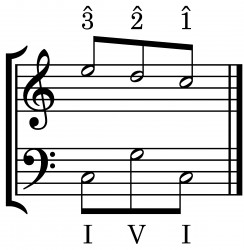
Carl Schachter, Arnold Whittall, and why music analysis matters
9th June 2026
Two recent deaths have robbed the world of music analysis of a pair of its most revered figures. Carl Schachter, who has died at the age of 93, was a pupil of (and subsequently collaborator with) Felix Salzer, himself one of Heinrich Schenker’s foremost students. Schachter continued to enrich and broaden the teaching of Schenkerian analysis, including important work on its application to issues of rhythm (which Schenker, focussing on harmonic and contrapuntal matters, largely bypassed). His influence went well beyond the... read more
read more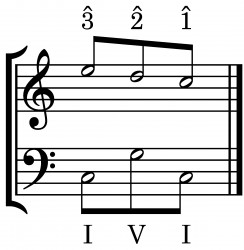
Carl Schachter, Arnold Whittall, and why music analysis matters
9th June 2026
Two recent deaths have robbed the world of music analysis of a pair of its most revered figures. Carl Schachter, who has died at the age of 93, was a pupil of (and subsequently collaborator with) Felix Salzer, himself one of Heinrich Schenker’s foremost students. Schachter continued to enrich and broaden the teaching of Schenkerian analysis, including important work on its application to issues of rhythm (which Schenker, focussing on harmonic and contrapuntal matters, largely bypassed). His influence went well beyond the... read more
read more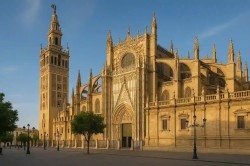
Music of the Iberian Peninsula, Part 2: ‘O quam gloriosum’ – The Spanish and Portuguese Golden Age
2nd June 2026
Over the past fortnight, I’ve been bathed in the most glorious, radiant, transformative light. Not the UK’s recent unseasonable heatwave, but the extraordinary vocal polyphony of the Siglo de Oro: the Spanish (and Portuguese) ‘Golden Century’. Extending from the late 15th to the early 17th century, this was a time of remarkable artistic flowering on the Iberian Peninsula, coinciding with the emergence of Spain and Portugal as global imperial powers with extensive colonial territories in the Americas, Africa and Asia. The... read more
read more