 FREE UK SHIPPING OVER £35!
The Spin Doctor Europadisc's Weekly Column
Perceptual Labyrinths: Celebrating Luciano Berio
29th October 2025
29th October 2025
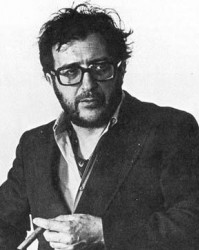 Last Friday marked the centenary of one of the most fascinating and consistently absorbing of all 20th-century composers: Luciano Berio. Frequently regarded, together with Karlheinz Stockhausen and Pierre Boulez, as part of the great triumvirate of post-war modernists, Berio was indeed part of the ‘Darmstadt set’ in the 1950s, but he retained a healthy scepticism of the more dogmatic attitudes associated with the Darmstadt school. Indeed, his avoidance of the doctrinaire, and his protean ability to take what he needed from his various encounters with serialism and electronic music (he was one of the major forces in the development of the latter) is part of his considerable appeal. So, too, was his ability to combine a deep awareness of musical traditions and literary texts with a penchant for placing layers upon layers (‘writing upon writing’) to create music that is both fabulously allusive and endlessly engrossing.
Berio was born on 24 October 1925 in Oneglia, on Italy’s northwestern coast, and in his childhood he entertained thoughts of becoming a sea captain. Both his father and grandfather, however, were musicians and composers, and a thorough musical education beginning at home determined him instead on a musical course. Enforced enlistment into the army during the latter part of World War II saw him sustain a hand injury which put paid to his ambitions to become a professional pianist. Instead his studies at the Milan Conservatory focussed on counterpoint and composition. Although he was already familiar with the lyrical traditions of his homeland, the immediate post-war years introduced him to the giants of classical modernism, including Bartók, Stravinsky and Schoenberg (whose Pierrot lunaire at first simply baffled him).
In the late 1940s he served as accompanist to a remarkable young Armenian-American mezzo-soprano: Cathy Berberian became both his first wife and a hugely important influence on his compositions. The Folk Songs which he set for her in 1964 remain his most widely-heard work. During the 1950s, Berio spent periods at Tanglewood in the US (where he studied with Dallapiccola) and Darmstadt. His approach to serialism – both of the classical 12-note variety and the ‘total’ serialism which also affected such parameters as tempo, timbre and dynamics – was selective, and his creation of ‘harmonic fields’ ensured that there was often an harmonic groundedness to his notionally serial compositions.
Berio’s encounters with electronic music led him, together with composer-conductor Bruno Maderna, to found the Studio di fonologia musical in Milan (1955). Later on, he would head the electro-acoustic department at Boulez’s newly-established IRCAM in Paris, and in the 1980s he created the Tempo Reale in Florence. Yet Berio was never content to pursue electronic music in isolation, and the various procedures he created for generating and layering electronic sounds were also brought to bear in his purely acoustic compositions, unlocking a rich seam of creativity. Another key friendship was with the great Italian writer and semiotician Umberto Eco, who introduced Berio to the works of James Joyce. Berio’s penchant for creative analysis not just of the works of other composers, but of his own (even internally, within the very piece being analysed) owes much to Eco’s influence.
For many listeners, Berio’s works from the 1960s are most familiar: not just the Folk Songs, but the enthrallingly multi-layered Sinfonia of 1968–69, with its moving tribute to the murdered Martin Luther King in the second movement (‘O King’), and its richly post-modernist take on the scherzo from Mahler’s Second Symphony, and Epifanie (1961, rev. 1965) for female voice and orchestra. The 60s also saw the creation of half a dozen of the 14 Sequenzas he composed between 1958 and 2002, all for solo performer, and all requiring a virtuosity and agility not just technical but also artistic and intellectual. Sequenza III (1966), composed for Berberian, is among the most celebrated, bursting well beyond the bounds of Italianate lyricism to encompass clicks, glottal utterances and a huge range of other sounds that were hugely influential on late-20th-century vocal writing. The first multi-layered spin-offs from the Sequenzas – notably the series of Chemins – also date from this period.
Yet either side of the 1960s there is much else to explore, from the orchestral works Nones (1954) and Allelujah II (1956, for five instrumental groups) to the operas La vera storia (1981), Un re in Ascolta (1984) and Outis (1995–96). Berio’s unwavering commitment to performing musicians, and his ability to connect with wider audiences (creating ‘perceptual labyrinths’), ensured that his music had far broader appeal than that of many other modernists, and his engagement with the music of composers ranging from Schubert, Brahms and Mahler to the Beatles serves as eloquent proof. His arrangements of Beatles songs are mainly quasi-Baroque pastiche, but the appendix – a second arrangement of Lennon and McCartney’s Michelle – is as vivid an illustration as any of his ability to create a proliferation of layers that are both stimulating and enchanting.
Scandalously few of the great Berio recordings – such as his collaborations with Cathy Berberian, Boulez’s classic 1984 account of the Sinfonia, and the excellent Deutsche Grammophon survey of the first 13 Sequenzas – are currently available on disc. However, we list below the best of currently available titles (including a newly-issued account of the astounding, hour-long Coro [1975–77] under Simon Rattle), which give some idea of the enormous voyage covered by Berio between 1925 and his death in May 2003, and a starting point for further exploration.
A few recommendations:
Musica Viva 50: Berio - Coro (Rattle) 900650
Berio To Sing (Richardot, Les Cris de Paris) HMM902647 [incl. Folk Songs, O King and Michelle II]
Latest Posts
Music of the Iberian Peninsula, Part 3: More observations on the Golden Age
16th June 2026
Our last visit to the Iberian peninsula, a fortnight ago, was an insanely ambitious, necessarily broad-brush survey of the Spanish and Portuguese Golden Age, covering vocal and instrumental music, the sacred and the secular. This week, we take a more concise and (I hope) focussed look at a few of the sacred vocal masterpieces which exemplify the particular fervour and intensity of this remarkable period of musical history. They reflect the special place the peninsula had as a bulwark against the Reformation that had taken... read more
read more
Music of the Iberian Peninsula, Part 3: More observations on the Golden Age
16th June 2026
Our last visit to the Iberian peninsula, a fortnight ago, was an insanely ambitious, necessarily broad-brush survey of the Spanish and Portuguese Golden Age, covering vocal and instrumental music, the sacred and the secular. This week, we take a more concise and (I hope) focussed look at a few of the sacred vocal masterpieces which exemplify the particular fervour and intensity of this remarkable period of musical history. They reflect the special place the peninsula had as a bulwark against the Reformation that had taken... read more
read more
Carl Schachter, Arnold Whittall, and why music analysis matters
9th June 2026
Two recent deaths have robbed the world of music analysis of a pair of its most revered figures. Carl Schachter, who has died at the age of 93, was a pupil of (and subsequently collaborator with) Felix Salzer, himself one of Heinrich Schenker’s foremost students. Schachter continued to enrich and broaden the teaching of Schenkerian analysis, including important work on its application to issues of rhythm (which Schenker, focussing on harmonic and contrapuntal matters, largely bypassed). His influence went well beyond the... read more
read more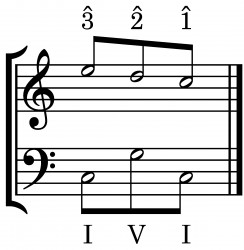
Carl Schachter, Arnold Whittall, and why music analysis matters
9th June 2026
Two recent deaths have robbed the world of music analysis of a pair of its most revered figures. Carl Schachter, who has died at the age of 93, was a pupil of (and subsequently collaborator with) Felix Salzer, himself one of Heinrich Schenker’s foremost students. Schachter continued to enrich and broaden the teaching of Schenkerian analysis, including important work on its application to issues of rhythm (which Schenker, focussing on harmonic and contrapuntal matters, largely bypassed). His influence went well beyond the... read more
read more
Music of the Iberian Peninsula, Part 2: ‘O quam gloriosum’ – The Spanish and Portuguese Golden Age
2nd June 2026
Over the past fortnight, I’ve been bathed in the most glorious, radiant, transformative light. Not the UK’s recent unseasonable heatwave, but the extraordinary vocal polyphony of the Siglo de Oro: the Spanish (and Portuguese) ‘Golden Century’. Extending from the late 15th to the early 17th century, this was a time of remarkable artistic flowering on the Iberian Peninsula, coinciding with the emergence of Spain and Portugal as global imperial powers with extensive colonial territories in the Americas, Africa and Asia. The... read more
read more