FREE UK SHIPPING OVER £35!

The Spin Doctor Europadisc's Weekly Column

Tercentenary Focus: Alessandro Scarlatti

  15th October 2025

15th October 2025
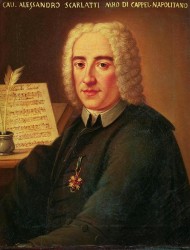

Although his music is these days far less well-known than that of his son, Domenico, Alessandro Scarlatti (1660–1725) is a figure of considerable importance in the development of Italian Baroque music. The tercentenary of his death – which falls on 22 October – affords the opportunity to explore his life and output in greater depth. Older reference books routinely credited him as ‘founder of the Neapolitan School’ of opera, but in recent decades that assessment has been challenged. Although he did indeed spend much of his career working in the Kingdom of Naples, he spent significant periods in Rome (where he began his musical life, and to which he subsequently returned) and Venice; and although he produced numerous operatic works in Naples, the extent to which they can be described as distinctively ‘Neapolitan’ is debatable.

Alessandro Scarlatti was born into a musical family on 2 May in Palermo, Sicily; at the age of 12 he moved with his family to the Eternal City, where his musical gifts were soon developed in studies aided by family connections (it is said that he studied with the elderly Carissimi). Rome presented the young Scarlatti with plenty of opportunities to hear and perform music, and by the end of 1678 he was maestro di cappella at S Giacomo degli Incurabili. He also entered the circle of Queen Christina of Sweden, and following the huge success of his first opera, the privately-staged Arcadian pastoral Gli equivoci nel sembiante (1679), he was appointed her maestro di cappella. In 1682, he transferred from S Giacomo to S Girolamo della Carità. By 1684, when he was appointed maestro di cappella to the Spanish viceroy of Naples, Scarlatti had no fewer than six ‘Roman’ operas to his name – no mean feat in a city where public theatrical performances were effectively banned, and operas could only be given in the private establishments of wealthy patrons.

Scarlatti’s first period in Naples (1684–1702) was not without its difficulties: his principal supporters were in Rome, and his appointment aroused much local jealousy and resentment. During this period, he wrote more than thirty operas, of which fewer than half have survived intact. Most of them received private premieres at the viceregal palace before transferring to the neighbouring Teatro S Bartolomeo. None can be said to be distinctly ‘Neapolitan’, but his later operas from this period show a move away from the then-customary succession of simple recitatives and profusion of short arias towards greater depth, increased use of the orchestral strings, and the introduction of the three-section ‘Italian’ introductory sinfonia (fast-slow-fast) which was a key staging post in the early development of the symphony. He also wrote sacred music, serenatas and chamber cantatas for the local nobility (as he had done in Rome), but the financial demands of a growing young family meant that he soon began seeking additional work elsewhere, to the detriment of his official duties in Naples.

Despite the enthusiastic support of Ferdinando de’ Medici in Tuscany (Scarlatti wrote five works for Ferdinand’s private theatre), a hoped-for permanent post never materialised. By January 1703, Scarlatti had returned to Rome, where – although the ban on public theatrical performances remained a frustration to him – he composed some of his finest church music. A newly-released disc on the Arcana label, ‘Christmas at the Bethlehem of the West: Music from Santa Maria Maggiore, Rome’, includes the Messa per il Santissimo Natale, an impressive work from 1707 whose fluent writing and ease of invention perfectly illustrates Scarlatti’s natural gifts as a vocal composer. The same album also includes the lovely solo pastoral cantata Non so più qual m’ingombra from nine years later, which is particularly beguiling. As had happened previously, his appointment as assistant to the ageing maestro di cappella of S Maria Maggiore brought criticisms of negligence, particularly in his teaching commitments.

Scarlatti fared no better in Venice – the Mecca of Italian opera at the time – where his operas failed to please the critics, and his confrontational personality certainly didn’t help matters. Nevertheless the failure of what is now widely regarded as his operatic masterpiece, the five-act opera seria, Mitridate Eupatore (premiered on 5 January 1707 with Scarlatti), seems almost as extraordinary as its present-day neglect. Based on the Electra plays of Sophocles and Euripides, this demanding work was once championed in extended extracts by no less a figure than the young Joan Sutherland. A modern recording is long overdue: perhaps this year’s tercentennial events will lead to one.

From 1708 to the end of his life, Scarlatti was based once again in Naples. However, tastes there had changed in favour of the emergent comic genre of the opera buffa; Scarlatti’s strengths lay elsewhere, and his one operatic commedia, Il trionfo dell’onore, is not so different from his more serious stage works, even though it is peopled by more down-to-earth characters than the historic or mythological figures of his drammi and tragedie per musica. The forthcoming release of a production of this singular work from La Fenice, Venice, under the baton of Enrico Onofri will allow us to judge for ourselves. The serious operas of Scarlatti’s later years were composed for performance in Rome: they include the three-act Griselda, whose story of a humble peasant girl married to a tyrannical king has its roots in Boccaccio’s Decameron. This is generally judged to be Scarlatti’s most musically satisfying opera, with more imaginative scoring and increased use of da capo arias resulting in a more focussed feel to it. The 2002 Harmonia Mundi recording conducted by René Jacobs and featuring the likes of Dorothea Röschmann and Bernarda Fink, and handsomely reissued in 2019 with complete texts, is now an astonishing bargain.

Without notable popular successes in opera, in his later years Scarlatti turned increasingly to instrumental genres, an area he had previously had little time for. His concerti grossi date from these years, as does his most imposing sacred work, the Messa di Santa Cecilia (1720), for five soloists, choir and orchestra. For an excellent overview of Alessandro Scarlatti’s achievements in the field of solo cantatas, sacred music, concertos and sonatas, a nine-disc set of classic and historic performances from Erato is excellent value, while an attractive selection of chamber cantatas sung by mezzo-soprano Lucile Richardot on the Audax label highlights a genre that was important throughout his career. Given their renowned status in the development of the genre, Scarlatti’s operas remain for the most part shamefully neglected: we hope that this anniversary year helps to change that.

For now, here are a few recommendations. As ever, happy listening!


Latest Posts


Music of the Iberian Peninsula, Part 3: More observations on the Golden Age

16th June 2026

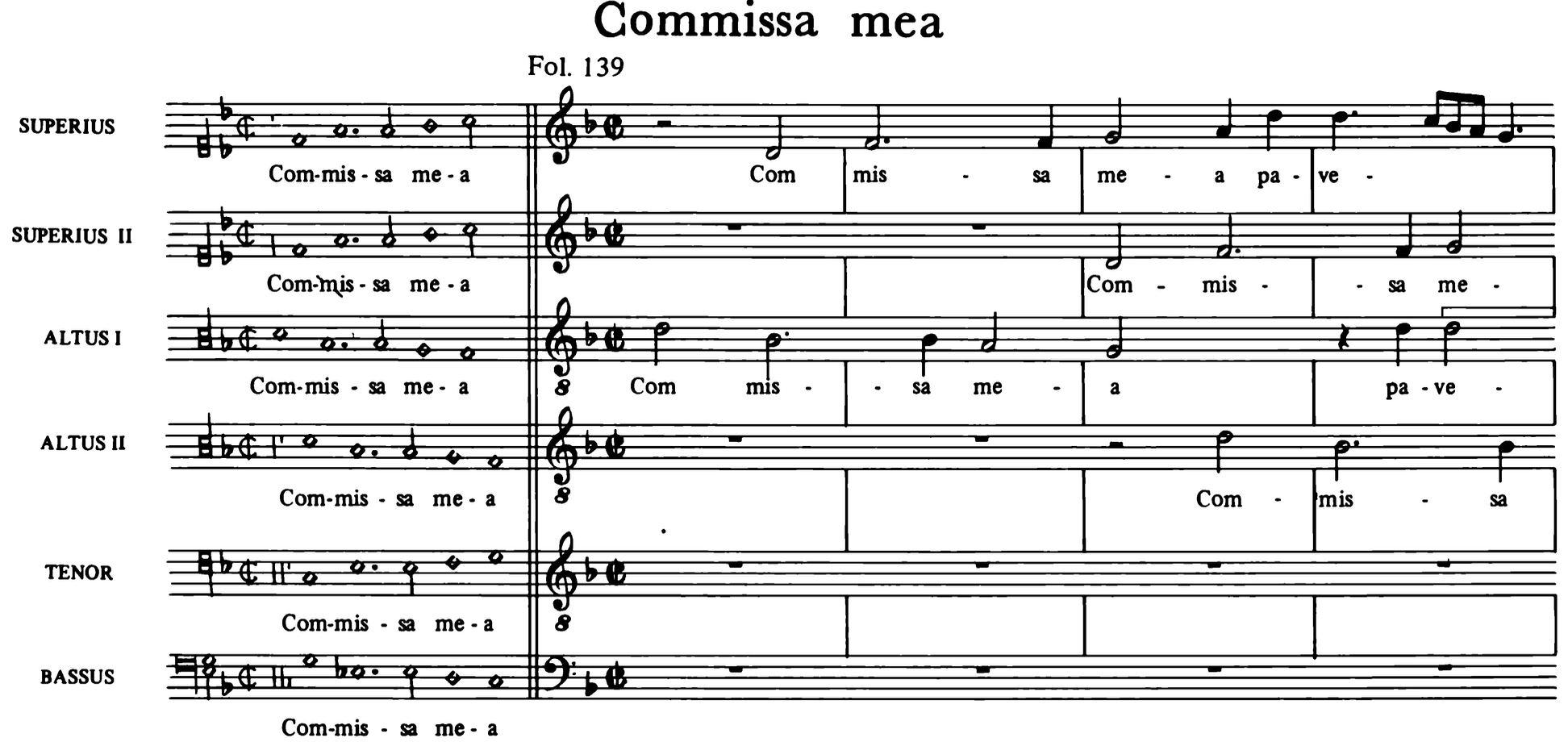
Our last visit to the Iberian peninsula, a fortnight ago, was an insanely ambitious, necessarily broad-brush survey of the Spanish and Portuguese Golden Age, covering vocal and instrumental music, the sacred and the secular. This week, we take a more concise and (I hope) focussed look at a few of the sacred vocal masterpieces which exemplify the particular fervour and intensity of this remarkable period of musical history. They reflect the special place the peninsula had as a bulwark against the Reformation that had taken... read more

read more
Music of the Iberian Peninsula, Part 3: More observations on the Golden Age

16th June 2026

Our last visit to the Iberian peninsula, a fortnight ago, was an insanely ambitious, necessarily broad-brush survey of the Spanish and Portuguese Golden Age, covering vocal and instrumental music, the sacred and the secular. This week, we take a more concise and (I hope) focussed look at a few of the sacred vocal masterpieces which exemplify the particular fervour and intensity of this remarkable period of musical history. They reflect the special place the peninsula had as a bulwark against the Reformation that had taken... read more

read more
Carl Schachter, Arnold Whittall, and why music analysis matters

9th June 2026

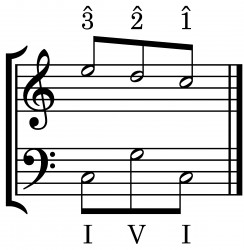
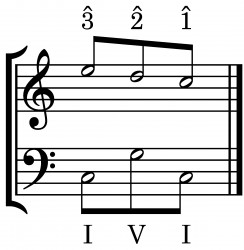
Two recent deaths have robbed the world of music analysis of a pair of its most revered figures. Carl Schachter, who has died at the age of 93, was a pupil of (and subsequently collaborator with) Felix Salzer, himself one of Heinrich Schenker’s foremost students. Schachter continued to enrich and broaden the teaching of Schenkerian analysis, including important work on its application to issues of rhythm (which Schenker, focussing on harmonic and contrapuntal matters, largely bypassed). His influence went well beyond the... read more

read more
Carl Schachter, Arnold Whittall, and why music analysis matters

9th June 2026

Two recent deaths have robbed the world of music analysis of a pair of its most revered figures. Carl Schachter, who has died at the age of 93, was a pupil of (and subsequently collaborator with) Felix Salzer, himself one of Heinrich Schenker’s foremost students. Schachter continued to enrich and broaden the teaching of Schenkerian analysis, including important work on its application to issues of rhythm (which Schenker, focussing on harmonic and contrapuntal matters, largely bypassed). His influence went well beyond the... read more

read more
Music of the Iberian Peninsula, Part 2: ‘O quam gloriosum’ – The Spanish and Portuguese Golden Age

2nd June 2026

Over the past fortnight, I’ve been bathed in the most glorious, radiant, transformative light. Not the UK’s recent unseasonable heatwave, but the extraordinary vocal polyphony of the Siglo de Oro: the Spanish (and Portuguese) ‘Golden Century’. Extending from the late 15th to the early 17th century, this was a time of remarkable artistic flowering on the Iberian Peninsula, coinciding with the emergence of Spain and Portugal as global imperial powers with extensive colonial territories in the Americas, Africa and Asia. The... read more

read more
View Full Archive