 FREE UK SHIPPING OVER £35!
The Spin Doctor Europadisc's Weekly Column
Unboxing Brendel
16th September 2025
16th September 2025
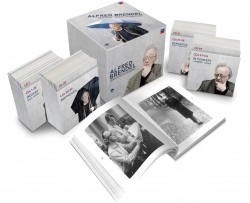 The death just three months ago of the great Alfred Brendel brought about – as these moments tend to do – a renewed interest in the recorded legacy of a pianist who retired from the concert platform and recording studio back in 2008. At the time, relatively few his extensive recordings were current in the catalogue, although a generous selection of his earliest recordings has been available on reissue labels such as Alto. Now, however, Decca have reissued the mighty 114-CD box of ‘Complete Philips Recordings’, which first appeared in 2015 and was, by the time of Brendel’s death, sold out. Handsomely housed in a squat cuboid box, it contains almost everything from his first recordings for Philips in the late 1960s to his farewell concerts of four decades later which appeared in Decca.
How complete is it? Well, it contains pretty much all his studio recordings for Philips and Decca, as well as the 1971 account of Schoenberg’s Piano Concerto with Rafael Kubelík and the Bavarian Radio Symphony Orchestra, and even a 1999 Mozart disc with the Alban Berg Quartett licensed from EMI. There’s also a wide array of live recordings, although sadly not the Schumann Piano Concerto and Brahms’s Handel Variations which appeared around the same time as the big box, but hasn’t been included in its reissue and is currently unavailable. Nor are there any of the DVD recordings that have appeared over recent years (including Schubert with Dietrich Fischer-Dieskau): both these omissions are missed opportunities, and presumably it was easiest to rush out a straight reissue of the original 2015 box. Make of that what you will...
That said, the contents are so wide-ranging that few whose interest has been aroused by Brendel’s mix of keen musical intelligence and quixotic wit is unlikely to be disappointed. The highlights, for many, will include the two cycles (analogue and digital, respectively) of Beethoven’s Piano Sonatas, as well as the three cycles (with Haitink, Levine and Rattle) of the composer’s Piano Concertos; similarly penetrating accounts of Schubert’s piano sonatas, Wanderer Fantasy, Impromptus, etc.; the complete Mozart Piano Concertos with Neville Marriner, and selected later remakes with Mackerras (a particularly happy collaboration, with stylish support from the Scottish Chamber Orchestra); and of course a generous selection of piano sonatas by Haydn – a composer whose reputation as a keyboard composer Brendel did so much to boost.
There’s a disc of neatly played Bach (including the Italian Concerto) to get things going, but precious little Brahms apart from the concertos: Brendel’s 1989 recording of the Ballades, op.10, makes one regret all the more the fact that he never added the later piano works to his recorded repertoire. On the other hand, the real revelation for listeners (like me) who associate Brendel above all with the Viennese Classics is likely to be the six discs devoted to the piano works of Liszt, including two different recordings (1972 and 1986) of the second ‘Italian’ set of Années de pèlerinage, as well as two (1981 and 1991) of the Sonata in B minor, a work which, like Schubert’s Wanderer Fantasy, formed a kind of musical touchstone across his career. Brendel’s way with late Liszt is a winning one, less overbearingly flashy and self-consciously virtuosic than many, combining intelligent insight with abundant character. This is a combination that typifies all the performances in the box, belying the pianist’s reputation as lacking in colour, and is perhaps best heard in the many live recordings that Brendel came to prefer in later years.
The Lieder collaborations include not only the rightly renowned partnerships with Dietrich Fischer-Dieskau and Matthias Goerne, but also a 1961 Dichterliebe with Eberhard Wächter, making one wonder whether Brendel felt a particular affinity with the baritone voice. From his later years, two discs document his partnership with his son Adrian in Beethoven’s complete works for cello and piano (the five sonatas and three sets of variations). Other chamber music sees Brendel teaming up with the Cleveland Quartet, violinist Thomas Zehetmair and oboist Heinz Holliger.
Supported by a booklet containing detailed track listings, as well as fascinating essays by former BBC producer Mischa Donat and Brendel himself, this is a box that just keeps on giving. Yes, there’s a lot of duplicated repertoire, but – as both writers make clear – there are plenty of interpretative differences to justify such doubling (and even tripling or quadrupling) up. Brendel is candid about his own preferences, tending towards his later recordings, including the live ones, but the listener will find that things aren’t always quite so clear-cut. Inevitably, there are regrets: more Brahms would surely have been treasurable, and it’s also a huge pity that Brendel’s lively interest in modern and contemporary music didn’t translate into performances beyond Schoenberg’s Concerto and Berg’s Sonata. Still, if you missed this box first time round, at roughly £2 per disc and (as such things tend to be these days) likely to be available for only a rather limited time, it’s worth the investment for the Haydn, Beethoven and Schubert recordings alone; the Mozart discs are similarly enthralling, while Liszt and others spring constant surprises. I’m still working my way through, and may be some time...
Latest Posts
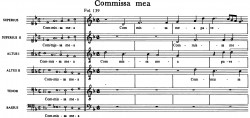
Music of the Iberian Peninsula, Part 3: More observations on the Golden Age
16th June 2026
Our last visit to the Iberian peninsula, a fortnight ago, was an insanely ambitious, necessarily broad-brush survey of the Spanish and Portuguese Golden Age, covering vocal and instrumental music, the sacred and the secular. This week, we take a more concise and (I hope) focussed look at a few of the sacred vocal masterpieces which exemplify the particular fervour and intensity of this remarkable period of musical history. They reflect the special place the peninsula had as a bulwark against the Reformation that had taken... read more
read more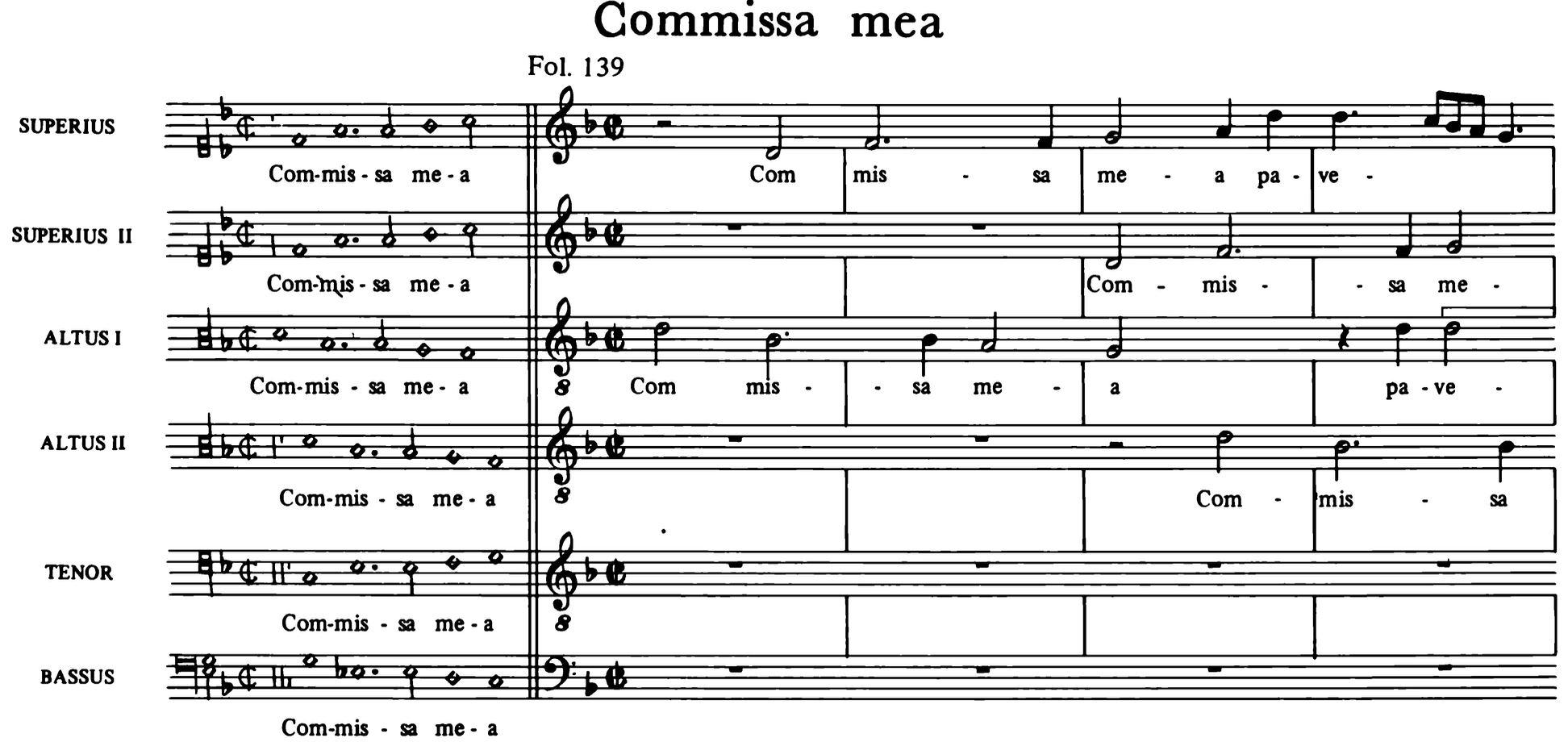
Music of the Iberian Peninsula, Part 3: More observations on the Golden Age
16th June 2026
Our last visit to the Iberian peninsula, a fortnight ago, was an insanely ambitious, necessarily broad-brush survey of the Spanish and Portuguese Golden Age, covering vocal and instrumental music, the sacred and the secular. This week, we take a more concise and (I hope) focussed look at a few of the sacred vocal masterpieces which exemplify the particular fervour and intensity of this remarkable period of musical history. They reflect the special place the peninsula had as a bulwark against the Reformation that had taken... read more
read more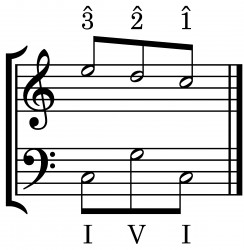
Carl Schachter, Arnold Whittall, and why music analysis matters
9th June 2026
Two recent deaths have robbed the world of music analysis of a pair of its most revered figures. Carl Schachter, who has died at the age of 93, was a pupil of (and subsequently collaborator with) Felix Salzer, himself one of Heinrich Schenker’s foremost students. Schachter continued to enrich and broaden the teaching of Schenkerian analysis, including important work on its application to issues of rhythm (which Schenker, focussing on harmonic and contrapuntal matters, largely bypassed). His influence went well beyond the... read more
read more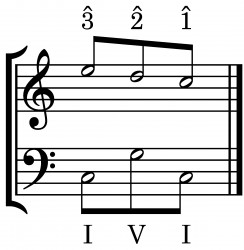
Carl Schachter, Arnold Whittall, and why music analysis matters
9th June 2026
Two recent deaths have robbed the world of music analysis of a pair of its most revered figures. Carl Schachter, who has died at the age of 93, was a pupil of (and subsequently collaborator with) Felix Salzer, himself one of Heinrich Schenker’s foremost students. Schachter continued to enrich and broaden the teaching of Schenkerian analysis, including important work on its application to issues of rhythm (which Schenker, focussing on harmonic and contrapuntal matters, largely bypassed). His influence went well beyond the... read more
read more
Music of the Iberian Peninsula, Part 2: ‘O quam gloriosum’ – The Spanish and Portuguese Golden Age
2nd June 2026
Over the past fortnight, I’ve been bathed in the most glorious, radiant, transformative light. Not the UK’s recent unseasonable heatwave, but the extraordinary vocal polyphony of the Siglo de Oro: the Spanish (and Portuguese) ‘Golden Century’. Extending from the late 15th to the early 17th century, this was a time of remarkable artistic flowering on the Iberian Peninsula, coinciding with the emergence of Spain and Portugal as global imperial powers with extensive colonial territories in the Americas, Africa and Asia. The... read more
read more