 FREE UK SHIPPING OVER £35!
The Spin Doctor Europadisc's Weekly Column
Remembering Christoph von Dohnányi
10th September 2025
10th September 2025
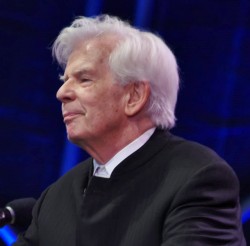 The death on Saturday 6 September of the distinguished German conductor Christoph von Dohnányi, just two days before his 96th birthday, has brought warm tributes from across the classical music world. He was born on 8 September 1929 into a family with notable Hungarian roots. His grandfather was the composer Ernst von Dohnányi, with whom he would study in Florida after World War II. His father, Hans (to whom he bore a striking resemblance), and maternal uncle, the great Lutheran pastor Dietrich Bonhoeffer, were both executed by the Nazis in the wake of the 20 July plot to assassinate Hitler, in which it was alleged they were leading conspirators. Both were prominent figures in the anti-Nazi resistance movement, and something of their moral strength of character was inherited by Christoph and his brother Klaus, who who served as SPD mayor of Hamburg in the 1980s.
After the upheavals of the war and in the wake of this family tragedy, the teenaged Dohnányi initially studied law in Munich before switching to music, becoming a repetiteur at the Bavarian State Opera. As well as studying with his grandfather in Florida, he also studied with Bernstein at Tanglewood. In 1952 he was engaged as assistant by Georg Solti at the Frankfurt, and in due course, after Generalmusikdirektor positions in Lübeck and Kassel, 1968 he was appointed GMD (and subsequently artistic director) at the Frankfurt Opera in 1968, where he instigated an innovative regime which balanced traditional repertoire with neglected and new works (he had already conducted the 1965 premiere of Henze’s Der junge Lord at the Deutsche Oper Berlin). From 1977 to 1984 he was GMD and intendant at the Hamburg State Opera.
Although Dohnányi remained active in the opera house, the 1980s brought about a change of direction when he became music director of the Cleveland Orchestra in 1984, an appointment which lasted until 2002. There he cultivated a sound that combined the orchestra’s renowned excellence with new levels of detail and refinement, particularly in the late-Romantic and 20th-century repertoire of which he was becoming a notable champion. Recently celebrated with a 40-disc set from Decca, these ‘Cleveland Years’ led the orchestra to new heights of excellence. His series of Bruckner symphonies was notable for its clarity and structural cogency, perhaps less so for its visionary qualities. His Mahler was less successful, and a planned recording of Wagner’s Ring (following pioneering live performances in Cleveland) progressed no further than Das Rheingold and Die Walküre due to financial constraints. Among the more eye-catching features of these years is a fine 1995 recording of the vast orchestral score Earth Dances by Harrison Birtwistle, whose music Dohnányi continued to champion into the new millennium.
Alongside the Cleveland recordings stand some excellent Decca recordings made from the mid-1970s onwards with the Vienna Philharmonic. Soon to be reissued in a 32-disc set scheduled for release in November, these recordings include a vibrant cycle of Mendelssohn symphonies, fabulously detailed accounts of Stravinsky’s Firebird and Petrushka, and – perhaps best of all – benchmark accounts of Bartók’s Miraculous Mandarin (whose scenario was originally intended for setting by Dohnányi’s grandfather) and Berg’s Wozzeck and two-act Lulu, both starring Dohnányi’s then-wife Anja Silja. The coupling of the orchestra’s lustrous playing, steeped in tradition, and the conductor’s questing musical intelligence in 20th-century music remains an unbeatable one.
From 1997 to 2008 Dohnányi was also principal conductor of London’s Philharmonia Orchestra, an appointment which was quite a coup at the time. His time there not only brought about a renewed commitment to modern music, but also brought high-profile visits to the continent, including Vienna’s Musikverein and the Salzburg Festival, as well as a residency at Paris’s Théâtre du Châtelet. Dohnányi’s cool yet probing way with works of the core Austro-German repertoire are represented in a series of Philharmonia recordings issued on the Signum label, including a live Salzburg performance of Bruckner’s Ninth Symphony.
Later years found Dohnányi returning to Hamburg at the helm of the NDR Symphony Orchestra, where he helped champion the building of the city’s Elbphilharmonie. Noted for his trenchant, often outspoken views on a range of subjects, from fellow conductors to the arts and politics, Dohnányi brought a unique blend of musicianship to his performances, combining a deep awareness of tradition with modern sensibilities and a sharp intellectual focus. Some of his recordings are characterised by a certain coolness and detachment, but by all accounts he had a warm personality, and he will be much-mourned by family, friends, colleagues and audiences.
Recommended recordings:
Christoph von Dohnanyi: The Cleveland Years 4854683
Dohnanyi in Vienna: The Complete Decca Recordings 4871327
Bruckner - Symphony no.9 (Philharmonia) SIGCD431
Bruckner - Symphony no.4 (Philharmonia) SIGCD256
R Strauss - Till Eulenspiegel, Ein Heldenleben SIGCD148
Latest Posts
Music of the Iberian Peninsula, Part 3: More observations on the Golden Age
16th June 2026
Our last visit to the Iberian peninsula, a fortnight ago, was an insanely ambitious, necessarily broad-brush survey of the Spanish and Portuguese Golden Age, covering vocal and instrumental music, the sacred and the secular. This week, we take a more concise and (I hope) focussed look at a few of the sacred vocal masterpieces which exemplify the particular fervour and intensity of this remarkable period of musical history. They reflect the special place the peninsula had as a bulwark against the Reformation that had taken... read more
read more
Music of the Iberian Peninsula, Part 3: More observations on the Golden Age
16th June 2026
Our last visit to the Iberian peninsula, a fortnight ago, was an insanely ambitious, necessarily broad-brush survey of the Spanish and Portuguese Golden Age, covering vocal and instrumental music, the sacred and the secular. This week, we take a more concise and (I hope) focussed look at a few of the sacred vocal masterpieces which exemplify the particular fervour and intensity of this remarkable period of musical history. They reflect the special place the peninsula had as a bulwark against the Reformation that had taken... read more
read more
Carl Schachter, Arnold Whittall, and why music analysis matters
9th June 2026
Two recent deaths have robbed the world of music analysis of a pair of its most revered figures. Carl Schachter, who has died at the age of 93, was a pupil of (and subsequently collaborator with) Felix Salzer, himself one of Heinrich Schenker’s foremost students. Schachter continued to enrich and broaden the teaching of Schenkerian analysis, including important work on its application to issues of rhythm (which Schenker, focussing on harmonic and contrapuntal matters, largely bypassed). His influence went well beyond the... read more
read more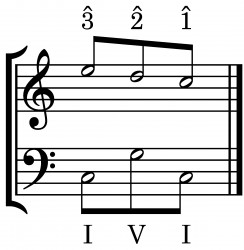
Carl Schachter, Arnold Whittall, and why music analysis matters
9th June 2026
Two recent deaths have robbed the world of music analysis of a pair of its most revered figures. Carl Schachter, who has died at the age of 93, was a pupil of (and subsequently collaborator with) Felix Salzer, himself one of Heinrich Schenker’s foremost students. Schachter continued to enrich and broaden the teaching of Schenkerian analysis, including important work on its application to issues of rhythm (which Schenker, focussing on harmonic and contrapuntal matters, largely bypassed). His influence went well beyond the... read more
read more
Music of the Iberian Peninsula, Part 2: ‘O quam gloriosum’ – The Spanish and Portuguese Golden Age
2nd June 2026
Over the past fortnight, I’ve been bathed in the most glorious, radiant, transformative light. Not the UK’s recent unseasonable heatwave, but the extraordinary vocal polyphony of the Siglo de Oro: the Spanish (and Portuguese) ‘Golden Century’. Extending from the late 15th to the early 17th century, this was a time of remarkable artistic flowering on the Iberian Peninsula, coinciding with the emergence of Spain and Portugal as global imperial powers with extensive colonial territories in the Americas, Africa and Asia. The... read more
read more