 FREE UK SHIPPING OVER £35!
The Spin Doctor Europadisc's Weekly Column
Landmark Recordings: Marin Marais’s complete ‘Pièces de viole’
28th August 2025
28th August 2025
 As we’ve previously observed, mention the great recording projects of the past, and certain achievements immediately spring to mind: Solti’s groundbreaking (and still earth-shattering) account of Wagner’s Ring on Decca, Antal Doráti’s complete survey of Haydn’s symphonies with the Philharmonia Hungarica for the same label, the Harnoncourt-Leonhardt period-instrument cycle of all Bach’s sacred cantatas (not to mention subsequent complete cycles from Gardiner, Koopman and Suzuki), and the complete Schubert Lieder on Hyperion. Even leaving aside such monumental achievements as the Philips Complete Mozart Edition and more recent bumper boxes from both major labels and budget imprints, the early music repertoire has been a particular beneficiary of this urge for completeness.
Scott Ross’s 34-disc box of the complete keyboard sonatas of Domenico Scarlatti introduced many listeners to a repertoire that was only partially familiar from the few dozen works that make it regularly onto piano and harpsichord recital programmes. Olivier Baumont achieved something comparable with his 10-disc set of François Couperin’s complete harpsichord works. Such boxes have a habit of disappearing from the catalogue (most are produced in fairly limited runs, especially in these days of streaming). One that is still very much in progress is Benjamin Alard’s ambitious project to record all of J.S. Bach’s keyboard music (including the organ works), on a variety of instruments including clavichord, pedal harpsichord and claviorganum.
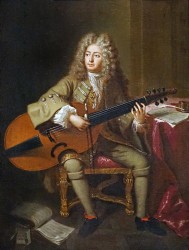
But what of music for non-keyboard instruments? One particularly valuable project, recorded over a seven-year period between 2014 and 2021 and released between 2017 and 2023 on the Ricercar label, is the complete Pièces de viole by one of the leading viol players of the Baroque era, the French composer Marin Marais (1656–1728). His five books of ‘Pieces for Viol’, comprising hundreds of individual movements for one, two and even three viols plus continuo, many of them organised in suites, were published between 1686 (a year after the birth of J.S. Bach) and 1725, set new standards for the instrument, above all in their sheer elegance, inventiveness, command of instrumental sonorities and lightly-worn contrapuntal mastery.
The son of a Parisian shoemaker, Marais entered the choir school of St Germain-l’Auxerrois (where his uncle, Louis Marais, was vicar) in 1667, and received an excellent musical education during his five years there (among his contemporaries was Michel-Richard de Lalande). Marais’s viol playing probably began during those years, and he continued his studies on the instrument with the great Sainte-Colombe, whose high standards he was nevertheless said to have surpassed after just six months of tuition. He then joined the orchestra of the Paris Opéra orchestra under his other mentor, Jean-Baptiste Lully. These two figures between them determined the music in which Marais made his greatest achievements as a composer: opera and music for the viol. It is unsurprising to find tombeaux to both these decisive figures in the books of the Pièces de violes.
In opera, Marais stayed true to the principles of the Lullian tragédie en musique (most notably in his operatic masterpiece, Alcyone, of 1706), while achieving new levels of instrumental sophistication, sensitivity to text, and exploitation of vocal tessitura. Alcyone marked the peak of his career, and the advent of the viol virtuoso Antoine Forqueray eventually eclipsed his own famed prowess on the instrument. Nevertheless, as the later books of the Pièces de viole amply prove, Marais’s inventiveness showed no signs of trailing off, and the mixture of energetic and graceful dances, exquisite and highly individual character pieces, virtuosity and vivid pictorialism, increase in astonishment from the Third Book (1711) onwards.
Those who have been collecting the Ricercar recordings by viol player François Joubert-Caillet and his colleagues in L’Achéron will already be familiar with the abundant strengths of their performances: an invigorating sense of engagements, particularly in the earlier books, and, in the later books (including the extended and celebrated Suitte d’un goût étranger of Book 4), a more reflective and cerebral approach which perfectly suits the music’s sonorous depths and expressive range. The highlights are too numerous to mention, but whether in courtly refinement or dances of more bucolic origin, Joubert-Caillet and his partners are equally at home and just as sensitive to the tiniest of nuances, while never losing touch with the overall trajectory.
The tombeaux to Lully and Saint-Colombe are deeply touching, while the exploratory Sujet diversitez in Book 1 is one of a number of pieces with a more speculative air. The famous Voix humaines of Book 2 features a memorably realised bowed vibrato, evoking the strains of the human voice. Other techniques include the occasional call for pizzicato, executed with lute-like delicacy. The many different nationalities, locales and characters of the Suitte d’un goût étranger are realised with great subtlety, while Book 5 includes the astonishing Tableau de l’opération de la taille, a movement which depicts an operation to remove a kidney stone!
Now gathered into a single 20-disc box of really remarkable value (just over £50, with handsome documentation and presentation matching excellent recorded sound), these performances by Joubert-Caillet and the musicians of L’Achéron will provide hours of enjoyment and gentle reflectiveness, whether dipped into by individual pieces, suites, or whole books. Without a doubt, they belong in the elite company of landmark sets to have graced the catalogues in recent years: if you don’t already know Marais’s enthralling instrumental output, this is the perfect opportunity to explore music that stands alongside the finest of the Baroque era. Do try it!
The Recording:
Marais - Pieces de viole: The Complete Collection RIC112
Latest Posts
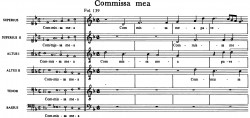
Music of the Iberian Peninsula, Part 3: More observations on the Golden Age
16th June 2026
Our last visit to the Iberian peninsula, a fortnight ago, was an insanely ambitious, necessarily broad-brush survey of the Spanish and Portuguese Golden Age, covering vocal and instrumental music, the sacred and the secular. This week, we take a more concise and (I hope) focussed look at a few of the sacred vocal masterpieces which exemplify the particular fervour and intensity of this remarkable period of musical history. They reflect the special place the peninsula had as a bulwark against the Reformation that had taken... read more
read more
Music of the Iberian Peninsula, Part 3: More observations on the Golden Age
16th June 2026
Our last visit to the Iberian peninsula, a fortnight ago, was an insanely ambitious, necessarily broad-brush survey of the Spanish and Portuguese Golden Age, covering vocal and instrumental music, the sacred and the secular. This week, we take a more concise and (I hope) focussed look at a few of the sacred vocal masterpieces which exemplify the particular fervour and intensity of this remarkable period of musical history. They reflect the special place the peninsula had as a bulwark against the Reformation that had taken... read more
read more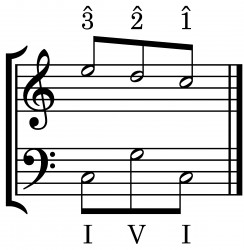
Carl Schachter, Arnold Whittall, and why music analysis matters
9th June 2026
Two recent deaths have robbed the world of music analysis of a pair of its most revered figures. Carl Schachter, who has died at the age of 93, was a pupil of (and subsequently collaborator with) Felix Salzer, himself one of Heinrich Schenker’s foremost students. Schachter continued to enrich and broaden the teaching of Schenkerian analysis, including important work on its application to issues of rhythm (which Schenker, focussing on harmonic and contrapuntal matters, largely bypassed). His influence went well beyond the... read more
read more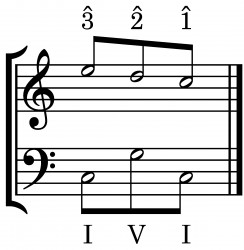
Carl Schachter, Arnold Whittall, and why music analysis matters
9th June 2026
Two recent deaths have robbed the world of music analysis of a pair of its most revered figures. Carl Schachter, who has died at the age of 93, was a pupil of (and subsequently collaborator with) Felix Salzer, himself one of Heinrich Schenker’s foremost students. Schachter continued to enrich and broaden the teaching of Schenkerian analysis, including important work on its application to issues of rhythm (which Schenker, focussing on harmonic and contrapuntal matters, largely bypassed). His influence went well beyond the... read more
read more
Music of the Iberian Peninsula, Part 2: ‘O quam gloriosum’ – The Spanish and Portuguese Golden Age
2nd June 2026
Over the past fortnight, I’ve been bathed in the most glorious, radiant, transformative light. Not the UK’s recent unseasonable heatwave, but the extraordinary vocal polyphony of the Siglo de Oro: the Spanish (and Portuguese) ‘Golden Century’. Extending from the late 15th to the early 17th century, this was a time of remarkable artistic flowering on the Iberian Peninsula, coinciding with the emergence of Spain and Portugal as global imperial powers with extensive colonial territories in the Americas, Africa and Asia. The... read more
read more