 FREE UK SHIPPING OVER £35!
The Spin Doctor Europadisc's Weekly Column
Celebrating Coleridge-Taylor
20th August 2025
20th August 2025
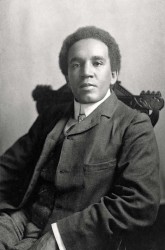 Although these days larger than some British cities, the South London suburb of Croydon is not known for its composers. Alongside more recent candidates such as singer-songwriters Kirsty MacColl (1959–2000) and Ralph McTell (b.1944), there are such figures as William Hurlstone (1876–1906) and Joseph Holbrooke (1878–1958). But undoubtedly Croydon’s most famous composer-son is Samuel Coleridge-Taylor (1875–1912), who achieved immortality through the astonishing turn-of-the-century success of his cantata Hiawatha’s Wedding Feast (1898), the first of a trilogy of choral works collectively entitled The Song of Hiawatha which set texts from the eponymous 1855 epic poem by Henry Wadsworth Longfellow. Tapping into the cult of the exotic and the romantic appeal of all things native American, Hiawatha’s Wedding Feast brought Coleridge-Taylor immediate transatlantic fame, although – having sold the rights to Novello’s for just 15 guineas – not the long-term financial security that might otherwise have been his.
Coleridge-Taylor was born in London on 15 August 1875, the illegitimate son of Sierra Leonean doctor Daniel Hugh Taylor (who returned to Africa before Samuel was born) and Englishwoman Alice Hare Martin. He grew up with his mother’s family in Croydon, studying violin with Joseph Beckwith, and singing in local church choirs. As his musical gifts became apparent, he entered the Royal College of Music in 1890 as a violin student, but was already composing church music. In 1892 he began studying composition with Stanford, and the following year was awarded and open scholarship in composition. Through the close mentorship of Stanford, Coleridge-Taylor absorbed the influence of Brahms, particularly in formal organisation and a penchant for chamber music, but even more crucial, particularly in terms of colour, inventiveness and rhythmic vitality, was Dvořák, who became his musical idol.
Among Coleridge-Taylor’s RCM contemporaries were Vaughan Williams, Holst, Ireland and Bridge, but he became closest to fellow South Londoner Hurlstone. Public performances of his chamber music and an RCM performance of three movements of the Symphony in A minor led to a growing musical assurance and individuality, and following his departure from the College in 1897, his first commission, from the Three Choirs Festival, came about through the influence of A.J. Jaeger and Elgar. The resulting orchestral A minor Ballade was premiered in Gloucester on 14 September 1898, just a couple of months before the first performance of Hiawatha’s Wedding Feast under Stanford’s baton at the RCM.
Although the Wedding Feast’s sequels, The Death of Minnehaha (1899) and Hiawatha’s Departure (1900) never achieved quite the same level of popularity, they soon brought renown across the Pond. Even before Coleridge-Taylor’s first US visit in 1904 (he was admired as both violinist and conductor), a Coleridge-Taylor Choral Society had been formed in Washington, D.C.. He was received at the White House by President Theodore Roosevelt (an exceptional honour in those days), while New York Philharmonic musicians who performed under his baton in 1910 hailed him as the ‘African Mahler’.
These American connections (as well as his father’s descent from African-American slaves) also led to an increased awakening of Coleridge-Taylor’s self-awareness as a black composer. He adopted influences from native American music, negro spirituals and African music, as well as contemporary African-American literature. Nevertheless, when it came to writing a violin concerto for the American virtuoso Maud Powell, an initial plan based on spirituals gave way to a wholly original work whose music is imbued with a soulfulness that Dvořák would have envied, and that recaptures the inventiveness of the late 1890s.
The Violin Concerto was premiered by Powell on 4 June 1912 at the Norfolk Connecticut Music Festival, but Coleridge-Taylor died five weeks before the British premiere on 8 October that year (by Arthur Catterall, under the baton of Henry Wood), the years of overwork – including teaching commitments at Trinity College of Music and the Guildhall School of Music – and financial strain having taken their toll. His daughter, Avril (1903–1998) went on to make her own mark as a composer, but Coleridge-Taylor’s star was arguably at its peak from the late 1920s to the late 1930s, when the annual fortnight of performances of The Song of Hiawatha at the Royal Albert Hall under Malcolm Sargent was a firm fixture in the British musical calendar.
The recent ‘rediscovery’ of Coleridge-Taylor’s music has focused on his wider output, from the many songs and choral works to chamber and incidental music and orchestral works. While Sargent’s classic recording of the Wedding Feast is available on both Alto and Heritage, it’s a great shame that the 1991 Argo recording of the complete Song of Hiawatha with Welsh National Opera forces under Kenneth Alwyn (in vastly superior sound and with better choral projection of the text) is currently deleted.
Unmissable are Chineke! Orchestra’s Decca album including the African Suite, Violin Concerto and Nonet, as well as Avril’s Sussex Landscape, and Kaleidoscope Chamber Collective’s disc of the Nonet, Piano Trio and Piano Quintet on Chandos. For a wide range of shorter choral works and partsongs, try both the Choir of King’s College London (on Delphian) and the London Choral Sinfonia (Orchid Classics). The Five Fantasiestücke for string quartet make and ideal companion for Dvořák’s late G major Quartet (performed by the Takács Quartet on Hyperion). On Naxos, the RTE Concert Orchestra under Adrian Leaper focus on some of the composer’s lighter works (including the delightful Petite Suite), while an excellent alternative performance of the Violin Concerto (performed by Lorraine McAslan) is to be found on the Lyrita label.
On the sesquicentenary of his birth, and with a special concert at Croydon’s Fairfield Hall coming up this October, there’s certainly never been a better time to get acquainted with Samuel Coleridge-Taylor’s music.
Recommended recordings:
Hiawatha’s Wedding Feast (Sargent), Othello, etc. HTGCD249
Othello & African Suites, Violin Concerto, etc. (Chineke!) 4853322
Nonet, Piano Trio, Piano Quintet (Kaleidoscope) CHAN20242
Partsongs (Choir of King’s College London) DCD34271
Choral Music (London Choral Sinfonia) ORC100247
Violin Concerto, Legend, Romance (McAslan) SRCD317
Latest Posts
Music of the Iberian Peninsula, Part 3: More observations on the Golden Age
16th June 2026
Our last visit to the Iberian peninsula, a fortnight ago, was an insanely ambitious, necessarily broad-brush survey of the Spanish and Portuguese Golden Age, covering vocal and instrumental music, the sacred and the secular. This week, we take a more concise and (I hope) focussed look at a few of the sacred vocal masterpieces which exemplify the particular fervour and intensity of this remarkable period of musical history. They reflect the special place the peninsula had as a bulwark against the Reformation that had taken... read more
read more
Music of the Iberian Peninsula, Part 3: More observations on the Golden Age
16th June 2026
Our last visit to the Iberian peninsula, a fortnight ago, was an insanely ambitious, necessarily broad-brush survey of the Spanish and Portuguese Golden Age, covering vocal and instrumental music, the sacred and the secular. This week, we take a more concise and (I hope) focussed look at a few of the sacred vocal masterpieces which exemplify the particular fervour and intensity of this remarkable period of musical history. They reflect the special place the peninsula had as a bulwark against the Reformation that had taken... read more
read more
Carl Schachter, Arnold Whittall, and why music analysis matters
9th June 2026
Two recent deaths have robbed the world of music analysis of a pair of its most revered figures. Carl Schachter, who has died at the age of 93, was a pupil of (and subsequently collaborator with) Felix Salzer, himself one of Heinrich Schenker’s foremost students. Schachter continued to enrich and broaden the teaching of Schenkerian analysis, including important work on its application to issues of rhythm (which Schenker, focussing on harmonic and contrapuntal matters, largely bypassed). His influence went well beyond the... read more
read more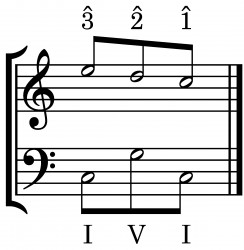
Carl Schachter, Arnold Whittall, and why music analysis matters
9th June 2026
Two recent deaths have robbed the world of music analysis of a pair of its most revered figures. Carl Schachter, who has died at the age of 93, was a pupil of (and subsequently collaborator with) Felix Salzer, himself one of Heinrich Schenker’s foremost students. Schachter continued to enrich and broaden the teaching of Schenkerian analysis, including important work on its application to issues of rhythm (which Schenker, focussing on harmonic and contrapuntal matters, largely bypassed). His influence went well beyond the... read more
read more
Music of the Iberian Peninsula, Part 2: ‘O quam gloriosum’ – The Spanish and Portuguese Golden Age
2nd June 2026
Over the past fortnight, I’ve been bathed in the most glorious, radiant, transformative light. Not the UK’s recent unseasonable heatwave, but the extraordinary vocal polyphony of the Siglo de Oro: the Spanish (and Portuguese) ‘Golden Century’. Extending from the late 15th to the early 17th century, this was a time of remarkable artistic flowering on the Iberian Peninsula, coinciding with the emergence of Spain and Portugal as global imperial powers with extensive colonial territories in the Americas, Africa and Asia. The... read more
read more