 FREE UK SHIPPING OVER £35!
The Spin Doctor Europadisc's Weekly Column
More on Shostakovich
12th August 2025
12th August 2025
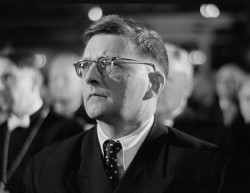 Last week’s piece marking this year’s Shostakovich anniversary certainly stirred up some debate, and we’re grateful to all those who took time to respond. Like a recent article in BBC Music in which several critics owned up to their own musical deaf-spots (‘Hero or hype?’, August), it stirred up some strong feelings on both sides of the Shostakovich divide. A particular thank-you to the respondent who suggested I listen to Kurt Sanderling conducting the 15th Symphony: I duly searched out his Cleveland recording, and found the high quality of the playing and recording, together with Sanderling’s evident engagement with the bleaker side of the work’s musical imagery, more compelling than I’d experienced with other performances.
With its multiple quotations in the outer movements (Rossini, Wagner and Glinka), and its stark, concentrated language, the 15th is one of Shostakovich’s most ambivalent late works, a combination of postmodernist irony and late-style concentrated-ness, shot through with ambiguities that are reflected in the wide range of possible meanings imputed to it by commentators past and present. Suffice to say, hearing it in Sanderling’s thoughtful, probing performance was enough to make me reassess my view of it (what a shame that this particular recording is currently unavailable). If Shostakovich was indeed distilling himself out of existence here (the Symphony, which proved to be his last, was written at a time of increasing ill health), he was surely doing it with a purpose: the consideration of what is left from one’s life as one approaches one’s final years. (That’s a vast oversimplification, and scarcely reflects the haunting fragility of much of the music, but you get the idea...)
A further suggestion that I listen to Leonard Bernstein’s recording of the Seventh Symphony had more mixed results: the playing of the Chicago Symphony Orchestra, captured at live performances, is certainly splendid, and Bernstein makes a cogent case for the music as a symphonic entity. Yet the music’s overpowering bombast, which ensured its immediate and enthusiastic international uptake following its wartime premiere, may still be a stumbling block to some, and has come to be viewed more problematically by recent academic opinion.
I’d still recommend any Shostakovich sceptics out there to investigate the early symphonies, as well as the First Piano Sonata and Aphorisms, where there’s an uninhibited freshness, inventiveness and daring that will come as a surprise to those who associate the composer only with the varying levels and layers of irony, bombast and bleakness that are characteristic of his later works. Yet, as surely as with Beethoven, Berlioz or Wagner, it’s evidently well-nigh impossible to extricate Shostakovich’s music from the circumstances of his life, and everyday life during the harshest periods of Soviet rule, with the deadening hand of the regime constantly on his shoulder, a complex personality and frail health all casting inescapable shadows over his creativity.
Just how much of Shostakovich’s music is inescapably (and hence irretrievably) of its time and place will vary with every listener. Another interesting aspect to consider is how much the ‘Shostakovich Phenomenon’ is a product of the culture industry of the west. The very recording companies that have allowed us to hear the composer’s works in sound of increasing sophistication and hitherto unimaginable detail (and shorn of the extraneous disturbances that can mar live performances) have also come to treat Shostakovich as a commercial golden goose: the series of symphonies, concertos and Lady Macbeth of Mtsensk recorded by Andris Nelsons and the Boston Symphony Orchestra, recently released as an imposing box by Deutsche Grammophon, are a case in point. If the Shostakovich of the early 21st century is a product as much of the culture industry as of any purely musical or biographical qualities, what does that say about the general state of classical music in the mid-2020s? And would Shostakovich – for whom the excesses of western consumerism were distasteful, if hardly on the same level as Soviet authoritarianism or Nazi fascism – relish the irony of the situation?
More topically, given the current geopolitical climate, what can Shostakovich’s (more or less) veiled critiques of authoritarianism, together with his (often subtly subversive) accommodations of officially-approved artistic fashions teach us, in a world where ‘classical’ music is increasingly seen as marginalised, exclusive and irrelevant? Might his music’s relatively wide appeal (not least among younger audiences), and its ability to straddle such diverse styles as jazz, film music, string quartet and esoteric piano miniature, offer some clues as to how to approach the problems presently facing the arts? Or, at the very least, help us to ask the right sort of questions?
Lastly, just as there is no ‘right’ or ‘wrong’ way to listen to music, there is no ‘right’ or ‘wrong’ music to like or dislike. One person’s favourite composer might well be another’s bête noire. Criticism need not be taken as personal slight, and differences of opinion need not be ingrained by resorting to absolutes (that way lies dictatorship!). Much can be learned through reasoned argument and persuasion, and none of us should be immune to self-questioning. Extremes of emotion can be expressed through music, but in our day-to-day lives they are best kept to the really important matters. Once again, thank you for all your feedback: it’s a perpetual education!
Latest Posts
Music of the Iberian Peninsula, Part 3: More observations on the Golden Age
16th June 2026
Our last visit to the Iberian peninsula, a fortnight ago, was an insanely ambitious, necessarily broad-brush survey of the Spanish and Portuguese Golden Age, covering vocal and instrumental music, the sacred and the secular. This week, we take a more concise and (I hope) focussed look at a few of the sacred vocal masterpieces which exemplify the particular fervour and intensity of this remarkable period of musical history. They reflect the special place the peninsula had as a bulwark against the Reformation that had taken... read more
read more
Music of the Iberian Peninsula, Part 3: More observations on the Golden Age
16th June 2026
Our last visit to the Iberian peninsula, a fortnight ago, was an insanely ambitious, necessarily broad-brush survey of the Spanish and Portuguese Golden Age, covering vocal and instrumental music, the sacred and the secular. This week, we take a more concise and (I hope) focussed look at a few of the sacred vocal masterpieces which exemplify the particular fervour and intensity of this remarkable period of musical history. They reflect the special place the peninsula had as a bulwark against the Reformation that had taken... read more
read more
Carl Schachter, Arnold Whittall, and why music analysis matters
9th June 2026
Two recent deaths have robbed the world of music analysis of a pair of its most revered figures. Carl Schachter, who has died at the age of 93, was a pupil of (and subsequently collaborator with) Felix Salzer, himself one of Heinrich Schenker’s foremost students. Schachter continued to enrich and broaden the teaching of Schenkerian analysis, including important work on its application to issues of rhythm (which Schenker, focussing on harmonic and contrapuntal matters, largely bypassed). His influence went well beyond the... read more
read more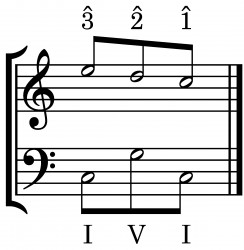
Carl Schachter, Arnold Whittall, and why music analysis matters
9th June 2026
Two recent deaths have robbed the world of music analysis of a pair of its most revered figures. Carl Schachter, who has died at the age of 93, was a pupil of (and subsequently collaborator with) Felix Salzer, himself one of Heinrich Schenker’s foremost students. Schachter continued to enrich and broaden the teaching of Schenkerian analysis, including important work on its application to issues of rhythm (which Schenker, focussing on harmonic and contrapuntal matters, largely bypassed). His influence went well beyond the... read more
read more
Music of the Iberian Peninsula, Part 2: ‘O quam gloriosum’ – The Spanish and Portuguese Golden Age
2nd June 2026
Over the past fortnight, I’ve been bathed in the most glorious, radiant, transformative light. Not the UK’s recent unseasonable heatwave, but the extraordinary vocal polyphony of the Siglo de Oro: the Spanish (and Portuguese) ‘Golden Century’. Extending from the late 15th to the early 17th century, this was a time of remarkable artistic flowering on the Iberian Peninsula, coinciding with the emergence of Spain and Portugal as global imperial powers with extensive colonial territories in the Americas, Africa and Asia. The... read more
read more