 FREE UK SHIPPING OVER £35!
The Spin Doctor Europadisc's Weekly Column
The Second-hand Bug
8th July 2025
8th July 2025
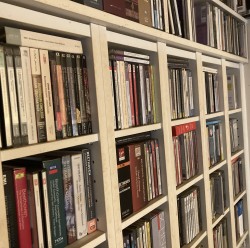 One of the banes in the life of any collector of recorded music is the frequent non-availability of items from the back catalogue. We’ve lost count of the number of times when Radio 3’s ‘Building a Library’ or Gramophone’s ‘Collection’ has heaped praise on its top choice, only for it to show as unavailable except for download or as part of some vast compilation box. And, with many labels now manufacturing in smaller quantities than before, some titles seem to have very limited availability, even when not expressly designated a ‘limited edition’. In the days before the internet, one of the rites of passage for the serious classical aficionado was discovering the Aladdin’s caves of second-hand classical specialists. In London, there was the helpful but frequently pricey Harold Moore’s on Great Marlborough Street, while in the less salubrious surroundings of Lower Marsh (behind Waterloo Station) was the altogether more characterful Gramex, run by the late Roger Hewland, which in its heyday boasted wall-to-wall LPs organised only in the broadest of categories ensuring that, whatever you went in looking for, you’d be sure to come away with much else besides!
Here in Nottingham, Simply Classical on the Mansfield Road was the place to go, operated by Robert Tomanek, a refugee from the 1956 Hungarian Uprising, while in my original home town of Croydon there was Beanos on Surrey Street, whose upstairs classical section had its very own interior front door. It was there, among much else, that I picked up my first recording of Parsifal, Boulez’s Bayreuth Festival recording on DG, with an eye-catching shiny silver cover. Nor were such shops restricted to cities and larger towns: when my parents retired to the sleepy seaside town of Seaford in East Sussex in the late 1980s, I was delighted to discover that, even in such a backwater, there existed a tiny shop devoted to used classical records, the snappily-named Grooves, making my visits down there that extra bit pleasurable.
Nowadays, however, such shops – like the stores that used to specialise in brand-new classical releases – are almost non-existent, as the triple-whammy of online buying, soaring rents and a culture-shift away from classical music has sounded the death-knell for a once thriving market. Yet for the determined collector there are still options, even without resorting to such multinationals as Amazon and ebay (although some bargains can still be found on the latter). Charity shops can be a bit hit-and-miss (as can the whole activity of buying second-hand), but I’ve found that Oxfam’s Music & Books stores have been reliable purveyors of interesting and often highly collectible items over the years, especially for rare vinyl, and there’s the added bonus of knowing that the money is going to good causes.
Closer to home, the more observant among you will know that Europadisc too has recently taken the plunge into the second-hand market. Compared with our huge lists of new discs, the number of used items we currently offer is small, but we are steadily adding titles, from popular classics, compilations and box sets to (most recently) several mint-condition DVDs likely to appeal to those interested in the more adventurous byways of 20th-century music (Xenakis, Earle Brown, Cage...). Each item includes a guide to the disc’s condition, and the prices are competitive – certainly cheap enough, in most cases, to take a punt, as one so often does when buying used discs. I’ve already purchased several: my colleagues have deliberately put the second-hand stock within easy eyesight of my desk, so that temptation is constantly staring me in the face! And while some fall within the cheap-and-cheerful bracket, there are enough hard-to-find titles to make a thorough browse eminently worthwhile.
As must be the case with many seasoned collectors, some of the most treasured titles in my personal hoard have been second-hand purchases. There have been remarkably few duds, although the £2.99 forked out for the fourth and (mercifully) final Beethoven symphony cycle by A Very Famous Conductor would have been better spent elsewhere (or, indeed, anywhere); which just goes to show that, very occasionally, you can go wrong... On the other hand, although I’ve never been a great one for watching (as opposed to listening to) music, I somehow seem to have amassed four different DVD productions of Mozart’s Don Giovanni (including two conducted by that peerless Mozartian, Charles Mackerras) and – still more remarkably – no fewer than three of Monteverdi’s L’incoronazione di Poppea! Both are works that seem – judging by the number of releases they’ve had – to have special strengths in the visual medium.
There’s also that special thrill that comes from picking up something that’s both a bargain and a rare treat wrapped up in one. A pauper’s cornucopia, as it were. I hope this has piqued your interest in exploring the second-hand side of the market. If so: happy hunting! And, however you choose to collect your music, do keep ’em spinning...
Europadisc’s used listings (updated regularly!):
https://www.europadisc.co.uk/used_classical_cds.htm
Latest Posts
Music of the Iberian Peninsula, Part 3: More observations on the Golden Age
16th June 2026
Our last visit to the Iberian peninsula, a fortnight ago, was an insanely ambitious, necessarily broad-brush survey of the Spanish and Portuguese Golden Age, covering vocal and instrumental music, the sacred and the secular. This week, we take a more concise and (I hope) focussed look at a few of the sacred vocal masterpieces which exemplify the particular fervour and intensity of this remarkable period of musical history. They reflect the special place the peninsula had as a bulwark against the Reformation that had taken... read more
read more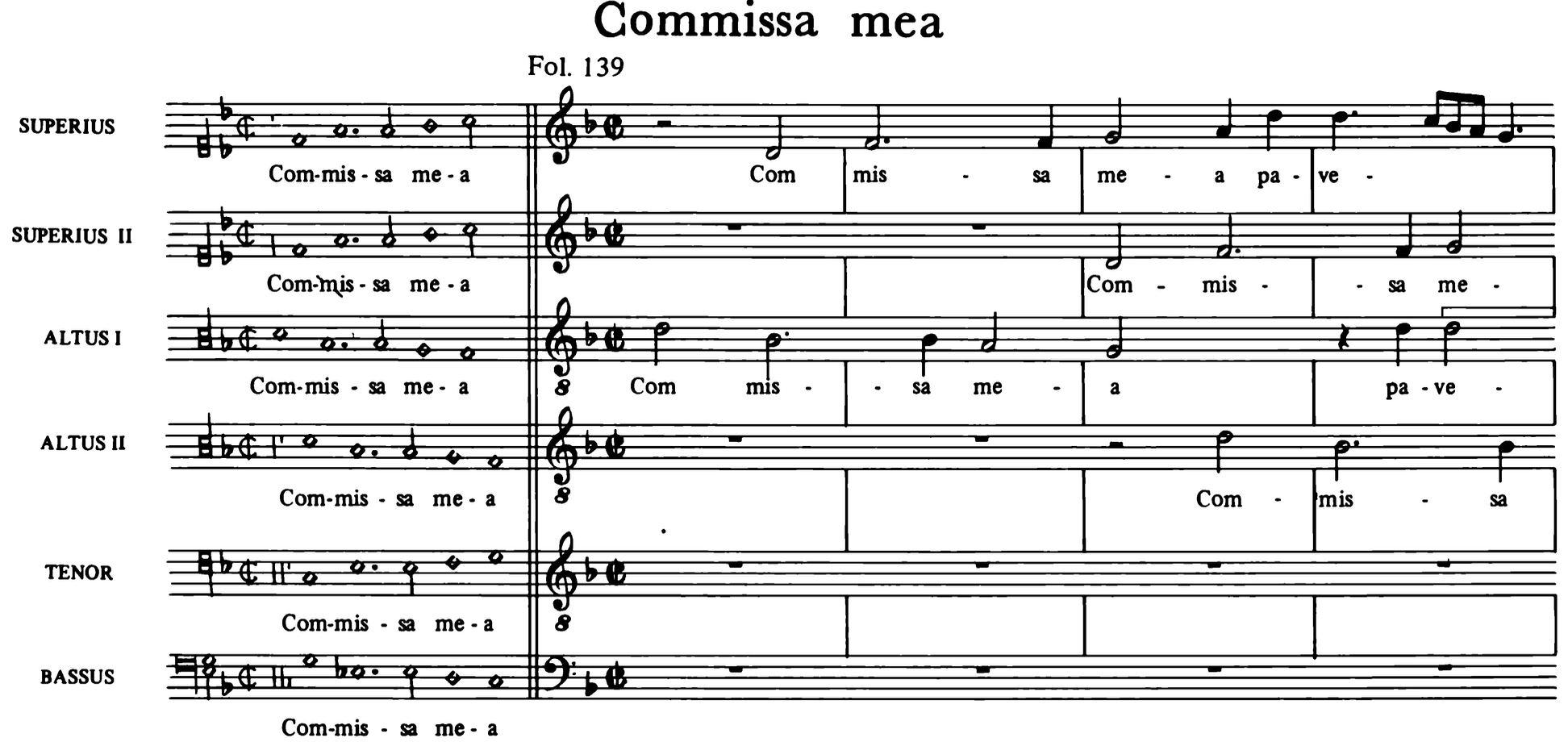
Music of the Iberian Peninsula, Part 3: More observations on the Golden Age
16th June 2026
Our last visit to the Iberian peninsula, a fortnight ago, was an insanely ambitious, necessarily broad-brush survey of the Spanish and Portuguese Golden Age, covering vocal and instrumental music, the sacred and the secular. This week, we take a more concise and (I hope) focussed look at a few of the sacred vocal masterpieces which exemplify the particular fervour and intensity of this remarkable period of musical history. They reflect the special place the peninsula had as a bulwark against the Reformation that had taken... read more
read more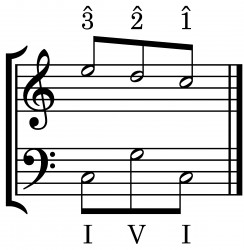
Carl Schachter, Arnold Whittall, and why music analysis matters
9th June 2026
Two recent deaths have robbed the world of music analysis of a pair of its most revered figures. Carl Schachter, who has died at the age of 93, was a pupil of (and subsequently collaborator with) Felix Salzer, himself one of Heinrich Schenker’s foremost students. Schachter continued to enrich and broaden the teaching of Schenkerian analysis, including important work on its application to issues of rhythm (which Schenker, focussing on harmonic and contrapuntal matters, largely bypassed). His influence went well beyond the... read more
read more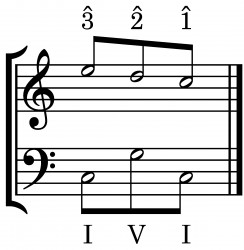
Carl Schachter, Arnold Whittall, and why music analysis matters
9th June 2026
Two recent deaths have robbed the world of music analysis of a pair of its most revered figures. Carl Schachter, who has died at the age of 93, was a pupil of (and subsequently collaborator with) Felix Salzer, himself one of Heinrich Schenker’s foremost students. Schachter continued to enrich and broaden the teaching of Schenkerian analysis, including important work on its application to issues of rhythm (which Schenker, focussing on harmonic and contrapuntal matters, largely bypassed). His influence went well beyond the... read more
read more
Music of the Iberian Peninsula, Part 2: ‘O quam gloriosum’ – The Spanish and Portuguese Golden Age
2nd June 2026
Over the past fortnight, I’ve been bathed in the most glorious, radiant, transformative light. Not the UK’s recent unseasonable heatwave, but the extraordinary vocal polyphony of the Siglo de Oro: the Spanish (and Portuguese) ‘Golden Century’. Extending from the late 15th to the early 17th century, this was a time of remarkable artistic flowering on the Iberian Peninsula, coinciding with the emergence of Spain and Portugal as global imperial powers with extensive colonial territories in the Americas, Africa and Asia. The... read more
read more