 FREE UK SHIPPING OVER £35!
The Spin Doctor Europadisc's Weekly Column
Pearls of the French Baroque: Lully and Rameau
17th June 2025
17th June 2025
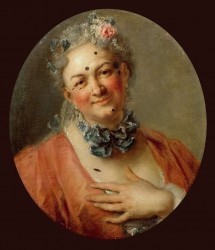 In its combination of visual, verbal and musical elements, opera is world of heightened emotion but also of spectacle. And, if spectacle is your thing, few operas deliver so lavishly as those of the French Baroque. The masters of this genre, centred on the court of Louis XIV at Versailles, employed classical subjects mingled with references to contemporary politics as the basis for sumptuous entertainments in which dance and stagecraft occupied positions at least as important as the sung libretto and the music itself. This makes often them tricky to revive in the modern world, especially as the political subtext may either get lost or be used as a pretext for projecting modern-day parallels which may or may not find resonance in the music.
Whatever the challenges, French Baroque operas have been enjoying an unusually healthy revival in recent years. Pioneers such as Jean-Claude Malgoire and (most significantly) William Christie have helped to ensure that several generations of singers are now au fait with the style and manners of the genre, which are just as distinctive and specialised as the trilli and gruppi of Monteverdian opera, the ornamentation of Italian opera seria, and the techniques of the 19th-century bel canto tradition. The result is that the French genre is now hard on the heels of the postwar Handelian revival, certainly on disc.
Two French-based labels, Erato Disques (now part of the Warner Classics group) and Harmonia Mundi, led the way in this revival; since 2018 they have been joined by the Château de Versailles Spectacles imprint, devoted largely to music of the French Baroque, and focussing on performances from the present-day Opéra royal de Versailles. Their two most recent releases – in the handsome presentation that is the label’s hallmark – bolster the discography of the two great composers of French Baroque opera: the Florentine-born favourite of Louis XIV, Jean-Baptiste Lully (1632–1687), and the operatic latecomer Jean-Philippe Rameau (1683–1764), whose career flourished during the reign of Louis XV.
Lully is the foundational figure of French opera. In partnership with the librettist Philippe Quinault (1635–1688), he established the conventions of the tragédie lyrique, composing an opera per year between 1673 and his death 14 years later. Cast in five acts preceded by an allegorical prologue, the tragédie lyrique offered a clear framework on which to hang the various elements of the genre: the fluid recitatives, the elaborate stage machinery, the dances and choruses, all of which drew praise from the genre’s admirers. Although not his most popular success, Lully’s Atys (1676) – based on a tale from Book 4 of Ovid’s Fasti – won the particular admiration of Louis XIV himself, becoming known as ‘the king’s opera’.
The action tells the story of the Phrygian Attis, appointed high priest to the goddess Cybele (who loves him), but in mutual love with the nymph Sangaride, who in turn is betrothed to King Celænus. Its central act includes a sommeil (sleep sequence), with good and bad dreams. With the odds stacked against them, the lovers become victims of the goddess: she casts a spell on Attis, who mistakes Cybele for Sangaride, and Sangaride for a monster which he then chases and kills. On the lifting of the spell, Attis is overcome with remorse and kills himself. Cybele, belatedly regretting the punishment meted out to the hero, transforms him into a pine tree, and the opera closes with a divertissement of mourning.
The CVS label already has a fine recording of Atys released just last year, starring Reinoud Van Mechelen and conducted Christophe Rousset. Their new one, however, deserves investigation on several counts: Matthew Newlin and Ana Quintans make an extremely sensitive pair of lovers, the musical direction of Leonardo García-Alarcon is bracingly forthright, highlighting the work’s strengths, and (best of all) there’s also a DVD/Blu-ray of Angelin Preljocaj’s 2023 Versailles production, which successfully combines spectacle with restrained beauty of design as well as some fine choreography. The set is dedicated to the memory of Florence Malgoire (daughter of Jean-Claude), who led the orchestra for the performances.
Seven decades separate Atys from Rameau’s Platée (1745), but the biggest difference is that the latter work is that rare thing in French Baroque opera: a comedy (comédie lyrique). With a libretto based on a play by Jacques Autreau, it tells of how Jupiter cures his wife, Juno, of jealousy by pretending to fall in love with the ugly water nymph, Platée. The action could easily come across as cruel: in modern terms, a combination of sexual harassment and body-shaming. Yet Rameau’s genius for characterisation earns the central character (performed by a high tenor or ‘haute-contre’) the audience’s sympathy, while his skills as a colourist find a ‘natural’ home in the actions calls for a chorus of frogs, cuckoos, a donkey, not to mention the obligatory storms and thunderclaps signalling divine interventions. Rameau was not a great formal innovator, but his inventiveness and ability to shape material to the demands of the drama saw him bring French opera – whether tragic or comic – to a peak of perfection.
The Recordings:
Lully - Atys (Newlin, Quintans, Bridelli, Wolf / García-Alarcon) CVS113 (CD + DVD + Blu-ray)
Latest Posts
Music of the Iberian Peninsula, Part 3: More observations on the Golden Age
16th June 2026
Our last visit to the Iberian peninsula, a fortnight ago, was an insanely ambitious, necessarily broad-brush survey of the Spanish and Portuguese Golden Age, covering vocal and instrumental music, the sacred and the secular. This week, we take a more concise and (I hope) focussed look at a few of the sacred vocal masterpieces which exemplify the particular fervour and intensity of this remarkable period of musical history. They reflect the special place the peninsula had as a bulwark against the Reformation that had taken... read more
read more
Music of the Iberian Peninsula, Part 3: More observations on the Golden Age
16th June 2026
Our last visit to the Iberian peninsula, a fortnight ago, was an insanely ambitious, necessarily broad-brush survey of the Spanish and Portuguese Golden Age, covering vocal and instrumental music, the sacred and the secular. This week, we take a more concise and (I hope) focussed look at a few of the sacred vocal masterpieces which exemplify the particular fervour and intensity of this remarkable period of musical history. They reflect the special place the peninsula had as a bulwark against the Reformation that had taken... read more
read more
Carl Schachter, Arnold Whittall, and why music analysis matters
9th June 2026
Two recent deaths have robbed the world of music analysis of a pair of its most revered figures. Carl Schachter, who has died at the age of 93, was a pupil of (and subsequently collaborator with) Felix Salzer, himself one of Heinrich Schenker’s foremost students. Schachter continued to enrich and broaden the teaching of Schenkerian analysis, including important work on its application to issues of rhythm (which Schenker, focussing on harmonic and contrapuntal matters, largely bypassed). His influence went well beyond the... read more
read more
Carl Schachter, Arnold Whittall, and why music analysis matters
9th June 2026
Two recent deaths have robbed the world of music analysis of a pair of its most revered figures. Carl Schachter, who has died at the age of 93, was a pupil of (and subsequently collaborator with) Felix Salzer, himself one of Heinrich Schenker’s foremost students. Schachter continued to enrich and broaden the teaching of Schenkerian analysis, including important work on its application to issues of rhythm (which Schenker, focussing on harmonic and contrapuntal matters, largely bypassed). His influence went well beyond the... read more
read more
Music of the Iberian Peninsula, Part 2: ‘O quam gloriosum’ – The Spanish and Portuguese Golden Age
2nd June 2026
Over the past fortnight, I’ve been bathed in the most glorious, radiant, transformative light. Not the UK’s recent unseasonable heatwave, but the extraordinary vocal polyphony of the Siglo de Oro: the Spanish (and Portuguese) ‘Golden Century’. Extending from the late 15th to the early 17th century, this was a time of remarkable artistic flowering on the Iberian Peninsula, coinciding with the emergence of Spain and Portugal as global imperial powers with extensive colonial territories in the Americas, Africa and Asia. The... read more
read more