 FREE UK SHIPPING OVER £35!
The Spin Doctor Europadisc's Weekly Column
An Imperfect Wagnerite
10th June 2025
10th June 2025
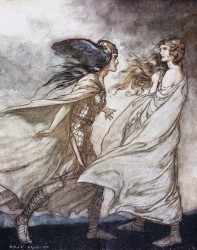 In my (now very distant) youth, I was an ardent lover of the music dramas of Richard Wagner. While still at school, I had cheap tickets for the Götz Friedrich Ring cycle at Covent Garden (with memorable sets by Josef Svoboda, and a cast including the likes of Donald McIntyre, Berit Lindholm and Jean Cox). From there on, it was total immersion: the fabled Solti Ring on Decca; another live cycle, at English National Opera (the Byam Shaw/Blatchley/Koltai production, though sadly not with the original cast); Tristan, Parsifal, and as many books as I could get hold of – Newman, Shaw, Donington, Magee, Dahlhaus... During my university years, I had a reputation as a Wagner buff, but soon (thanks to some splendid teachers) I was able to put my early uncritical enthusiasm into perspective. Wagner did indeed compose magnificent music, and changed the relationship between music and drama, but he also had some extremely questionable personal, artistic and political views (too well-known to be rehearsed here). In time, my Wagner-mania gave way Bruckner-mania, but nowadays, while still loving both composers’ music, I find that a little goes a long way – too much of either, I discovered, can be a dangerous thing!
So it was with a mixture of eager anticipation and slight trepidation that, a little over a week ago, I travelled out to the Swiss capital, Bern, for a performance of Götterdämmerung, the final instalment of the Ring cycle. It was the concluding part of a cycle presented over the last few years by Oper Bern’s outgoing music director, Nicholas Carter. The Stadttheater Bern is a modest-sized house for a capital city, but then the city itself is modest when compared to Zurich or Geneva, or to many other global capitals. This appeared to be the first time that a Ring cycle had been mounted there (albeit in annual instalments rather than complete). For reasons of space, the reduced scoring by Gottfried Ephraim Lessing was used: rationalising much of the woodwind, brass and harps, but still remaining very faithful to the original.
I went with two great friends of mine who were completely new to Wagner. Neither had had any time to do homework on the background, music or plot, but since the back-story is retold at least twice in every act, that wasn’t too much of a handicap, and both are German speakers. What made the event more interesting was that a friend of theirs also came along – a committed Wagnerian, deeply thoughtful, with strong opinions and a level of attentiveness I’d never before witnessed from an audience member during a Wagner opera. We had plenty to talk about, and disagreed on many things, among them the listenability of historic recordings (which, as regular readers know, I love). One thing we did agree on: the production was terrible! Lots of latex, far too many ‘movement group’ extras (including a dancer as a human substitute for Brünnhilde’s horse, Grane), and wholly unnecessary full-frontal nudity during Siegried’s Funeral Music.
Musically, however, it was a triumph, with some excellent singing from a largely young cast, plenty of forward momentum (except for an ill-judged Luftpause before the very final tutti of the work), and a chorus that sounded as though it had been trained by the legendary Wilhelm Pitz himself. Götterdämmerung, however, is a strange – dare one say flawed? – work. It was conceived well before the rest of the Ring cycle, designed as a stand-alone work entitled Siegfrieds Tod (‘Siegfried’s Death’) during the early stages of writing the libretto, Wagner recognised that too much explanation of the back-story was necessary but, more importantly, that the music itself would lack the resonance of having been lived through. And so the work grew from one to two operas (with Siegfrieds Tod preceded by Der junge Siegfried), and then three plus a ‘preliminary evening’ (Das Rheingold). This would allow the intertwining of the human tragedy of Siegfried and Brünnhilde with the mythological struggle between the forces of good and evil (represented by the god Wotan and the Nibelung dwarf Alberich), and the final overthrowing of the old order.
The problem is that, having written the libretto backwards (as it were), and then composed the music in chronological order, Wagner ended up composing for the final part some of the cycle’s most adventurous music to a libretto which shows clear signs of the old ‘number opera’ type. This is most obvious in Act 2, where there are not only large-scale choruses of a type absent from the rest of the Ring, but a good old-fashioned ‘vengeance trio’. Götterdämmerung is also rich in those ‘bleeding chunks’ that often crop up (with or without voices) in the concert hall: Dawn and Siegfried’s Rhine Journey, Siegfried’s ‘Funeral March’ and, of course, Brünnhilde’s cataclysmic Immolation Scene. These are no doubt among the passages that struck my Wagnerian neophyte friends most immediately.
Yet, almost half a century on from my first exposure to Wagner, the scenes that now mesmerise me are those that probably completely passed by my younger self. The Norns’ Scene that opens the Prologue, and which can seem to be merely another retelling of what’s gone before, contains some of the most powerfully visionary music Wagner ever wrote, in which sonic mists gradually reveal the very sinews of time and prehistory, and which – in a good performance – can have a very tangible tension, as taut as the Rope of Time which the Norns themselves spin. And then there’s the epic scene in Act 1 where Brünnhilde, alone on her mountain-top after Siegfried has departed on deeds of glory, is visited by her Valkyrie sister Waltraute, who pleads with her to return the titular Ring to the Rhinemaidens and so redeem the doomed gods. In this one scene, so many of the themes (musical and dramatic) of the entire cycle return, in strikingly urgent transformations and full of the heavy weight of experience. This is surely one of the most essential moments in the entire drama. Just as much as the Wotan/Brünnhilde in Act 2 of Die Walküre, this is a scene that goes to the real heart of Wagner’s Ring, and on this too the earnest Wagnerian and I were in full agreement!
Nicholas Carter’s next appointment (starting in 2026) is as music director of Stuttgart State Opera: they’ll be lucky to have him. Let’s hope he gets to make some recordings soon. As for my Swiss friends: give Wagner time. Just a fraction of the time you alot to your gardening and you’ll have the Ring mastered in no time!
Recommended recording:
Götterdämmerung (Varnay, Windgassen, Bayreuth Festival/Keilberth) SBT41393
Recorded in 1955 in vivid early stereo, but hidden in the Decca vaults for decades, this recording has acquired classic status since its belated release in 2009. Though the Norns’ Scene takes time to settle, Waltraute’s Monologue is one of the most remarkable on disc, with Martha Mödl’s rich, urgent mezzo playing opposite Atrid Varnay’s gleaming Brünnhilde. The rest of the performance is rarely less than stellar.
Further reading:
Carl Dahlhaus (transl. Mary Whittall), Richard Wagner’s Music Dramas (Cambridge: Cambridge UP, 1979)
Still the most intelligently written and perceptive of all the hundreds of books to be written on the subject, and slim enough (just!) to slip into your pocket when at the opera.
Illustration: Waltraute confronts Brünnhilde, Arthur Rackham (1911)
Latest Posts
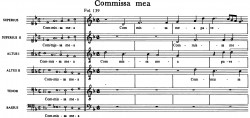
Music of the Iberian Peninsula, Part 3: More observations on the Golden Age
16th June 2026
Our last visit to the Iberian peninsula, a fortnight ago, was an insanely ambitious, necessarily broad-brush survey of the Spanish and Portuguese Golden Age, covering vocal and instrumental music, the sacred and the secular. This week, we take a more concise and (I hope) focussed look at a few of the sacred vocal masterpieces which exemplify the particular fervour and intensity of this remarkable period of musical history. They reflect the special place the peninsula had as a bulwark against the Reformation that had taken... read more
read more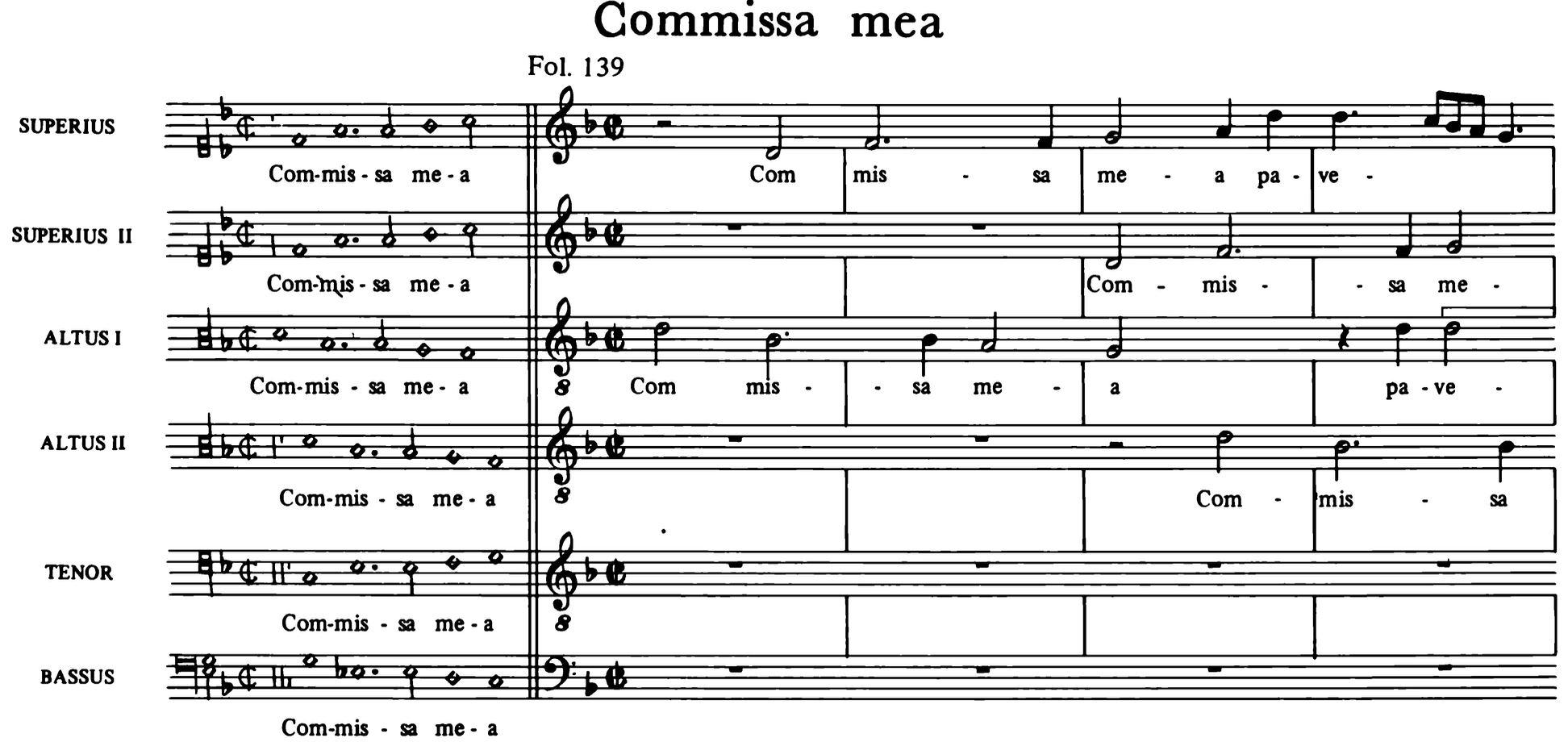
Music of the Iberian Peninsula, Part 3: More observations on the Golden Age
16th June 2026
Our last visit to the Iberian peninsula, a fortnight ago, was an insanely ambitious, necessarily broad-brush survey of the Spanish and Portuguese Golden Age, covering vocal and instrumental music, the sacred and the secular. This week, we take a more concise and (I hope) focussed look at a few of the sacred vocal masterpieces which exemplify the particular fervour and intensity of this remarkable period of musical history. They reflect the special place the peninsula had as a bulwark against the Reformation that had taken... read more
read more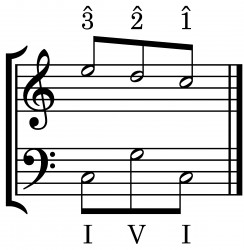
Carl Schachter, Arnold Whittall, and why music analysis matters
9th June 2026
Two recent deaths have robbed the world of music analysis of a pair of its most revered figures. Carl Schachter, who has died at the age of 93, was a pupil of (and subsequently collaborator with) Felix Salzer, himself one of Heinrich Schenker’s foremost students. Schachter continued to enrich and broaden the teaching of Schenkerian analysis, including important work on its application to issues of rhythm (which Schenker, focussing on harmonic and contrapuntal matters, largely bypassed). His influence went well beyond the... read more
read more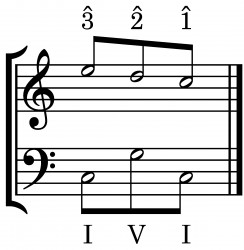
Carl Schachter, Arnold Whittall, and why music analysis matters
9th June 2026
Two recent deaths have robbed the world of music analysis of a pair of its most revered figures. Carl Schachter, who has died at the age of 93, was a pupil of (and subsequently collaborator with) Felix Salzer, himself one of Heinrich Schenker’s foremost students. Schachter continued to enrich and broaden the teaching of Schenkerian analysis, including important work on its application to issues of rhythm (which Schenker, focussing on harmonic and contrapuntal matters, largely bypassed). His influence went well beyond the... read more
read more
Music of the Iberian Peninsula, Part 2: ‘O quam gloriosum’ – The Spanish and Portuguese Golden Age
2nd June 2026
Over the past fortnight, I’ve been bathed in the most glorious, radiant, transformative light. Not the UK’s recent unseasonable heatwave, but the extraordinary vocal polyphony of the Siglo de Oro: the Spanish (and Portuguese) ‘Golden Century’. Extending from the late 15th to the early 17th century, this was a time of remarkable artistic flowering on the Iberian Peninsula, coinciding with the emergence of Spain and Portugal as global imperial powers with extensive colonial territories in the Americas, Africa and Asia. The... read more
read more