 FREE UK SHIPPING OVER £35!
The Spin Doctor Europadisc's Weekly Column
Orlando the Great: Gibbons beyond the vocal works
28th May 2025
28th May 2025
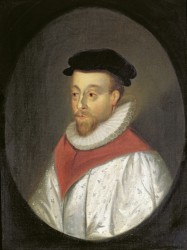 The music of Orlando Gibbons – the 400th anniversary of whose untimely death falls next week – is still best represented in performance and on disc by his choral music. With the exception of the Cromwellian Commonwealth, his vocal works (such as the celebrated Advent verse anthem This is the Record of John) have maintained a lasting place in the cathedral and collegiate repertoire. His instrumental works, whether for solo keyboard or ensemble, have enjoyed less exposure, but are no less rewarding. It is Gibbons’s further misfortune that he gets squeezed out of the bigger picture somewhat by Tallis and Byrd before him, and Purcell after. As such, he has tended to be classed as a transitional figure between the Eizabethan Renaissance on the one hand and the early English Baroque on the other. Yet, had it not been for his early demise he would certainly be regarded in the foremost rank of English composers of his or any time.
Gibbons was born in Oxford, baptised on Christmas Day 1583. Hs father, William, had been a town wait (public musician) in Cambridge from 1567, and had taken a similar post in Oxford in 1580, but the family moved back to Cambridge around 1588. There, the young Orlando became a chorister in the Choir of King’s College, where his eldest brother Edward (1568–1650) was master of the choir. By 1603 he was an unsalaried member of the Chapel Royal, and on 21 March 1605 he was sworn in as a Gentleman of the Chapel Royal, probably as junior organist. The following year he married Elizabeth Patten (whose father was Yeoman of the Vestry of the Chapel Royal), and also received the MusB degree from Cambridge.
By 1615 he was joint organist of the Chapel Royal, and in 1617 he was a member of the musical establishment of the Prince of Wales (later Charles I). His position at the court of James I was further consolidated when he became virginalist to the privy chamber at Michaelmas 1619. In 1623, he succeeded John Parsons as organist at Westminster Abbey, with Thomas Day as his junior. By 1625 he was senior organist of the Chapel Royal, and he also oversaw the music for James I’s funeral in March that year. His evident closeness to the new monarch, Charles I, had little time to bear further fruit: soon after the court set out for Canterbury on 31 May to greet Charles’s new bride, Henrietta Maria, Gibbons was stricken by illness (probably a brain haemorrhage), and he died at the age of 41 on 5 June at Canterbury, where he was buried in the Cathedral. His wife survived him by little more than a year, but his eldest surviving son, Christopher (1615–1676), was granted a scholarship at Charterhouse, and went on to teach several important Restoration composers, most notably Purcell.
Orlando Gibbons spent almost his entire career as a musician under the rule of James I, and most of his appointments were specifically as a keyboard player. Historically, his music has been particularly admired for its contrapuntal dexterity, but there is also a vitality and wit to his works, something which is particularly evident in his ensemble and instrumental music. His ensemble works could have been written for a variety of ensembles, among them the viol consort, although the violin family was already making inroads into this field. In any event, a new disc from Fretwork on the Signum label contains a generous selection of his consort music, among which the variations on ‘Go from my Window’ and the pair of Fantasias for two viols are especially noteworthy: the former includes some delightful ‘pealing’ passages around the tune as cantus firmus, while the first of the two-part Fantasias includes passages of spiky close imitation. The disc is rounded off by the splendid verse anthem Behold, thou hast made my days, whose vocal writing alternates between solo tenor and five-part chorus. At the centre of the album is a handsome 400th anniversary tribute from composer Nico Muhly, My Days for viols and voices, which plays with 16th-century gestures and textures in a manner that one hopes Gibbons would enjoy.
Just as essential to a rounded appreciation of Gibbons’s output is his music for keyboard. A disc on the Linn label played by the late John Toll, originally released in 2001, has had the field pretty much to itself for years, and Toll has a very special way particularly with the single-manual Ruckers harpsichord which he alternates with the organ of Adlington Hall. Now, however, a recent disc from the Resonus label offers a fine alternative. Like Toll, Stephen Farr alternates between organ and harpsichord, offering a brighter sound-picture (the organ is that of Sidney Sussex College, Cambridge), yet with no sacrifice of textural clarity. While the pieces played on organ tend to bolster Gibbons’s polyphonic credentials, the harpsichord pieces point up the dance-like qualities and atmosphere of good humour. Highlights include the ‘Lord Salisbury’ Pavan and Galliard, the popular-based Peascod Time or The Hunt’s Up, and the imposing Fantasia, MB12. The opening track, the Fantasia for Double Organ, begins with exactly the same ornamental gesture that Muhly’s My Days takes as it starting point, making a nice connection between the two discs.
All three of these albums offer plenty of musical riches for those wanting to explore Gibbons’s output beyond the familiar vocal repertoire. They make a powerful case for rating Gibbons among the greatest of all English composers, a career tantalisingly cut short but leaving a legacy that still contains much to be discovered.
The Recordings:
My Days: Orlando Gibbons and Nico Muhly (Fretwork) SIGCD897
Latest Posts
Music of the Iberian Peninsula, Part 3: More observations on the Golden Age
16th June 2026
Our last visit to the Iberian peninsula, a fortnight ago, was an insanely ambitious, necessarily broad-brush survey of the Spanish and Portuguese Golden Age, covering vocal and instrumental music, the sacred and the secular. This week, we take a more concise and (I hope) focussed look at a few of the sacred vocal masterpieces which exemplify the particular fervour and intensity of this remarkable period of musical history. They reflect the special place the peninsula had as a bulwark against the Reformation that had taken... read more
read more
Music of the Iberian Peninsula, Part 3: More observations on the Golden Age
16th June 2026
Our last visit to the Iberian peninsula, a fortnight ago, was an insanely ambitious, necessarily broad-brush survey of the Spanish and Portuguese Golden Age, covering vocal and instrumental music, the sacred and the secular. This week, we take a more concise and (I hope) focussed look at a few of the sacred vocal masterpieces which exemplify the particular fervour and intensity of this remarkable period of musical history. They reflect the special place the peninsula had as a bulwark against the Reformation that had taken... read more
read more
Carl Schachter, Arnold Whittall, and why music analysis matters
9th June 2026
Two recent deaths have robbed the world of music analysis of a pair of its most revered figures. Carl Schachter, who has died at the age of 93, was a pupil of (and subsequently collaborator with) Felix Salzer, himself one of Heinrich Schenker’s foremost students. Schachter continued to enrich and broaden the teaching of Schenkerian analysis, including important work on its application to issues of rhythm (which Schenker, focussing on harmonic and contrapuntal matters, largely bypassed). His influence went well beyond the... read more
read more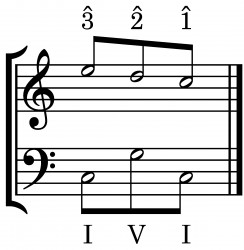
Carl Schachter, Arnold Whittall, and why music analysis matters
9th June 2026
Two recent deaths have robbed the world of music analysis of a pair of its most revered figures. Carl Schachter, who has died at the age of 93, was a pupil of (and subsequently collaborator with) Felix Salzer, himself one of Heinrich Schenker’s foremost students. Schachter continued to enrich and broaden the teaching of Schenkerian analysis, including important work on its application to issues of rhythm (which Schenker, focussing on harmonic and contrapuntal matters, largely bypassed). His influence went well beyond the... read more
read more
Music of the Iberian Peninsula, Part 2: ‘O quam gloriosum’ – The Spanish and Portuguese Golden Age
2nd June 2026
Over the past fortnight, I’ve been bathed in the most glorious, radiant, transformative light. Not the UK’s recent unseasonable heatwave, but the extraordinary vocal polyphony of the Siglo de Oro: the Spanish (and Portuguese) ‘Golden Century’. Extending from the late 15th to the early 17th century, this was a time of remarkable artistic flowering on the Iberian Peninsula, coinciding with the emergence of Spain and Portugal as global imperial powers with extensive colonial territories in the Americas, Africa and Asia. The... read more
read more