 FREE UK SHIPPING OVER £35!
The Spin Doctor Europadisc's Weekly Column
Fischer-Dieskau Centenary Releases
21st May 2025
21st May 2025
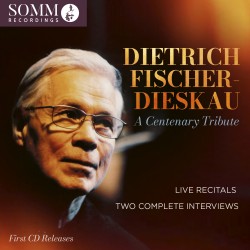 In the history of recorded sound, surely no other singer has had such a wide influence in the field of art-song as the German baritone Dietrich Fischer-Dieskau (1925–2012), the centenary of whose birth falls next week. In the 1960s and 70s, when his career was at its considerable peak, he was virtually ubiquitous on the concert stages and in the opera houses of the great musical cities of the world. His repertoire was phenomenal: some 3000 individual songs and cycles, hundreds of sacred works and over 100 operatic roles, ranging from the German core repertoire for which he is best remembered through French and Italian works to Russian, Hungarian and English repertoire.
The young Dieter (as he was known in the family circle) was brought up in a cultured milieu in interwar Berlin: his father, Albert, was a teacher with a passion for music, and his older brother, Klaus, became a church musician and choral conductor; both also composed. A performance of Wagner’s Lohengrin ignited Dieter’s own love of music and singing. His first public appearance as a singer was in January 1942, an ambitious programme for a local audience of a work with which he became indelibly associated: Schubert’s Winterreise. It would also be the subject of his very first recording, in 1948. In between, he was drafted into the Wehrmacht, saw service as an infantryman in Italy, and was captured in 1945 and became a prisoner of war (he returned to Germany only in 1947).
From the late 1940s, DFD’s rise was little short of meteoric. His operatic debut, in 1948, was as the Marquis de Posa in Verdi’s Don Carlos under Ferenc Fricsay at Berlin’s Städtische Oper (today’s Deutsche Oper). Soon he was singing at all of Europe’s great opera houses, and from 1954 to 1961 was a regular member of the postwar Bayreuth company. 1951 saw his British debut, and he soon developed a uniquely close relationship with British audiences, culminating in his work with Benjamin Britten, including – of course – his role as baritone soloist in the War Requiem (Coventry Cathedral, 1962).
In opera, he was most widely admired in Mozart and Wagner. His ventures into Italian repertoire divided opinion, some finding him altogether too smooth and cultivated as Rigoletto or Falstaff, or simply too unidiomatic. Yet, revisiting his Posa on Solti’s Don Carlo (Decca), one finds much to admire, not least in the thrilling confrontation with Nicolai Ghiaurov’s King Philip. The other area in which he excelled – thanks to a combination of peerless technique and innate intellectual curiosity – was 20th-century opera. If his Wozzeck (immortalised on Karl Böhm’s DG recording) was again too sophisticated for some, he was one of very few singers of the time with the technical capacity for the role. In other works, from Bartók’s Bluebeard’s Castle and Busoni’s Doktor Faust to Messiaen’s Saint François d’Assise and Aribert Reimann’s Lear (the latter expressly written for him) he proved that beauty of tone and sensitivity to text were not incompatible in modern music. On disc, at least, his Lear and his Kurwenal in Furtwängler’s legendary EMI Tristan represent him at his finest.
Yet it was in the art-song repertoire that Fischer-Dieskau had his deepest impact. His magisterial surveys of the songs of Schubert, Schumann, Brahms and Wolf – often (as with Winterreise) in multiple recordings – are still considered cornerstones of the catalogue, while his pioneering championship of Mahler’s songs (with piano or orchestral accompaniment) resulted in performances of often haunting intensity. Of the many pianists with whom he forged close relationships, his work with Gerald Moore and Karl Engel is most notable, but from any of his recordings (including the many live recitals) today’s audiences and performers can learn an enormous amount.
One of Fischer-Dieskau’s last students, with whom he struck up a very special relationship, was the young baritone, Benjamin Appl, who presents his own centenary homage with ‘For Dieter: the past and the future’ (ALPHA Classics). Presented as a sumptuous hardback book, this is an album in more than one sense. The single disc, on which Appl is partnered by the ever-attentive James Baillieu, ranges from the expected (individual setting by Schubert, Schumann, Brahms and Wolf) to more surprising items (Debussy, Sinding, Künneke and Eisler), as well as 20th-century repertoire with which DFD was closely associated (Reimann, Britten and Barber), and even a few songs by his father and brother, which bring an intimate touch to the programme. As a singer, Appl is his own man, but the beauty of line is very much in the Fischer-Dieskau mould, yet without that slight edge to the timbre that was so unique to his teacher. The 20th-century items are among the highlights (especially Eisler and Reimann), as is a lovingly-sung account of Clara Schumann’s Liebst du um Schönheit.
The programme is organised as a series of snapshots spanning Fischer-Dieskau’s career in its various stages, and the accompanying book contains a generous selection of archive photos, documents and the singer’s own paintings in a scarpbook format, as well as an absorbing and lengthy accompanying text by Appl with extensive quotes from diaries and letters. All this provides rich insight into Fischer-Dieskau the singer, thinker and man: an often elusive figure during his lifetime, brought vividly to life. This, together with the SOMM album, is an essential, affectionate and magnificent tribute to an extraordinary musician, and will be snapped up by his many admirers.
The Recordings:
For Dieter: Hommage à Dietrich Fischer-Dieskau ALPHA1131
Dietrich Fischer-Dieskau: A Centenary Tribute ARIADNE50382
Latest Posts
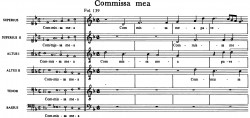
Music of the Iberian Peninsula, Part 3: More observations on the Golden Age
16th June 2026
Our last visit to the Iberian peninsula, a fortnight ago, was an insanely ambitious, necessarily broad-brush survey of the Spanish and Portuguese Golden Age, covering vocal and instrumental music, the sacred and the secular. This week, we take a more concise and (I hope) focussed look at a few of the sacred vocal masterpieces which exemplify the particular fervour and intensity of this remarkable period of musical history. They reflect the special place the peninsula had as a bulwark against the Reformation that had taken... read more
read more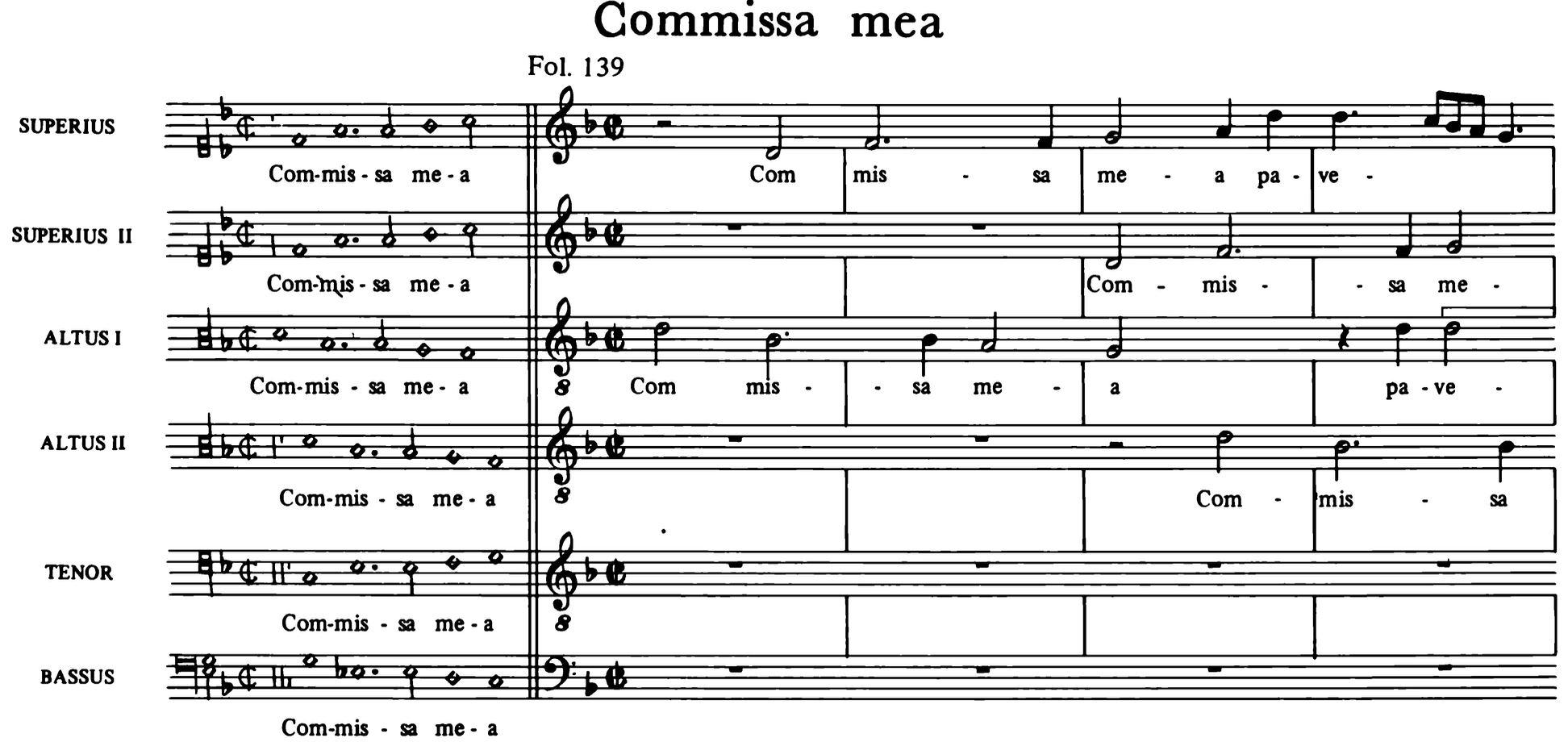
Music of the Iberian Peninsula, Part 3: More observations on the Golden Age
16th June 2026
Our last visit to the Iberian peninsula, a fortnight ago, was an insanely ambitious, necessarily broad-brush survey of the Spanish and Portuguese Golden Age, covering vocal and instrumental music, the sacred and the secular. This week, we take a more concise and (I hope) focussed look at a few of the sacred vocal masterpieces which exemplify the particular fervour and intensity of this remarkable period of musical history. They reflect the special place the peninsula had as a bulwark against the Reformation that had taken... read more
read more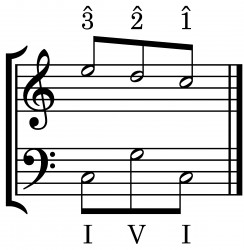
Carl Schachter, Arnold Whittall, and why music analysis matters
9th June 2026
Two recent deaths have robbed the world of music analysis of a pair of its most revered figures. Carl Schachter, who has died at the age of 93, was a pupil of (and subsequently collaborator with) Felix Salzer, himself one of Heinrich Schenker’s foremost students. Schachter continued to enrich and broaden the teaching of Schenkerian analysis, including important work on its application to issues of rhythm (which Schenker, focussing on harmonic and contrapuntal matters, largely bypassed). His influence went well beyond the... read more
read more
Carl Schachter, Arnold Whittall, and why music analysis matters
9th June 2026
Two recent deaths have robbed the world of music analysis of a pair of its most revered figures. Carl Schachter, who has died at the age of 93, was a pupil of (and subsequently collaborator with) Felix Salzer, himself one of Heinrich Schenker’s foremost students. Schachter continued to enrich and broaden the teaching of Schenkerian analysis, including important work on its application to issues of rhythm (which Schenker, focussing on harmonic and contrapuntal matters, largely bypassed). His influence went well beyond the... read more
read more
Music of the Iberian Peninsula, Part 2: ‘O quam gloriosum’ – The Spanish and Portuguese Golden Age
2nd June 2026
Over the past fortnight, I’ve been bathed in the most glorious, radiant, transformative light. Not the UK’s recent unseasonable heatwave, but the extraordinary vocal polyphony of the Siglo de Oro: the Spanish (and Portuguese) ‘Golden Century’. Extending from the late 15th to the early 17th century, this was a time of remarkable artistic flowering on the Iberian Peninsula, coinciding with the emergence of Spain and Portugal as global imperial powers with extensive colonial territories in the Americas, Africa and Asia. The... read more
read more