 FREE UK SHIPPING OVER £35!
The Spin Doctor Europadisc's Weekly Column
Two recent losses to English music
13th May 2025
13th May 2025
 The past week has seen the loss of two notable figures on the English musical scene, both of them particularly valued for their contributions to the choral repertoire.
Ronald Corp, who died on 7 May at the age of 74, was born in Wells, Somerset, on 4 January 1951. He studied music at Oxford, and joined the Music Library at the BBC, at the same time working as conductor with such ensembles as the Finchley Children’s Music Group. In 1988 he established the New London Orchestra and, three years later, the New London Children’s Choir. He made frequent recordings with both ensembles, as well as with the London Chorus, of which he became music director in 1994.
Corp’s repertoire as a conductor was wide, with a particular focus on neglected and lighter music from the late-19th and early-20th centuries. His Dutton Epoch recording of Rutland Boughton’s The Queen of Cornwall (currently unavailable) earned particular praise, while for Hyperion he recorded string orchestra music by Bacewicz (well before it became fashionable) and a series of British Light Music Classics. Another Dutton disc, of orchestral works by Ina Boyle, was a particular success with our customers, shining valuable light on her overlooked music.
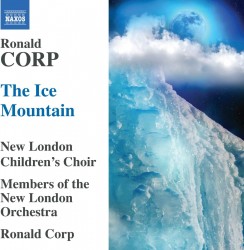
Vocal and choral music were a recurring focus of Corp’s recordings, as they were of his own extensive compositional output, which has become increasingly well represented on disc. Among many collections of songs (all of which give evidence of a wide variety of tastes), there’s a moving disc of works in memory of the First World War (‘Fields of the Fallen’), as well as an opera on a Swiss folk subject (The Ice Mountain) and a disc of string quartets on Naxos. Written in an engagingly eclectic style, and often reflecting the witty side of Corp’s personality, they deserve investigation as much as his recordings as conductor.
In the late 1990s, Corp was ordained as a non-stipendiary minister in the Church of England, serving in three high-church Anglo-Catholic parishes in London. As conductor, composer and clergyman, he leaves – to judge by the many tributes paid to him over the past week – a deep legacy, particularly for his work with younger musicians.
Another versatile musical figure was Matthew Best, who died on 10 May at the age of 68. Born on 6 February 1957, he was a choral scholar at King’s College, Cambridge, and early in his career made a mark as both composer (his opera Alice, based on Lewis Carroll, was premiered at the 1979 Aldeburgh Festival) and singer, originally as a bass before adding baritone roles to his fast-growing repertoire. He joined the Covent Garden company in his early twenties, and won the Decca-Kathleen Ferrier Prize in 1981. He was particularly noted as Scarpia in Tosca, as well as for his Wagnerian roles (including both Amfortas and Wotan for Scottish Opera), and he also sang the part of the monk Pimen in Mussorgsky’s Boris Godunov with Opera North (captured on a disc of highlights in Chandos’s Opera in English series).
It was as a conductor, however, that Best achieved widest renown. He founded the Corydon Singers while still in his teens, and a decade later they were signed to the Hyperion label, for whom they made a succession of acclaimed recordings: vibrant, polished and wonderfully shaped. Starting with an impressive disc of Bruckner motets, they soon added all the Austrian composer’s other major choral works, in accounts that still hold their own against newcomers. A recording of motets by Bruckner’s arch-rival Brahms is also worth seeking out, and equally impressive were accounts of Duruflé’s Requiem (a BBC Radio 3 Building a Library choice) and Rachmaninov’s Vespers. Another release that won particular plaudits was Vaughan Williams’s Serenade to Music, and a disc of American choral music including Bernstein’s Chichester Psalms further cemented the Corydons’ reputation in 20th-century repertoire. They also ventured into neglected Beethoven (the Mass in C, and the early cantatas in honour of Emperors Joseph II and Leopold II).
Best’s activities brought him work with numerous orchestras, including the Hanover Band and the English Chamber Orchestra, as well as his own Corydon Orchestra. He also devoted himself in recent years to the education of new generations of performers. He was music director of Academy Choir Wimbledon and the Academy Baroque Players, and since 2015 had been on the teaching staff of the Royal Northern College of Music in Manchester, which honoured him last month with a fellowship. His is another substantial loss to the English musical world, but with a considerable discographic legacy.
Some recommended recordings:
Ronald Corp:
Corp - Fields of the Fallen, Dawn on the Somme ST0604
Corp - The Ice Mountain 8572777
Corp - String Quartets 1 & 2, Country Matters 8572578
Ina Boyle - A Sea Poem, Symphony no.1, Violin Concerto, etc. CDLX7352
Sullivan - The Contrabandista, The Foresters CDA67486
The Playful Pachyderm: Popular Works for Bassoon and Orchestra CDA67453
Corydon Singers/Best:
Beethoven - Mass in C major, Ah! perfido CDH55263
Brahms - Motets CDH55346
Bruckner - Motets CDA66062
Duruflé - Requiem CDA66191
Rachmaninov - Vespers CDA30016
Vaughan Williams - Serenade to Music & other works CDA30025
Latest Posts
Music of the Iberian Peninsula, Part 3: More observations on the Golden Age
16th June 2026
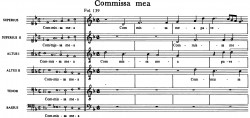
Our last visit to the Iberian peninsula, a fortnight ago, was an insanely ambitious, necessarily broad-brush survey of the Spanish and Portuguese Golden Age, covering vocal and instrumental music, the sacred and the secular. This week, we take a more concise and (I hope) focussed look at a few of the sacred vocal masterpieces which exemplify the particular fervour and intensity of this remarkable period of musical history. They reflect the special place the peninsula had as a bulwark against the Reformation that had taken... read more
read more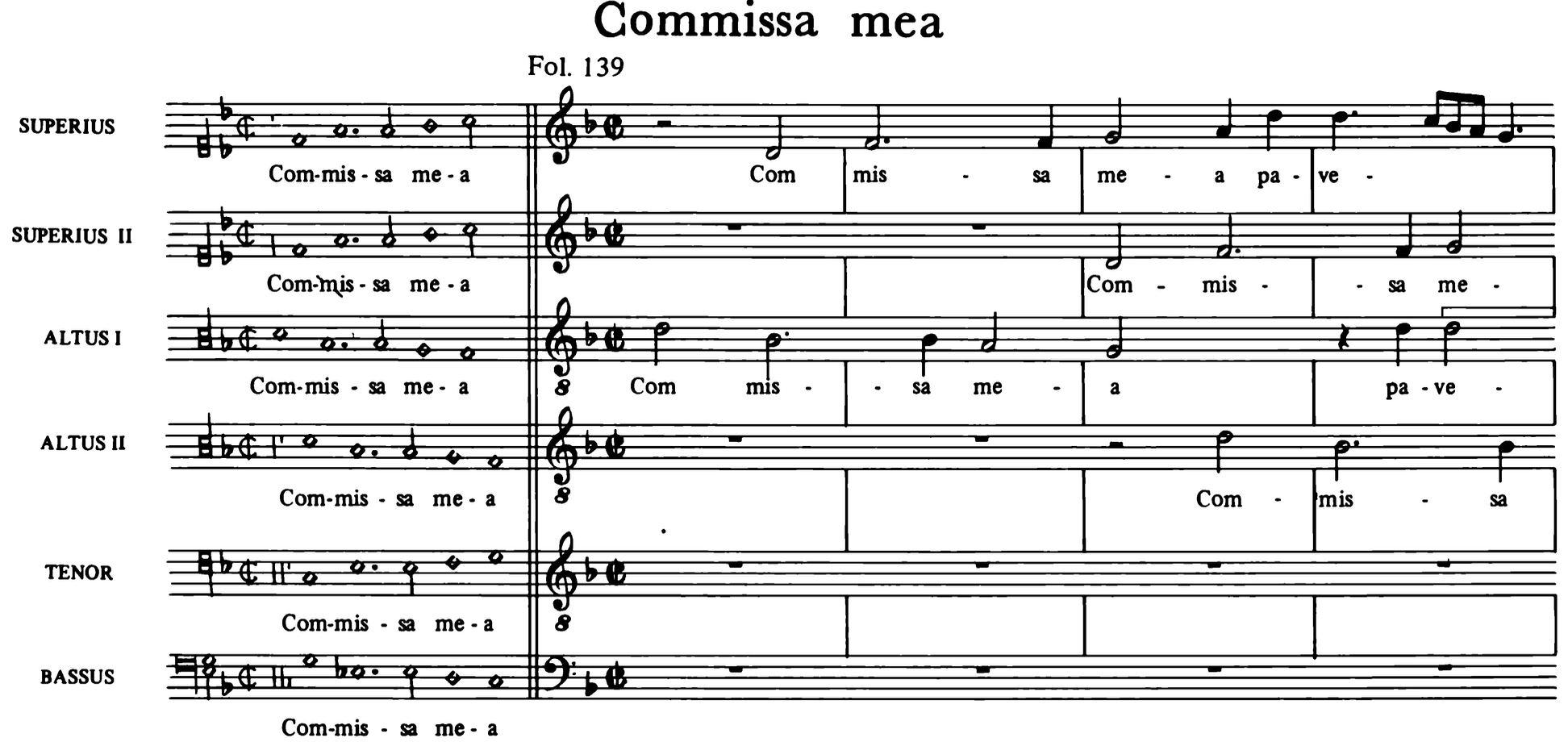
Music of the Iberian Peninsula, Part 3: More observations on the Golden Age
16th June 2026
Our last visit to the Iberian peninsula, a fortnight ago, was an insanely ambitious, necessarily broad-brush survey of the Spanish and Portuguese Golden Age, covering vocal and instrumental music, the sacred and the secular. This week, we take a more concise and (I hope) focussed look at a few of the sacred vocal masterpieces which exemplify the particular fervour and intensity of this remarkable period of musical history. They reflect the special place the peninsula had as a bulwark against the Reformation that had taken... read more
read more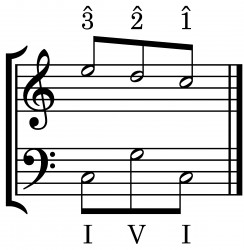
Carl Schachter, Arnold Whittall, and why music analysis matters
9th June 2026
Two recent deaths have robbed the world of music analysis of a pair of its most revered figures. Carl Schachter, who has died at the age of 93, was a pupil of (and subsequently collaborator with) Felix Salzer, himself one of Heinrich Schenker’s foremost students. Schachter continued to enrich and broaden the teaching of Schenkerian analysis, including important work on its application to issues of rhythm (which Schenker, focussing on harmonic and contrapuntal matters, largely bypassed). His influence went well beyond the... read more
read more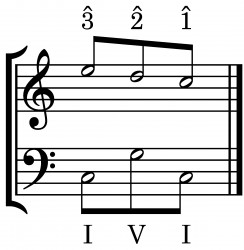
Carl Schachter, Arnold Whittall, and why music analysis matters
9th June 2026
Two recent deaths have robbed the world of music analysis of a pair of its most revered figures. Carl Schachter, who has died at the age of 93, was a pupil of (and subsequently collaborator with) Felix Salzer, himself one of Heinrich Schenker’s foremost students. Schachter continued to enrich and broaden the teaching of Schenkerian analysis, including important work on its application to issues of rhythm (which Schenker, focussing on harmonic and contrapuntal matters, largely bypassed). His influence went well beyond the... read more
read more
Music of the Iberian Peninsula, Part 2: ‘O quam gloriosum’ – The Spanish and Portuguese Golden Age
2nd June 2026
Over the past fortnight, I’ve been bathed in the most glorious, radiant, transformative light. Not the UK’s recent unseasonable heatwave, but the extraordinary vocal polyphony of the Siglo de Oro: the Spanish (and Portuguese) ‘Golden Century’. Extending from the late 15th to the early 17th century, this was a time of remarkable artistic flowering on the Iberian Peninsula, coinciding with the emergence of Spain and Portugal as global imperial powers with extensive colonial territories in the Americas, Africa and Asia. The... read more
read more