 FREE UK SHIPPING OVER £35!
The Spin Doctor Europadisc's Weekly Column
The New Janáček Renaissance
7th May 2025
7th May 2025
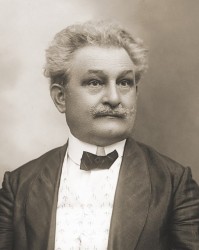 It’s now a good half century since the post-war ‘discovery’ of Janáček by Anglophone audiences, thanks in large part to the pioneering work of Charles Mackerras, the centenary of whose birth falls later this year. Mackerras studied in Prague with the great Czech conductor Václav Talich, and it was there that he also first encountered Janáček’s extraordinary music, not least the operas of his remarkable compositional Indian summer. From the early 1950s onwards, Mackerras’s championship of Janáček’s works went beyond merely introducing his music to new audiences: his tireless researches into the original scores removed the layers of well-meaning but sanitising revisions by the composer’s pupils and others, introducing even the Czechs themselves to a rawer, more intense and uncompromising sound-world which is quintessentially Janáčkian. At Sadler’s Wells and then English National Opera in the 1960s and 70s, Mackerras led a series of landmark productions of Janáček’s operas, featuring such renowned singers as Marie Collier, Amy Shuard and Gregory Dempsey, which are still remembered for their revelatory freshness. These in turn led conductor Georg Solti to recommend Mackerras to his record company, Decca, for what became an award-winning series of Janáček’s so-called ‘tragic operas’ with the Vienna Philharmonic and casts including many native Czech singers as well as the great Swedish soprano Elisabeth Söderström.
The Decca cycle of Janáček operas quickly scooped up numerous prestigious awards, and for the best part of five decades has been the gold standard for those works on disc, eclipsing several earlier Czech recordings on the Supraphon label, both in terms of intensity of performance, textual fidelity and recorded sound. Now, however, another richly rewarding cycle is taking shape, under a conductor who has freely acknowledged the debt he owes to Mackerras’s groundbreaking work: Simon Rattle. Taken from live concert performances in London’s Barbican Hall, his LSO Live recordings of The Cunning Little Vixen and Katya Kabanova, featuring experienced international casts, have so far earned high praise from the critics (including us!), even in comparison with the revered Mackerras cycle. The latest addition to the series – Janáček’s breakthrough opera Jenůfa – has just been released, and concert performances of the more elusive but hugely musically rewarding Excursions of Mr Brouček have just taken place which will in due course also appear on disc.
This is shaping up to be an exciting time for Janáček lovers: alongside the ongoing LSO cycle, the Royal Opera and Ballet at Covent Garden has been mounting a series of the composer’s works (most recently a stunning revival of Jenůfa by music director designate Jakub Hruša), and – thanks no doubt to some shrewd marketing by Janáček’s publishers Universal Edition – waves of performances of the operas have now been sweeping European theatres, in editions originating in the researches of Mackerras and the late John Tyrrell, and further refined and developed by the leading Czech specialist on the composer, Jiří Zahrádka. The timing could not be more perfect: the centenary of Janáček’s death is just three years away, by which time a new generation of audiences, listeners and viewers will no doubt be spoilt for choice in terms of recordings.
It is ardently to be hoped that someone at Decca will get the Mackerras cycle reissued for the conductor’s major anniversary later this year. There’s a combination of lyricism, freshness and honest grittiness to Mackerras’s performances (as well as the glorious Mitteleuropa sound of the Vienna Philharmonic) that no-one else quite matches. Perhaps the sense of a ‘moment of discovery’ is now impossible to recapture, and certainly the sort of production resources that were available to the Decca studios in the late 1970s and early 80s are now the stuff of pipe dreams. On first hearing, Rattle’s new Jenůfa, though expertly sung and played, seems a tad calculating and sculpted, the details often starkly-etched but lacking the big sweep that really transports the listener. And am I alone in thinking that the two tenors – Nicky Spence as the golden-haired bad-boy Števa and Aleš Briscein as the downtrodden yet ultimately heroic Laca – would have been better cast the other way around? Nevertheless, this series is undoubtedly a cycle for our time, and will eventually be more complete than the old Decca set.
Mackerras also recorded Janáček’s very first opera, the mythical Šárka (for Supraphon), and the problematic fourth opera Osud (‘Fate’, with Welsh National Opera). However, his marvellous ENO performances of The Excursions of Mr Brouček never made it to commercial release (for the simple reason that the sponsor of the ‘Opera in English’, Peter Moores – otherwise such a committed backer – didn’t like the work). In the Janáček operas, Mackerras’s are still big shoes to fill, but Rattle and his team deserve congratulations and every encouragement in their endeavour. And we hope that, as Hruša settles into his new role in London, his thrilling gifts in this music might also be better represented on disc (our spies tell us that a series of Josef Suk’s major orchestral works with the Czech Philharmonic is already in the pipeline).
We’ll be writing more about Charles Mackerras’s extraordinary legacy of recordings later this year. In the meantime, happy listening!
Katya Kabanova (LSO/Rattle) LSO0889
The Cunning Little Vixen (LSO/Rattle) LSO0850
Katya Kabanova (Wiener Philharmoniker/Hruša) 809108 (DVD) 809204 (Blu-ray)
Jenůfa (Berlin Staatsoper/Rattle) 760408 (DVD) 760504 (Blu-ray)
Šárka (Czech Philharmonic/Mackerras) SU34852
Osud (WNO/Mackerras) CHAN3029 (sung in English)
Latest Posts
Music of the Iberian Peninsula, Part 3: More observations on the Golden Age
16th June 2026
Our last visit to the Iberian peninsula, a fortnight ago, was an insanely ambitious, necessarily broad-brush survey of the Spanish and Portuguese Golden Age, covering vocal and instrumental music, the sacred and the secular. This week, we take a more concise and (I hope) focussed look at a few of the sacred vocal masterpieces which exemplify the particular fervour and intensity of this remarkable period of musical history. They reflect the special place the peninsula had as a bulwark against the Reformation that had taken... read more
read more
Music of the Iberian Peninsula, Part 3: More observations on the Golden Age
16th June 2026
Our last visit to the Iberian peninsula, a fortnight ago, was an insanely ambitious, necessarily broad-brush survey of the Spanish and Portuguese Golden Age, covering vocal and instrumental music, the sacred and the secular. This week, we take a more concise and (I hope) focussed look at a few of the sacred vocal masterpieces which exemplify the particular fervour and intensity of this remarkable period of musical history. They reflect the special place the peninsula had as a bulwark against the Reformation that had taken... read more
read more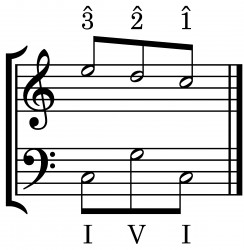
Carl Schachter, Arnold Whittall, and why music analysis matters
9th June 2026
Two recent deaths have robbed the world of music analysis of a pair of its most revered figures. Carl Schachter, who has died at the age of 93, was a pupil of (and subsequently collaborator with) Felix Salzer, himself one of Heinrich Schenker’s foremost students. Schachter continued to enrich and broaden the teaching of Schenkerian analysis, including important work on its application to issues of rhythm (which Schenker, focussing on harmonic and contrapuntal matters, largely bypassed). His influence went well beyond the... read more
read more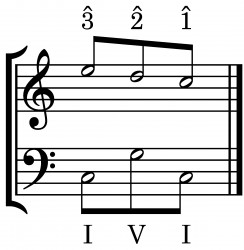
Carl Schachter, Arnold Whittall, and why music analysis matters
9th June 2026
Two recent deaths have robbed the world of music analysis of a pair of its most revered figures. Carl Schachter, who has died at the age of 93, was a pupil of (and subsequently collaborator with) Felix Salzer, himself one of Heinrich Schenker’s foremost students. Schachter continued to enrich and broaden the teaching of Schenkerian analysis, including important work on its application to issues of rhythm (which Schenker, focussing on harmonic and contrapuntal matters, largely bypassed). His influence went well beyond the... read more
read more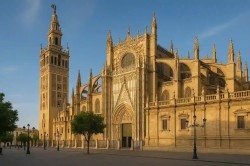
Music of the Iberian Peninsula, Part 2: ‘O quam gloriosum’ – The Spanish and Portuguese Golden Age
2nd June 2026
Over the past fortnight, I’ve been bathed in the most glorious, radiant, transformative light. Not the UK’s recent unseasonable heatwave, but the extraordinary vocal polyphony of the Siglo de Oro: the Spanish (and Portuguese) ‘Golden Century’. Extending from the late 15th to the early 17th century, this was a time of remarkable artistic flowering on the Iberian Peninsula, coinciding with the emergence of Spain and Portugal as global imperial powers with extensive colonial territories in the Americas, Africa and Asia. The... read more
read more