 FREE UK SHIPPING OVER £35!
The Spin Doctor Europadisc's Weekly Column
Doing things by halves (and quarters, fifths, and sixths...): Alois Hába
29th April 2025
29th April 2025
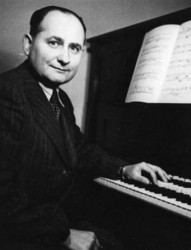 In the wider international perception of Czech music, Alois Hába (1893–1973) remains an outlier. Unlike such figures as Smetana, Dvořák, Janáček, Suk and Martinů, Hába’s music is little performed even in his homeland. His position as one of the pioneers of 20th-century music rests largely on his reputation as handed down in the history books: he was an early proponent of quarter-tone composition. The vast majority of works in the classical canon are founded on the division of the octave into twelve semitones: Hába went further in dividing the octave into 24 quarter-tones, most famously in his 1929 opera Matka (Mother), op.29 – a work known more by reputation than from actual performance. The particular challenges it poses – not least the use of specially designed but extremely rare quarter-tone clarinets, trumpets, harmonium and piano – ensure that it is very seldom performed, although a 1965 Supraphon recording has enjoyed occasional availability over the years.
In other works, Hába went even further: there are pieces for fifth- and sixth-tone (the octave divided into 30 and 36 micro-intervals respectively). These present further challenges for both performer and audience. Such micro-intervals can be difficult to discern, even for the keen-eared, especially if the player employs vibrato: the minutest inflection can cloud the perception, and even with quarter-tones the music can sometimes sound merely off-key rather than subtle. On balance, it is fairly unsurprising that such works are little performed. Yet Hába is a fascinating figure who combined musical sophistication and innovation with an awareness of folk traditions as well as modern trends, and whose wider output deserves to be better known.
Born in the eastern Moravian town of Vizovice, Hába was surrounded by music from an early age: his father had a folk band in which the young Alois would play violin and double bass, while his mother was an excellent folksinger. At the age of five it was discovered that Hába possessed absolute pitch (being able to identify a particular note of the scale by ear alone); more importantly, he became familiar with the folk traditions of Moravian Wallachia (Valašsko) and Moravian Slovakia (Slovácko) which were themselves rich in micro-intervals (as Bartók, working a little further east, discovered in his own folk-music researches).
Hába’s formal musical training was more conventional, first at the teachers’ training institute in Kroměříž, and then under Vítězslav Novák at the Prague Conservatoire, from which he graduated after one year of study. Following war service (during which he did a spell in the music section of the Austro-Hungarian Ministry of War), he studied with Franz Schreker in Vienna. If Prague broadened Hába’s musical horizons, Vienna was a revelation. Schreker fostered his radical inclinations, which were further encouraged by attending performances of Schoenberg’s Verein für musikalische Privataufführungen, pushing him toward a more athematic style that went far beyond what Schreker employed. Soon his works were being published by Universal Edition, for which Hába also worked as a proofreader on scores by Schoenberg, Szymanowski and Janáček.
In autumn 1920 Hába left Vienna, following Schreker to the Hochschule für Musik in Berlin, but by now he rarely showed his new works to his teacher, having achieved musical independence and maturity. An attempt to found a department of quarter- and sixth-tone music at the Berlin Hochschule fell through but, following his return to Prague in September 1923, he had greater success in establishing a department of microtonal music at the Conservatory there (with the support of Suk, its director). This initiative proved both influential (his pupils included Viktor Ullmann and Jiří Pauer) and surprisingly durable, a highpoint being Hába’s organisation of the 1935 Festival of the International Society for Contemporary Music (ISCM) in Prague.
After the disruption of the war years, Hába founded and ran what was to become the Prague State Opera (not to be confused with the city’s National Theatre). Although his more radical compositions, suppressed during the war, were little better received by the post-war communist regime, by the 1960s he received various official awards, including Artist of Merit (1963) and the Order of the Republic (1968). More importantly, he had helped to nurture a fledgling Czech musical avant-garde which outlived both him and the communist regime.
Now, Hába’s music is again slowly earning recognition in the Czech Republic, as is rewardingly illustrated by a new two-disc set of his complete solo piano works (for conventional piano) from Supraphon. They are championed on it by Miroslav Beinhauer, who since 2018 has absorbed himself in Hába’s output. The works span almost six decades of creative activity, from the Piano Sonata in E flat major (1914) of his early student years, to the Six Moods, op.102 (1971), composed for pianist Emma Kovárnová. Although inevitably they bypass the microtonal music for which Hába is best known, they reveal a composer of wide range and quickly-attained mastery. Just five years after that early sonata, he wrote the Piano Sonata, op.3, which Schreker regarded as ‘the best sonata written in his composition studio’, while Novák tartly labelled it a ‘sonata for three hands’ on account of its formidable technical challenges. Musically, it demonstrates a thorough absorption of the more expressionist aspects of the Second Viennese School, not least Berg’s magnificent Sonata of nine years earlier. ‘With this sonata,’ Hába later wrote, ‘I had finally achieved my own expressive voice.’
Another highlight is the more condensed world of the Six Piano Pieces of 1920, the first work of Hába’s early maturity to be composed fully independently of Schreker, while the Two Grotesque Pieces of 1920/21 were written for an album of Grotesques published by Universal which also included works by Bartók, Krenek, Reti and Wellesz, and were premiered in Berlin by Ullmann alongside his own works and pieces by Satie and Casella. From the mid-1920s come a series of engagingly light ‘Modern Dances’ including a Blues, Boston, Tango and Shimmy-Fox. The Toccata quasi una fantasia, op.38, of 1931 is more substantial, a ten-minute single-movement piece in nine sections and an overarching sonata form of considerable difficulty which owes much in its overall design to Liszt. Though hardly widely-known, it is (according to Vlasta Reitterová’s informative booklet notes) Hába’s most frequently played piano work, and Beinhauer’s performance – as with all those on this absorbing album – should win it and its composer many new admirers. It has certainly whetted our appetite for more from this unjustly neglected composer.
The Recording:
Hába - The Complete Piano Works (Beinhauer) SU43572
Latest Posts
Music of the Iberian Peninsula, Part 3: More observations on the Golden Age
16th June 2026
Our last visit to the Iberian peninsula, a fortnight ago, was an insanely ambitious, necessarily broad-brush survey of the Spanish and Portuguese Golden Age, covering vocal and instrumental music, the sacred and the secular. This week, we take a more concise and (I hope) focussed look at a few of the sacred vocal masterpieces which exemplify the particular fervour and intensity of this remarkable period of musical history. They reflect the special place the peninsula had as a bulwark against the Reformation that had taken... read more
read more
Music of the Iberian Peninsula, Part 3: More observations on the Golden Age
16th June 2026
Our last visit to the Iberian peninsula, a fortnight ago, was an insanely ambitious, necessarily broad-brush survey of the Spanish and Portuguese Golden Age, covering vocal and instrumental music, the sacred and the secular. This week, we take a more concise and (I hope) focussed look at a few of the sacred vocal masterpieces which exemplify the particular fervour and intensity of this remarkable period of musical history. They reflect the special place the peninsula had as a bulwark against the Reformation that had taken... read more
read more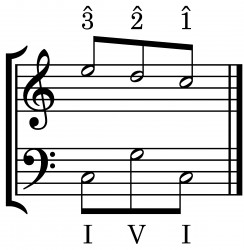
Carl Schachter, Arnold Whittall, and why music analysis matters
9th June 2026
Two recent deaths have robbed the world of music analysis of a pair of its most revered figures. Carl Schachter, who has died at the age of 93, was a pupil of (and subsequently collaborator with) Felix Salzer, himself one of Heinrich Schenker’s foremost students. Schachter continued to enrich and broaden the teaching of Schenkerian analysis, including important work on its application to issues of rhythm (which Schenker, focussing on harmonic and contrapuntal matters, largely bypassed). His influence went well beyond the... read more
read more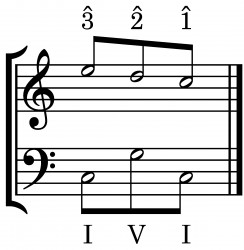
Carl Schachter, Arnold Whittall, and why music analysis matters
9th June 2026
Two recent deaths have robbed the world of music analysis of a pair of its most revered figures. Carl Schachter, who has died at the age of 93, was a pupil of (and subsequently collaborator with) Felix Salzer, himself one of Heinrich Schenker’s foremost students. Schachter continued to enrich and broaden the teaching of Schenkerian analysis, including important work on its application to issues of rhythm (which Schenker, focussing on harmonic and contrapuntal matters, largely bypassed). His influence went well beyond the... read more
read more
Music of the Iberian Peninsula, Part 2: ‘O quam gloriosum’ – The Spanish and Portuguese Golden Age
2nd June 2026
Over the past fortnight, I’ve been bathed in the most glorious, radiant, transformative light. Not the UK’s recent unseasonable heatwave, but the extraordinary vocal polyphony of the Siglo de Oro: the Spanish (and Portuguese) ‘Golden Century’. Extending from the late 15th to the early 17th century, this was a time of remarkable artistic flowering on the Iberian Peninsula, coinciding with the emergence of Spain and Portugal as global imperial powers with extensive colonial territories in the Americas, Africa and Asia. The... read more
read more