 FREE UK SHIPPING OVER £35!
The Spin Doctor Europadisc's Weekly Column
Of Popes and Music
23rd April 2025
23rd April 2025
 The death at the age of 88 of Pope Francis has dominated headlines for the last 48 hours (at the time of writing). Much has already been written about the achievements of his 12-year papacy, as well as the challenges and criticisms (from both conservatives and progressives) he faced during that time. Less widely-known is Francis’s taste in music: he was particularly well-versed in classical music, and soon after he took on the role of supreme pontiff an interview shone light on his deepest musical loves. They included Mozart – the ‘Et incarnatus est’ movement from the great Mass in C minor and performances by the Romanian pianist Clara Haskil being particular favourites – as well as Beethoven (‘I like listening to Beethoven, but in a Promethean way’), Bach’s Passions, and – perhaps most surprisingly – Wagner’s music-dramas.
An avid record collector, Francis owned a substantial collection of CDs, no doubt bolstered by gifts like that by then-Chancellor of Germany Angela Merkel in 2013: a 107-disc collection of Wilhelm Furtwängler’s complete recordings. In fact, he was something of a Furtwängler aficionado, and his favourite recording of Wagner’s Ring was the German maestro’s live 1950 La Scala: it contains some controversial cuts and is in less than ideal sound even for the period, but remains to this day the most viscerally exciting traversal of the work on record. Another of Francis’s favourites was Hans Knappertsbusch’s famous 1962 Bayreuth recording of Parsifal (available as part of an Eloquence set of the conductor’s operatic recordings), a work which clearly fascinated him deeply, not least for its theme of renunciation of temptation.
Among musical cognoscenti, the late Pope’s classical tastes have been the subject of much discussion: the repertoire mainstream Austro-German, interpretations classic and very much in the humanist tradition rather than the technical rigour of, say, Toscanini or Karajan. One wonders what he thought of Klemperer’s Beethoven (every bit as Promethean as Furtwängler, but less wayward – and thus, perhaps, less human?). Fundamentally, then, fairly conservative, then, but with a profound humanity and understanding that is able to touch people to the core – qualities that also in many ways sum up Francis’s pontificate.
As well as Parsifal, Francis’s musical tastes encompassed both the ‘spiritual minimalism’ of Arvo Pärt and the tango-infused works of his fellow countryman Astor Piazzolla. Not, however (so far as we’re aware) that most ‘papal’ of composers, Palestrina, whose great masses and motets came to be regarded as the musical epitome of the liturgical reforms introduced by the 16th-century Council of Trent. As we’ve remarked previously, this is a gross oversimplification of the truth, yet the great Missa Papae Marcelli – one of few musical works to take its name from an actual pope – continues to be regarded (quite justly) as a highpoint of late Renaissance polyphony. Its association with Pope Marcellus II may be shrouded in mystery, but in the right hands – such as the thrillingly ‘continental’ sound produced by the Westminster Cathedral Choir under David Hill (Hyperion, 1987) – this is music every bit as gripping as a Wagnerian music-drama, albeit with substantially less philosophical baggage!
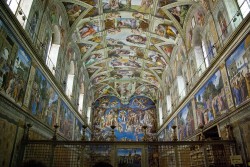
The Missa Papae Marcelli is one of those works indelibly associated with the Sistine Chapel at St Peter’s, Rome, a space dominated by the vivid colours of Michelangelo’s frescoes on the ceiling (including ‘The Creation of Adam’) and behind the altar (‘The Last Judgment’). Another work closely associated with the Sistine Chapel – a space which, in the coming weeks, will witness deliberations to elect a new Bishop of Rome – is Gregorio Allegri’s celebrated Miserere, written for the exclusive use of the Sistine Chapel Choir during the Tenebrae services of Holy Week. The form in which this much-loved work has come down to us, with its famous high Cs, may be inauthentic, but it has captured the hearts of countless listeners both in live performance and via recordings. Few accounts of the work have proved as popular as the 1980 recording by The Tallis Scholars under Peter Phillips, coupled with the Missa Papae Marcelli. Yet, though less ethereal, their more earthy 2005 remake, which also includes the six-voice motet Tu es Petrus (with obvious papal associations), is the more vivid performance and – coupled with booklet artwork by Michelangelo – is a particularly powerful evocation of this sacred space (the actual recording was made in the Chapel of Merton College, Oxford).
Of course, the history of the papacy and the Church of Rome has been very far from ethereal over the centuries, and one recording that reflects this particularly well is ‘Cesena: Songs for Popes, Princes and Mercenaries’ from the iconoclastic vocal ensemble Graindelavoix. The title ‘Cesena’ is associated with a 1377 massacre by Breton troops under the command of a papal legate, but also with a 14th-century Franciscan monk and champion of evangelical poverty, Michael of Cesena (c.1270–1342). The disc’s repertoire is taken from the recondite world 14th-century ars subtilior; in the words of Gramophone magazine’s David Fallows, ‘This is either a truly innovative approach to the music or a load of pretentious ideas that rather lost their way. I think, probably, a bit of both.’ But, for anyone wanting to venture beyond the sanitised, officially approved version of church history and its often disastrous exertion of temporal power, it’s a compelling listen.
Recommended recordings:
Clara Haskil plays Mozart - Piano Concertos 9 & 19 (Stuttgart RSO/Schuricht) SWR19013CD
Palestrina - Missa Papae Marcelli (Westminster Cathedral/Hill) CDA66266
Allegri - Miserere; Palestrina - Missa Papae Marcelli (Tallis Scholars, 2005) CDGIM041
Cesena: Songs for Popes, Princes and Mercenaries (Graindelavoix) GCDP32106
Latest Posts
Music of the Iberian Peninsula, Part 3: More observations on the Golden Age
16th June 2026
Our last visit to the Iberian peninsula, a fortnight ago, was an insanely ambitious, necessarily broad-brush survey of the Spanish and Portuguese Golden Age, covering vocal and instrumental music, the sacred and the secular. This week, we take a more concise and (I hope) focussed look at a few of the sacred vocal masterpieces which exemplify the particular fervour and intensity of this remarkable period of musical history. They reflect the special place the peninsula had as a bulwark against the Reformation that had taken... read more
read more
Music of the Iberian Peninsula, Part 3: More observations on the Golden Age
16th June 2026
Our last visit to the Iberian peninsula, a fortnight ago, was an insanely ambitious, necessarily broad-brush survey of the Spanish and Portuguese Golden Age, covering vocal and instrumental music, the sacred and the secular. This week, we take a more concise and (I hope) focussed look at a few of the sacred vocal masterpieces which exemplify the particular fervour and intensity of this remarkable period of musical history. They reflect the special place the peninsula had as a bulwark against the Reformation that had taken... read more
read more
Carl Schachter, Arnold Whittall, and why music analysis matters
9th June 2026
Two recent deaths have robbed the world of music analysis of a pair of its most revered figures. Carl Schachter, who has died at the age of 93, was a pupil of (and subsequently collaborator with) Felix Salzer, himself one of Heinrich Schenker’s foremost students. Schachter continued to enrich and broaden the teaching of Schenkerian analysis, including important work on its application to issues of rhythm (which Schenker, focussing on harmonic and contrapuntal matters, largely bypassed). His influence went well beyond the... read more
read more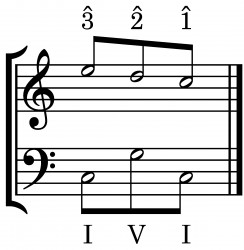
Carl Schachter, Arnold Whittall, and why music analysis matters
9th June 2026
Two recent deaths have robbed the world of music analysis of a pair of its most revered figures. Carl Schachter, who has died at the age of 93, was a pupil of (and subsequently collaborator with) Felix Salzer, himself one of Heinrich Schenker’s foremost students. Schachter continued to enrich and broaden the teaching of Schenkerian analysis, including important work on its application to issues of rhythm (which Schenker, focussing on harmonic and contrapuntal matters, largely bypassed). His influence went well beyond the... read more
read more
Music of the Iberian Peninsula, Part 2: ‘O quam gloriosum’ – The Spanish and Portuguese Golden Age
2nd June 2026
Over the past fortnight, I’ve been bathed in the most glorious, radiant, transformative light. Not the UK’s recent unseasonable heatwave, but the extraordinary vocal polyphony of the Siglo de Oro: the Spanish (and Portuguese) ‘Golden Century’. Extending from the late 15th to the early 17th century, this was a time of remarkable artistic flowering on the Iberian Peninsula, coinciding with the emergence of Spain and Portugal as global imperial powers with extensive colonial territories in the Americas, Africa and Asia. The... read more
read more