 FREE UK SHIPPING OVER £35!
The Spin Doctor Europadisc's Weekly Column
Works in Focus: Haydn’s ‘Seven Last Words of Our Saviour on the Cross’
16th April 2025
16th April 2025
 Holy Week – the seven days leading up to the feast of Easter – has traditionally been the time for some of the richest, most spiritually searching music in the church year. As Christians contemplate Jesus’s final days and crucifixion, they have done so to a soundtrack comprising some of the greatest music ever composed for a liturgical context. Performances of Passion settings are still widespread, though more usually in the concert hall than as part of a formal liturgy, while the more reflective context of the Tenebrae services with their responsories and Lamentations is increasingly represented both in live performance and on disc, with the French Baroque genre of the Leçons de ténèbres cultivated at the court of Louis XIV particularly treasured by connoisseurs.
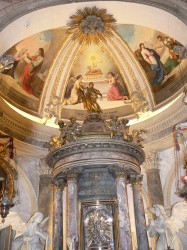
One work, however, stands apart from these traditions: Joseph Haydn’s Seven Last Words of Our Saviour on the Cross, a unique series of contemplations on Jesus’s last utterances as he was crucified. Haydn’s own account relates how he was approached to compose a series of musical meditations on each of these traditional Last Words – taken from the various gospels – for a Good Friday observance in one of Cádiz’s principal churches. The bishop would ascend to the pulpit, recite each utterance followed by a homily, and after each one then descend to prostrate himself before the altar, during which contemplative music was performed. The church was the Oratorio de la Santa Cueva [see picture], the year was 1786, and although Haydn used the word ‘oratorio’ to describe the genre, the meditations were purely instrumental, performed by a classical-sized orchestra of the sort familiar from his symphonies of the time.
As well as the seven meditations (each designated ‘Sonata’), the work was framed by an orchestral introduction and concluding ‘terremoto’ (earthquake), the latter depicting the supernatural event recounted in St Matthew’s gospel after Jesus had breathed his last. Haydn himself wrote of the challenge of composing ‘a succession of seven Adagios, each of which was to last about ten minutes, without wearying the listener’. However, by using a variety of tempi at the slow end of the spectrum – Adagio, Largo, Lento, Grave – as well as a range of instrumental textures, he succeeded magnificently. Each Sonata was indeed in slow-movement sonata form (with an exposition repeat in all but the first Sonata). More remarkable is the fact that each is in a different key (a particularly bold move for the time: see the schema below), while the Introduction (with its French-style dotted figuration) is in D minor, and the final earthquake (marked ‘Presto e con tutta la forza’, in dramatic contrast to the preceding movements) is in C minor.
Introduzione – D minor – Maestoso ed Adagio
Sonata I: ‘Pater, dimitte illis, quia nesciunt, quid faciunt’ – B flat major – Largo
‘Father, forgive them, for they know not what they do’
Sonata II: ‘Amen dico tibi: hodie mecum eris in paradiso’ – C minor – Grave e cantabile
‘Truly I say to you... today you will be with me in Paradise’
Sonata III: ‘Mulier, ecce filius tuus, et tu, ecce mater tua’ – E major – Grave
‘Woman, behold thy son – son, behold they mother’
Sonata IV: ‘Deus meus, Deus meus, utquid dereliquisti me’ – F minor – Largo
‘My God, my God, why have you forsaken me?’
Sonata V: ‘Sitio’ – A major – Adagio
‘I thirst’
Sonata VI: ‘Consummatum est’ – G minor – Lento
‘It is finished’
Sonata VII: ‘Pater, in manus tuas commendo spiritum meum’ – E flat major – Largo
‘Father, into your hands I commend my spirit’
Il terremoto (Earthquake) – C minor – Presto e con tutta la forza
Another notable feature is that the first theme of each Sonata is based on the rhythm and intonation of the corresponding text – something that Dvořák would do in his series of four symphonic poems based on Erben’s folk ballads, but not until 110 years later! As in the key-scheme, Haydn fully lives up to his reputation as the boldest of musical pioneers.
In their original orchestral form, The Seven Last Words are splendidly varied and colourful (particularly when performed with the distinctive sonorities of period instruments, and in a church acoustic). Performances in Paris, Rome, Berlin and Vienna attest to their success in Haydn’s lifetime, yet his publisher, Artaria, was keen to make more of the music’s potential and persuaded him to make an arrangement for string quartet. There are signs that this 1787 adaptation was undertaken in something of a hurry, with careless omissions, and often little more than transcribing the orchestral string parts – much less effective for chamber performance than Haydn’s customarily careful quartet writing. Nevertheless, in time, and with careful re-editing by many of the more painstaking ensembles, this string quartet guise has become the most popular (and most recorded) version of The Seven Last Words.
From the same year also dates a keyboard arrangement, not prepared by Haydn but approved by him, and although it is arguably better played for oneself than performed in a concert hall, it too has won a fair measure of popularity. Then in 1796 – a full decade after undertaking the original composition – Haydn heard on his travels a version with chorus singing the texts, adapted by Joseph Frieberth (complete with added recitatives). Haydn kept a copy of this arrangement, and then engaged Gottfried van Swieten – his future collaborator on The Creation and The Seasons – to make improvements to the text for his own choral arrangement. For this he not only enlarged the orchestra to include clarinets, contrabassoon and trombones, but also added a further purely instrumental introduction between the fifth and sixth Sonatas, strikingly scored for wind instruments only, a majestically funereal piece in the wind band (or Harmonie) tradition.
In the later 19th century, with the huge growth in amateur choral societies, it was this 1796 choral version that was most frequently performed, and it retained its popularity into the early 20th century. Nowadays it is less frequently heard, but is still worth investigating for its magnificent expansion on the original, not least in the added wind-only movement.
Nevertheless, it is the original orchestral version and the string quartet arrangement (when sensitively ‘doctored’) that best reflect the striking originality of Haydn’s conception. Before the final startling earthquake bursts forth, this is a work of deep consolation which in many respects anticipates the mood of Brahms’s equally original German Requiem. The use of sighing motifs, the modulation in the minor-key Sonatas to the relative major, the suggestion of the dryness of thirst in the delicate pizzicati that open Sonata V, and many other remarkable details, combine to make The Seven Last Words one of Haydn’s greatest masterpieces. Above all, it is the atmosphere of steadfast focus and contemplation that makes it an ideal companion for Holy Week, or whenever one needs space for more reflection...
Recommended recordings:
Orchestral version:
Le Concert des Nations / Savall - AVSA9854
String quartet version:
Fitzwilliam Quartet - CKD153
Piano version:
Ronald Brautigam (fortepiano) - BISCD1325
Choral version:
Kammerchor Stuttgart, Hofkapelle Stuttgart / Bernius - CAR83520
Latest Posts
Music of the Iberian Peninsula, Part 3: More observations on the Golden Age
16th June 2026
Our last visit to the Iberian peninsula, a fortnight ago, was an insanely ambitious, necessarily broad-brush survey of the Spanish and Portuguese Golden Age, covering vocal and instrumental music, the sacred and the secular. This week, we take a more concise and (I hope) focussed look at a few of the sacred vocal masterpieces which exemplify the particular fervour and intensity of this remarkable period of musical history. They reflect the special place the peninsula had as a bulwark against the Reformation that had taken... read more
read more
Music of the Iberian Peninsula, Part 3: More observations on the Golden Age
16th June 2026
Our last visit to the Iberian peninsula, a fortnight ago, was an insanely ambitious, necessarily broad-brush survey of the Spanish and Portuguese Golden Age, covering vocal and instrumental music, the sacred and the secular. This week, we take a more concise and (I hope) focussed look at a few of the sacred vocal masterpieces which exemplify the particular fervour and intensity of this remarkable period of musical history. They reflect the special place the peninsula had as a bulwark against the Reformation that had taken... read more
read more
Carl Schachter, Arnold Whittall, and why music analysis matters
9th June 2026
Two recent deaths have robbed the world of music analysis of a pair of its most revered figures. Carl Schachter, who has died at the age of 93, was a pupil of (and subsequently collaborator with) Felix Salzer, himself one of Heinrich Schenker’s foremost students. Schachter continued to enrich and broaden the teaching of Schenkerian analysis, including important work on its application to issues of rhythm (which Schenker, focussing on harmonic and contrapuntal matters, largely bypassed). His influence went well beyond the... read more
read more
Carl Schachter, Arnold Whittall, and why music analysis matters
9th June 2026
Two recent deaths have robbed the world of music analysis of a pair of its most revered figures. Carl Schachter, who has died at the age of 93, was a pupil of (and subsequently collaborator with) Felix Salzer, himself one of Heinrich Schenker’s foremost students. Schachter continued to enrich and broaden the teaching of Schenkerian analysis, including important work on its application to issues of rhythm (which Schenker, focussing on harmonic and contrapuntal matters, largely bypassed). His influence went well beyond the... read more
read more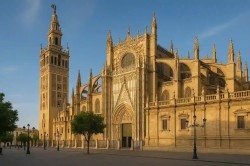
Music of the Iberian Peninsula, Part 2: ‘O quam gloriosum’ – The Spanish and Portuguese Golden Age
2nd June 2026
Over the past fortnight, I’ve been bathed in the most glorious, radiant, transformative light. Not the UK’s recent unseasonable heatwave, but the extraordinary vocal polyphony of the Siglo de Oro: the Spanish (and Portuguese) ‘Golden Century’. Extending from the late 15th to the early 17th century, this was a time of remarkable artistic flowering on the Iberian Peninsula, coinciding with the emergence of Spain and Portugal as global imperial powers with extensive colonial territories in the Americas, Africa and Asia. The... read more
read more