 FREE UK SHIPPING OVER £35!
The Spin Doctor Europadisc's Weekly Column
Early Music Highlights
1st April 2025
1st April 2025
 The first three months of 2025 seem to have flown past, despite the persistence of dispiriting headlines, helped along by a generous flow of new releases to delight lovers of early music in its varied forms. Does the past gain in attraction when the present seems so devoid of good news? What we can state with certainty – and some satisfaction, given the widespread impression that the arts in general and classical music in particular are under attack – is that the proliferation of excellent ensembles shows no sign of abating.
Baroque music is particularly well served in this regard: January saw the release of Handel’s opera Rinaldo, not in the well-known original version of 1711 but the dramatic tauter revision of 20 years later, with tenor Marco Angioloni directing a fine cast of singers headed by Filippo Mineccia, Vivica Genaux and Roberta Mameli (Glossa, GCD924802). If Handel’s operas are now much better known than they were a generation ago, there is still much to discover in them. Yet perhaps the most significant area of growth in the Baroque operatic repertoire – certainly on disc – is the French repertoire. Following in the footsteps of such pioneers as Jean-Claude Malgoire and William Christie, a swathe of accomplished performers has breathed new life into the genre.
One of the leading labels in this revival is the Château de Versailles Spectacles (CVS), championing performances recorded at the historic palace by both resident and visiting ensembles. Their recent release of Lully’s 1674 tragédie en musique, Alceste, by the ensemble Les Epopées under Stéphane Fuget, is a marvellous mixture of stylistic refinement, full-blooded rhetoric and – thanks to the full-throated massed oboes – a distinct whiff of the royal stables. Lully’s Alceste has suffered over the years in comparison with Euripides’ classical tragedy and Gluck’s later opera (one of his masterpieces). Yet this performance, boasting an excellent cast including Véronique Gens, Cyril Auvity and Nathan Berg, makes the strongest possible case for work that is as much about entertainment as it is about convincing drama.
Upcoming delights from CVS include Rameau’s 1748 ‘acte de ballet’ after Ovid’s Metamorphoses, Pigmalion (starring Mathias Vidal), coupled with a short cantata on the same subject by the little-known Antoine Bailleux (c. 1730–1800). Another rarity is the tragédie en musique, Ernelinde, princesse de Norvège, by the composer (and expert chess player) François-André Danican Philidor (1726–1795) – scion of a notable musical dynasty and an important transitional figure in the move to Gluck’s operatic reforms. Another starry cast, this time partnered (appropriately enough) by the Trondheim-based Orkester Nord under Martin Wåhlberg, brings the music of this pivotal figure vividly to life.
Far more familiar is the music of Vivaldi – or at least some of it, such as the ubiquitous ‘Four Seasons’ concertos from his Opus 8 collection. This year has already brought two notable recordings of these perennial crowd-pleasers, the first as part of a wide-ranging and imaginative double album by violinist Théotime Langlois de Swarte (Harmonia Mundi), the second from the seasoned team of Adrian Chandler and La Serenissima (Signum Classics), the first volume of a complete survey of the Op.8 concertos. Both have much to commend them, even in this much-duplicated repertoire. Another Vivaldi disc that has caught our ear is the second volume of a complete survey of the Red Priest’s 39 (!) bassoon concertos (due out 11 April). Played at modern pitch by Sophie Dervaux (principal bassoon of the Vienna Philharmonic Orchestra) and the small string band of La Folia Barockorchester, these are intimate, stylish accounts that combine lightness of touch with just the right degree of pungency: these Berlin Classics recordings are well worth investigating, even at premium price.
Another notable Berlin Classics release is the latest in a series of recordings from the Mozarteumorchester of Salzburg, featuring stylised cover art of Mozart-Kugeln (the famous marzipan-and-chocolate Mozart Balls). Period instrument specialist and Mozarteum professor Reinhard Goebel directs a cracking performance of the Posthorn Serenade by Salzburg’s most famous son, but even the inclusion of the 2 Marches in D major, K335, can't disguise the fact that this is rather short measure at just 47 minutes. Better value (and just as stylish) is the first volume of Mozart’s ‘Complete Works with Clarinet on period instruments’ spearheaded by Nicolas Baldeyrou on the Alpha label. Comprising the Wind Serenades, K361, K375 and K388 (the first being the justly celebrated ‘Gran Partita’), these performances combine a relaxed collegiality with vibrant playing, lively but never hectic speeds, and a recognition of the music’s stature without ever sounding pompous.
In this whistle-stop tour of our highlights from recent and imminent early music releases, we've saved two of the best until last. Under the title ‘Vox feminae’, the all-female ensemble Les Kapsber’girls present a fascinating and vividly realised programme of vocal music by women composers from the Baroque period, ranging from Francesca Caccini and Barbara Strozzi to the virtually unknown Lucia Quinciani (fl. 1611), the first published female composer of early Baroque monody. Punctuated by lute works by Ercole Pasquini and the groups dedicatee, Giovanni Girolamo Kapsberger, this is a fabulously performed programme, the voices bright, nimble and clear, the engagement with the texts palpable, the application of period techniques enthralling, the performances consistently engaging.
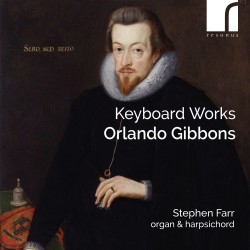
Kapsberger’s English contemporary Orlando Gibbons (1583–1625) is one of this year’s anniversary composers, although less likely to be encountered in the release schedules than Ravel or Shostakovich. Best known today for his sacred vocal music, he composed extensively for keyboard, and the recent release on Resonus Classics of a generous selection of pieces, including the majority of his keyboard Fantasias, is particularly welcome. Played on organ and harpsichord, Stephen Farr’s performances have an understated beauty that is perfectly suited to Gibbons’s quiet command of contrapuntal techniques, contemporary dance idioms and expressive depth. The latest in a series of excellent recordings by Farr on the Resonus label, and expertly recorded, it makes a particularly handsome 400th anniversary tribute.
Top picks:
Lully - Alceste (Fuget) CVS149
Vivaldi - Bassoon Concertos Vol.2 (Dervaux) 0303724BC
Mozart - Complete Works with Clarinet Vol.1 (Baldeyrou et al.) ALPHA1040
Vox feminae (Les Kapsber’girls) ALPHA1098
Gibbons - Keyboard Works (S Farr) RES10355
Latest Posts
Music of the Iberian Peninsula, Part 3: More observations on the Golden Age
16th June 2026
Our last visit to the Iberian peninsula, a fortnight ago, was an insanely ambitious, necessarily broad-brush survey of the Spanish and Portuguese Golden Age, covering vocal and instrumental music, the sacred and the secular. This week, we take a more concise and (I hope) focussed look at a few of the sacred vocal masterpieces which exemplify the particular fervour and intensity of this remarkable period of musical history. They reflect the special place the peninsula had as a bulwark against the Reformation that had taken... read more
read more
Music of the Iberian Peninsula, Part 3: More observations on the Golden Age
16th June 2026
Our last visit to the Iberian peninsula, a fortnight ago, was an insanely ambitious, necessarily broad-brush survey of the Spanish and Portuguese Golden Age, covering vocal and instrumental music, the sacred and the secular. This week, we take a more concise and (I hope) focussed look at a few of the sacred vocal masterpieces which exemplify the particular fervour and intensity of this remarkable period of musical history. They reflect the special place the peninsula had as a bulwark against the Reformation that had taken... read more
read more
Carl Schachter, Arnold Whittall, and why music analysis matters
9th June 2026
Two recent deaths have robbed the world of music analysis of a pair of its most revered figures. Carl Schachter, who has died at the age of 93, was a pupil of (and subsequently collaborator with) Felix Salzer, himself one of Heinrich Schenker’s foremost students. Schachter continued to enrich and broaden the teaching of Schenkerian analysis, including important work on its application to issues of rhythm (which Schenker, focussing on harmonic and contrapuntal matters, largely bypassed). His influence went well beyond the... read more
read more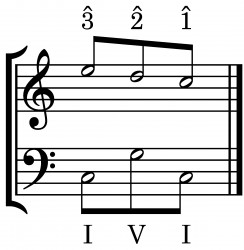
Carl Schachter, Arnold Whittall, and why music analysis matters
9th June 2026
Two recent deaths have robbed the world of music analysis of a pair of its most revered figures. Carl Schachter, who has died at the age of 93, was a pupil of (and subsequently collaborator with) Felix Salzer, himself one of Heinrich Schenker’s foremost students. Schachter continued to enrich and broaden the teaching of Schenkerian analysis, including important work on its application to issues of rhythm (which Schenker, focussing on harmonic and contrapuntal matters, largely bypassed). His influence went well beyond the... read more
read more
Music of the Iberian Peninsula, Part 2: ‘O quam gloriosum’ – The Spanish and Portuguese Golden Age
2nd June 2026
Over the past fortnight, I’ve been bathed in the most glorious, radiant, transformative light. Not the UK’s recent unseasonable heatwave, but the extraordinary vocal polyphony of the Siglo de Oro: the Spanish (and Portuguese) ‘Golden Century’. Extending from the late 15th to the early 17th century, this was a time of remarkable artistic flowering on the Iberian Peninsula, coinciding with the emergence of Spain and Portugal as global imperial powers with extensive colonial territories in the Americas, Africa and Asia. The... read more
read more